
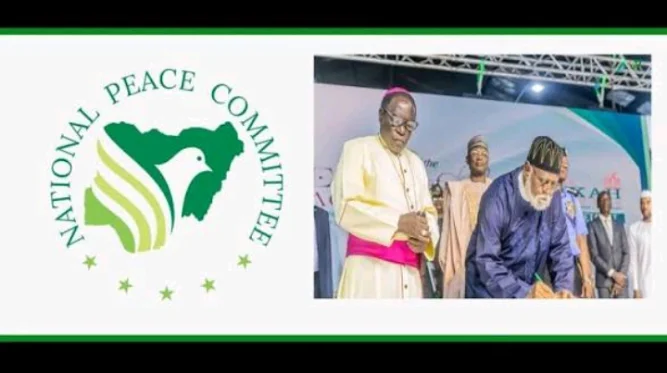
The Kukah Centre, Secretariat of the National Peace Committee has intensified stakeholder interactions in Osun State, as part of the preparations for the formal signing of the Peace Accord for the 2026 Osun State Governorship Election on 30 July 2026.
The bilateral stakeholder engagement and socialisation meetings supported by the European Union through the EU Support to Democratic Governance in Nigeria are aimed at deepening understanding of the Peace Accord, building trust among political actors and strengthening institutional collaboration for a peaceful, credible and violence-free electoral process.
The engagements are coming at a crucial period as the 15 August 2026 governorship election is considered one of Nigeria’s most strategic off-cycle polls, a major indicator for the 2027 General Elections, and is set against a backdrop of intense political competition, shifting alliances, and the implementation of the Electoral Act 2026 for the first time in an off-cycle governorship election.
During the engagement, the NPC Project Manager, Barr. Asabe Ndahi, said the Peace Accord is a collective commitment by political actors and stakeholders to put peace above partisan objectives and safeguard democratic norms during the electoral process.
“Beyond preparing stakeholders for the signing ceremony, the consultations provide a critical opportunity to discuss emerging electoral risks, strengthen institutional coordination and encourage collective action to prevent violence before, during and after the election,” she said.
Ndahi said the Political and Security Context Analysis of the committee had identified organised political violence, institutional tensions, electoral offences, voter inducement, misinformation and declining public confidence as critical risks that required sustained collaboration of stakeholders and proactive conflict prevention.
The bilateral engagements involved a broad spectrum of participants including representatives of the Independent National Electoral Commission, the Inter-Agency Consultative Committee on Election Security, the Nigeria Police Force, other security agencies, political parties, traditional rulers, religious leaders, civil society organisations, women groups, youth organisations, persons with disabilities, media organisations, election observers and development partners.
During the sessions, key issues were discussed, including organised political violence, electoral offences, voter inducement, political intimidation, disinformation, harmful political rhetoric, protection of electoral infrastructure and the importance of early warning and rapid response mechanisms.
The debates also included the issues of responsible political communication, peaceful campaigns, issue centred politics and respect for democratic institutions and lawful resolution of disputes.
Barr. Asabe Ndahi further explained that the Peace Accord is more than a signing ceremony, it is a confidence-building mechanism that encourages political actors to put national and public interest above partisan interests, reject violence and embrace peaceful democratic competition.
That engagement provides an opportunity for stakeholders to correct any misconceptions about the Peace Accord, understand their own responsibilities, enhance collaboration before Election Day, foster peaceful messaging in communities and reduce tensions around elections through dialogue, she said.
The committee was charged by Ndahi to ensure the electoral process in Osun State becomes a model for peaceful democratic transitions in Nigeria.
During the engagement stakeholders reaffirmed their commitment towards peaceful elections and urged political parties, supporters and citizens to reject violence, defend democratic ideals and guarantee that political rivalry is calm throughout the electoral cycle.
They also highlighted the necessity for institutional cooperation, evidence-based election security and concerted action to prevent conflict before, during and after the polling day.
The bilateral consultations are part of broader peacebuilding initiatives of the National Peace Committee ahead of the formal signing of the Peace Accord on 30 July 2026 and the governorship election slated for 15 August 2026.
“The committee continues to work with all stakeholders through The Kukah Centre to promote dialogue, accountability and public confidence in democratic institutions with the ultimate goal of delivering an election that reflects the will of the people and strengthens Nigeria’s democratic trajectory.
About the Author