
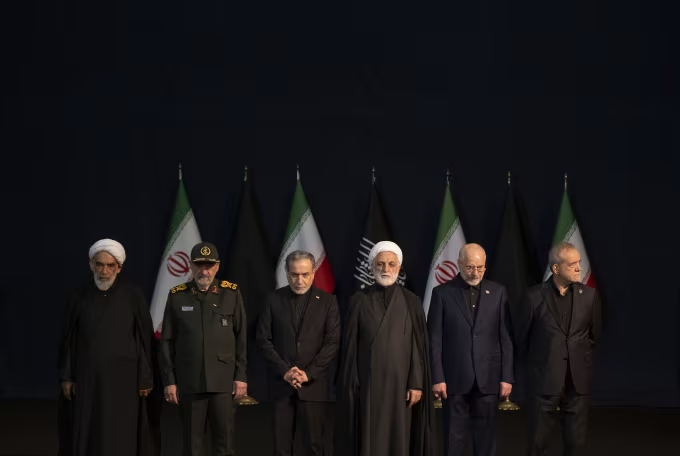
A fragile understanding between the United States and Iran is under new strain as powerful hardline factions in Iran intensify accusations that senior government officials have engineered a “coup” against the country’s revolutionary principles by engaging with Washington.
The current political spat comes as warfare between the United States and Iran has restarted after the collapse of a temporary truce reached in June. The renewed military confrontations have heightened tensions across the Middle East and exposed profound differences inside Iran over how the government should respond to Washington.
Conservative politicians and activists have criticised President Masoud Pezeshkian and Parliament Speaker Mohammad Bagher Ghalibaf for allegedly pushing through the previous memorandum of understanding with the United States against the strategic direction of Iran’s late Supreme Leader. Hardliners fear any deal with Washington would diminish Iran’s stature and undermine years of resistance to US pressure.
The “coup” story has gone viral on social media sites favoured by conservative backers, with some leading figures claiming pragmatic politicians are trying to reshape the foreign policy of the Islamic Republic without the support of the country’s ideological establishment. The rhetoric reflects a wider power struggle between forces advocating diplomacy and others demanding ongoing conflict with the United States, say analysts.
The political argument has taken place against the backdrop of a deepening military crisis. The U.S. has carried out a series of air strikes on Iranian military installations and infrastructure after accusing Tehran of threatening international trade via the Strait of Hormuz. Iran has attacked U.S.-linked military bases in numerous Gulf countries with missiles and drones and has warned that any new actions by the United States will be answered with more retribution.
Hardline factions have demanded Iran retain control of the Strait of Hormuz, and rejected talks that may be seen as appeasing Washington. Iran’s strategic leverage in the Gulf, they say, should not be bartered away for transitory diplomatic deals or sanctions relief.
At the same time more pragmatic voices in Iran’s political establishment have warned that a prolonged confrontation may cause deep economic harm. In reports, government officials have said they earlier backed talks partially due to concerns over the impact on Iran’s economy, its energy exports and its access to crucial products from military confrontation, sanctions and maritime blockades.
The fresh infighting has hindered the efforts of regional mediators to get diplomacy between Tehran and Washington back on track. Pakistan and some Gulf states have called on both parties to get back to the negotiating table, saying any escalation will jeopardise regional security and global energy markets.
The hard-liners’ increasingly harsh rhetoric is a sign of growing instability inside Iran’s ruling establishment at a time of simultaneous military, economic and diplomatic pressures on the country, political analysts say. There is no evidence of a genuine coup attempt, but the charges highlight growing ideological differences about Iran’s future course and its relationship with the United States.
U.S. military activities continue and Iranian officials are facing increasing domestic criticism prospects for restoring a sustainable ceasefire remain doubtful. Analysts warn that unless both sides return to genuine negotiation, the situation might worsen, raising the risk of wider regional instability with far-reaching implications for international security and global energy supplies.
About the Author