

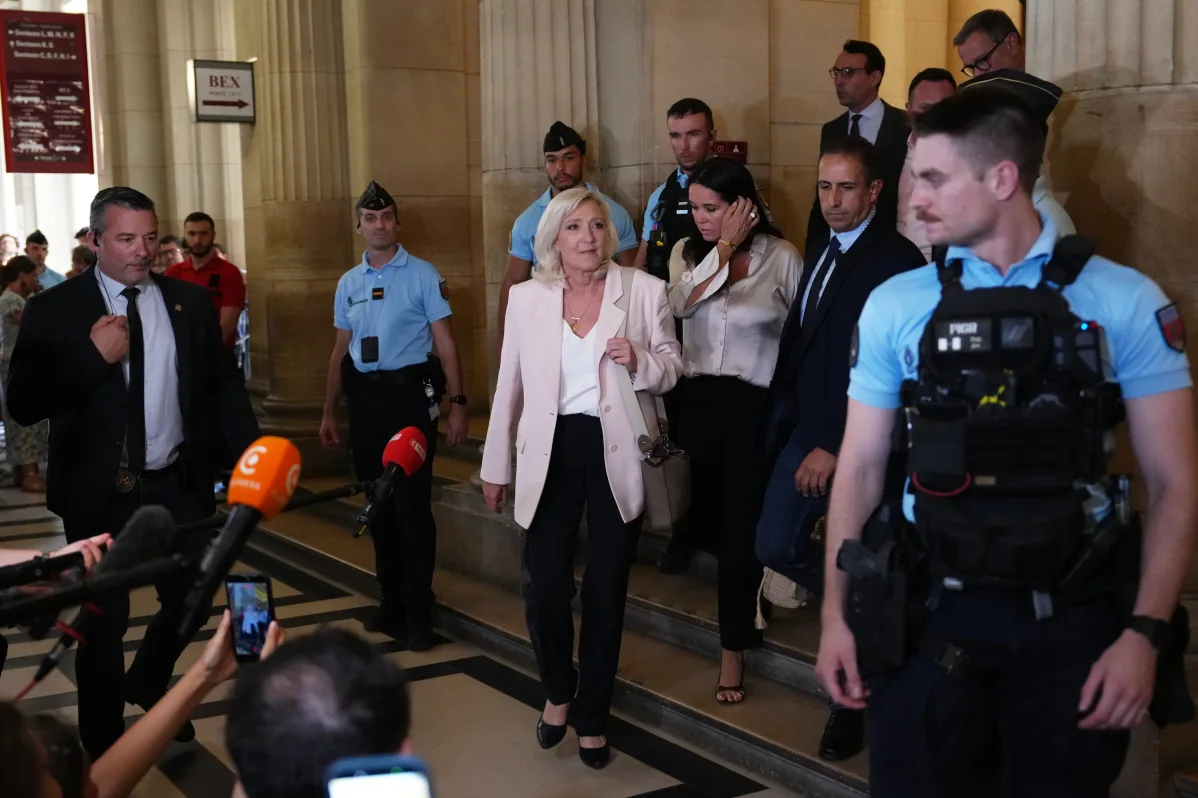
French far-right leader Marine Le Pen has been given the green light to run in the 2027 presidential election after a Paris appeals court considerably lowered her ban from holding public office but upheld her conviction for embezzling European Parliament funds. The decision is a stunning reversal in one of the most significant political and legal battles in France, but leaves Le Pen under electronic monitoring, a situation she has repeatedly argued may prohibit her from campaigning successfully.
The appeals court affirmed Le Pen’s conviction for misappropriating European Parliament funds from 2004-16 on the grounds that money allocated for parliamentary aides had been used to pay workers working for her far-right National Rally party. However, the justices greatly lowered the political sanctions issued in 2025. Her five-year ban from holding public office was reduced to 45 months with 30 of those suspended. Le Pen has already served 15 months of that ban after the original finding, thus the decision practically means she can run in the 2027 presidential election.
The court also sentenced Le Pen to three years in prison, two suspended, and one year under electronic monitoring — meaning she will have to wear an electronic ankle bracelet. The sentence keeps her out of prison but poses a great political quandary. Le Pen has previously said she would not run for president if she had to campaign with an electronic monitoring device, saying such constraints would make a statewide campaign impossible.
Le Pen, speaking after the ruling, praised the curbing of her election ban and restated her objection to the electronic bracelet requirement. In the next days she is anticipated to reveal whether she will launch a fourth presidential campaign or step aside for another National Rally candidate.
The decision is expected to shake up French politics. Le Pen had been viewed as one of the leading prospects to succeed President Emmanuel Macron in 2027, before her original conviction. Her National Rally party has been topping or near the top of national opinion polls on the back of increased public concern about immigration, inflation, security and the cost of living.
Focus has also shifted to Jordan Bardella, the 30-year-old head of National Rally and Le Pen’s political protégé. Bardella had been generally seen as the party’s prospective presidential candidate if Le Pen stayed barred from politics. Tuesday’s decision leaves the question of whether Le Pen or Bardella will eventually take the party into the 2027 election unanswered.
The legal complaint is based on allegations that the National Rally misused millions of dollars meant for European Parliament aides to pay party personnel in France. Prosecutors said the deal was a systematic misuse of public funds, but Le Pen has insisted throughout the proceedings that the party acted in good faith, denying any purposeful fraud. The appeals court maintained the conviction but issued lesser fines than those imposed at the original trial.
Political observers think the ruling might have far-reaching consequences in the French presidential election. While Le Pen’s legal eligibility has been fully restored, her choice to accept the terms tied to the sentence might shape the future of the National Rally and the broader French far-right movement. The verdict is also expected to rekindle debate on judicial independence, political accountability and the balance between criminal convictions and democratic participation.
About the Author