
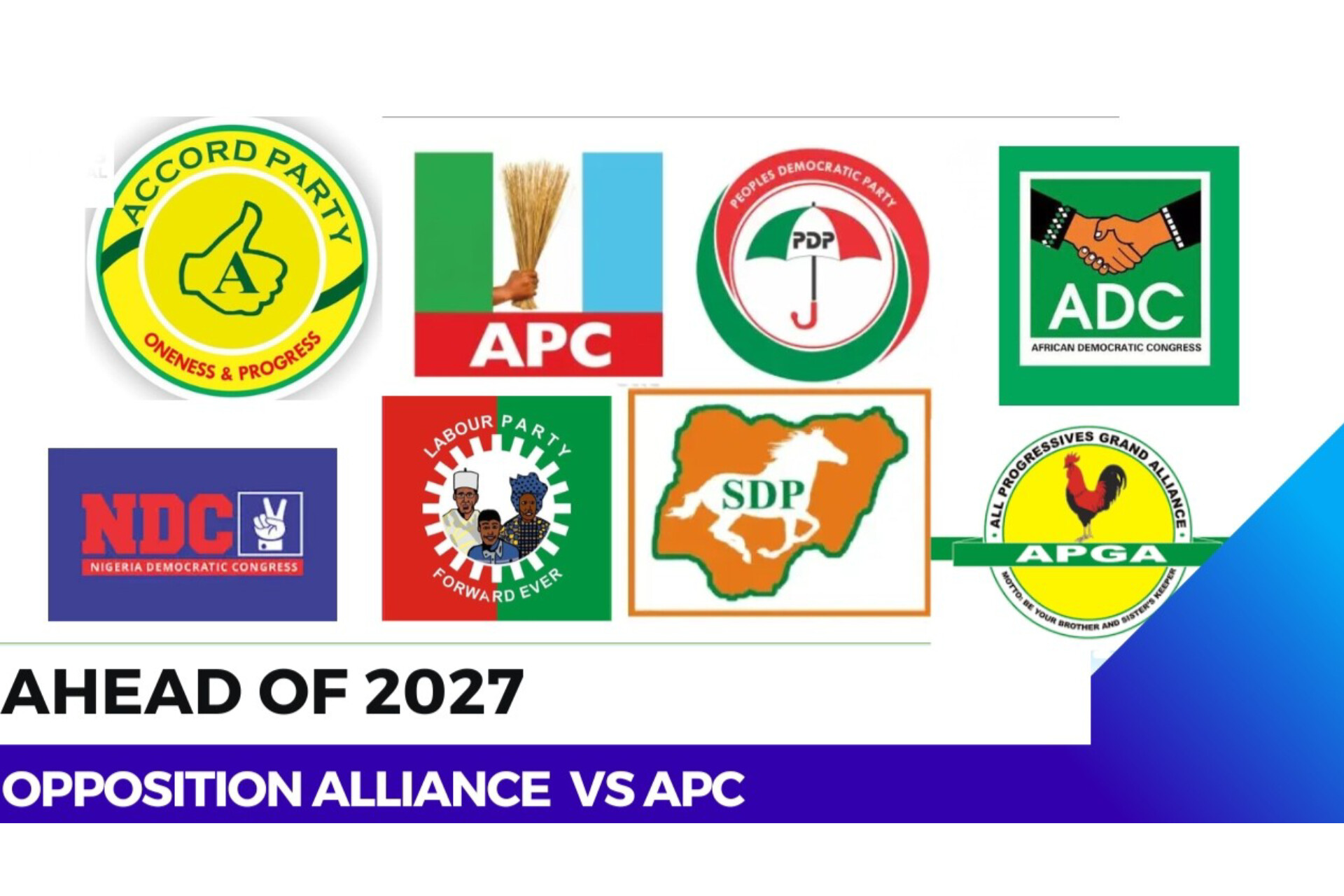
With eight months to the 2027 presidential elections, a flurry of positive reactions trailed the Federal High Court ruling yesterday which nullified some crucial timelines and processes outlined by the Independent National Electoral Commission (INEC). Many stakeholders hailed the judgment as a welcome reprieve from the choking deadlines preparatory to next year’s general poll.
In a significant verdict, the Federal High Court in Abuja concluded that the electoral commission acted outside its powers when it imposed stringent timelines on political parties for the conduct of primaries and other pre-election operations, The Guardian writes.
Justice M. G. Umar in his verdict in Suit No. FHC/ABJ/CS/517/2026 filed by the Youth Party against INEC said that INEC has no legislative powers to fix timetables for political parties to hold their primaries for the nomination of candidates for the 2027 polls.
The court also held that INEC could not legally abridge or limit periods already guaranteed under the Electoral Act, 2026 in respect of the submission of candidates particulars, withdrawal and substitution of candidates, publication of final lists and campaign windows for political parties.
Therefore, Justice Umar struck out those parts of INEC’s Revised Timetable and Schedule of Activities for the 2027 General Elections which were determined to be inconsistent with the Electoral Act.
The judgment was described by members of the opposition political parties as a watershed moment in Nigeria’s democratic journey. Stakeholders including political parties, Civil Society Organisations (CSOs) and Election Monitors expressed relief that the judiciary has finally woken up to its responsibilities as the bulwark against institutional excesses.
The African Democratic Congress (ADC) has welcomed the judgment saying it appreciates the finding on the date for party primaries among others. The verdict was a validation of the party’s earlier objections to major sections of the electoral body’s guidelines at the time they were announced, said the National Publicity Secretary of the party, Bolaji Abdullahi, in a statement issued in Abuja Thursday night.
The opposition ADC also reiterated its specific objections to the tight timetables for membership registration as well as the holding of party primaries. “The decision of the court on these issues including those which run contrary to the Constitution is therefore a welcome vindication of our position,” the party stated in the statement.
The verdict, which lifts the barrier imposed by the rules on politicians wanting to seek alternative platforms to run elections, is a positive development that encourages freedom of association, the party also noted. At that time we thought that restriction was to prevent people from defecting from the ruling party, the APC. “Now that the court has ruled against it, we are sure we will see a mass exodus from the ruling party in the coming days.”
The Peoples Redemption Party (PRP) also hailed the court for jettisoning the INEC rules, warning the commission against appealing the case, saying the ruling could strengthen internal democracy in political parties.
The party’s National Publicity Secretary, Muhammed Bello Ishaq, said that while it was carefully analyzing the verdict, on the surface, it believes that the order returns crucial responsibilities that political parties claim were previously taken over by INEC.
The PRP noted that the judgement enlarges the space for political parties to make autonomous decisions and takes away what it termed “unhealthy regimentation” of party affairs even as it maintained that the judgement could impact positively on the democratic culture in Nigeria by giving political parties more control of their internal processes.
However, the party noted that the judgement could throw up issues particularly if INEC chooses to appeal the order at the appellate court but expressed optimism that “patriots and influential stakeholders” should prevail on the commission not to seek for an appeal.
It was also found that the ruling party, the All Progressives Congress (APC), may also gain a lot from the judgment because of what it termed as mounting grievances emanating from attempts to handpick candidates within the party.
PRP said other political parties will also attempt to embrace chances created by the verdict to boost membership and improve the quality of their candidates ahead of future elections.
The troubled PDP welcomed the judgment saying the verdict was an important endorsement of the rule of law and internal democratic rights of political organizations.
The PDP Interim National Working Committee led by Kabiru Turaki, described the ruling on Thursday as a welcome development that will further improve democratic procedures and give political parties enough space to organise their internal operations.
Also, the Human Rights Writers Association of Nigeria (HURIWA) has further escalated the problem by demanding the resignation of INEC Chairman, Prof. Joash Amupitan, saying the court verdict had further increased worries over the electoral body’s neutrality.
Emmanuel Onwubiko, HURIWA’s National Coordinator, called on INEC to promptly comply with the verdict and realign its electoral timetable with the pronouncement of the court.
HURIWA, while observing that the commission had little time to engage in extended litigation in view of the short period leading to the elections, said: “The implication is that INEC has to obey the law and comply with the judgement delivered by the competent court of law.
“It is late for INEC to appeal because of the shortness of time to the election, so INEC should comply and extend the deadline as the ruling of the court says.”
Wale Okunniyi, leader of the Movement for Credible Election (MCE), said the ruling was a triumph for internal democracy and for wider political engagement. The earlier schedule put undue pressure on politicians and political parties, particularly smaller parties that had difficulty meeting squeezed deadlines.
“Earlier, MCE had appealed for the postponement of INEC’s timetable to at least September. The former configuration appeared to be set up to ensnare political actors and to limit political engagement. “Now politicians feeling short changed in their parties can take enough time to move to other platforms and pursue their ambitions,” he added.
Okunniyi said the verdict would particularly help opposition parties since it would give them more time to build alliances, absorb defectors, resolve internal conflicts and develop their structures ahead of the elections.
Reacting, the President of the Yoruba Ronu Leadership Forum, Akin Malaolu, said the court had restored justice to the election process by setting restrictions on INEC’s authority.
Malaolu said some disgruntled members of the ruling All Progressives Congress, who were not satisfied with the outcome of the party’s recent primaries, had started looking at other political platforms including the African Democratic Congress.
He said the verdict would lessen post-primary tension and anti-party actions in the APC as unhappy aspirants have more time to defect legitimately and participate in other parties’ procedures without being shut out by INEC’s deadlines.
“The initial timeline seemed to be designed to sabotage opposition parties by cutting down the time for consultation, mergers and accommodation of new entrants. This judgment alters that equation.”
The PDP National Vice Chairman (Southwest), Kamorudeen Ajibade, also praised the verdict, calling it as “a major relief’’ for opposition parties.
Ajibade asked INEC to stop appealing the judgment, saying the court had only reiterated the principles of the Electoral Act and constitutional rights of political parties.
Ajibade, a lawyer, said the verdict re-echoed that INEC’s administrative powers are subservient to the Electoral Act and are susceptible to judicial scrutiny.
“The legal position is that INEC has powers to publish election timetables and schedules but cannot give timeframes that are in conflict or that will virtually modify rights and timelines specifically provided by the Electoral Act itself.
“The constitutional basis for the court’s intervention is rooted in the judiciary’s power to interpret legislation and to test the compliance of government agency actions with existing statutes. So if a party considers that INEC acted “ultra vires” (outside its powers), the court might review those actions and nullify them.
“It is not a question of whether INEC can issue a timetable or not, legally it can, but whether the Commission can impose deadlines that limit statutory rights already created by the Electoral Act.
Also, a former presidential candidate and business mogul, Gbenga Hashim, hailed the judgment as a win for the rule of law and constitutional order. While hailing Justice M. G. Umar for what he called a courageous and principled decision that checked administrative overreach and re-affirmed the supremacy of the Electoral Act, 2026.
Hashim said he had always insisted that INEC must operate completely within the constraints of the law, disclosing that he had before sent an open letter to President Bola Ahmed Tinubu warning against acts that are potential of undermining the Electoral Act.
Hashim urged INEC to completely comply with the verdict and ensure that future electoral guidelines closely adhere to the terms of the law.
In a similar vein, the Coalition of United Political Parties (CUPP) in its statement asked INEC to immediately overhaul the 2027 election calendar in compliance with the court order. The Acting National Chairman of CUPP, Peter Ameh, commended the Federal High Court for “this progressive and constitution-aligned judgment”, noting that the ruling has opened democratic space by restoring party autonomy over its internal processes which INEC sought to regulate through its timetable.
The CUPP listed as gains of the landmark ruling the exemption of substitution primaries from the strict timelines of the Electoral Act, the nullification of the 21-day requirement for the submission of membership register for such primaries, and the affirmation that INEC cannot unilaterally truncate the statutory windows for submission of candidates and publication of final candidates’ lists.
The verdict is expected to have far-reaching ramifications for preparations ahead of the 2027 general elections, notably concerning the equilibrium between INEC’s administrative power and the legal independence provided to political parties by the Electoral Act.
Central to the controversy is the interpretation of the provisions of Sections 29, 31, 32, 33, 82, 84(1) and 98 of the Electoral Act, 2026 which provide the timetables for nominations of candidates, substitutes, party primaries and campaign activities.
The court ruled that INEC still has rights to supervise and monitor party primaries, but these authorities do not stretch to modifying statutory timelines passed by the National Assembly.
The ruling could alter the manner of doing electoral planning by confirming the pre-eminence of legislation above administrative directives issued by regulatory bodies. It could also require INEC to immediately examine its timetable for elections in compliance with the Electoral Act.
For parties already involved in internal discussions, alliances and nomination battles ahead of the 2027 polls, the ruling may give what many consider as a significant extension of political breathing space.
About the Author