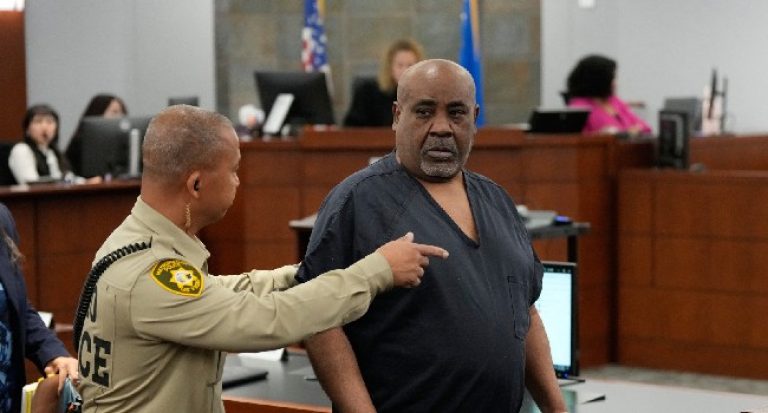

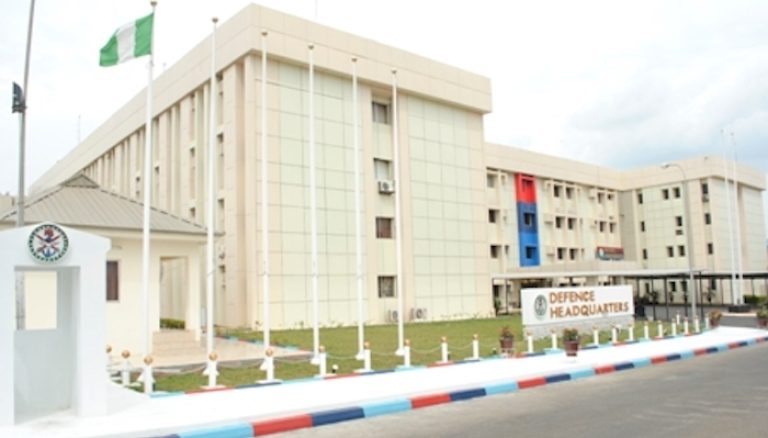
The second accused person in the charges filed against 36 persons accused of alleged mutiny and plot to overthrow the government of President Bola Tinubu, Colonel Mohammed Ma’aji, has questioned the jurisdiction of the Defence Headquarters Garrison General Court Martial sitting in Asokoro, Abuja, to hear the matter.
The Armed Forces of Nigeria, in a preliminary objection before the court martial in charge No: DHQ/GAR/ABJ/49/ADM between it and Brig Gen M.A. Sadiq, Col Ma’aji and 35 others, has asked the court martial to strike out the charges instituted against him, saying that the military tribunal lacked the jurisdiction to entertain the case, The PUNCH reports.
In the objection, Ma’aji maintained that the allegations were inherently faulty and incompetent in law.
The objection raised under Rules 36(1) and 37(1) of the Rules of Procedure Army 1972 sought an order of the Tribunal striking out and/or dismissing the accusations against the 2nd Accused.
“TAKE NOTICE THAT the 2nd Accused objects to the jurisdiction of the General Court Martial to entertain Counts One to Nine of the charges preferred against the 2nd Accused in Charge No: DHQ/GAR/ABJ/49/ADM, to wit: ARMED FORCES OF NIGERIA V. BRIG. GEN. M. A. SADIQ (N/10321) & 35 ORS and hereby prays the General Court Martial for the following reliefs:
ORDER FOR STRIKING OUT AND/OR DISMISSING THE CHARGES AGAINST THE 2ND ACCUSED IN CHARGE NO: DHQ/GAR/ABJ/49/ADM ON THE GROUND OF LACK OF JURISDICTION. An order refusing authority to entertain the charge as framed
“And such further order(s) as the Honourable General Court Martial may think fit to make in the circumstances.
The second accused in the allegation further contended that the complainant described as Armed Forces of Nigeria lacked legal power to institute criminal proceedings.
“The complainant (Armed Force of Nigeria) is not a legal person and therefore lacks the competence to institute and prosecute the criminal proceedings in Charge No: DHQ/GAR/ABJ/49/ADM,” Ma’aji said.
He said the complainant allegedly lacked legal personality and hence the General Court Martial was also bereft of authority to entertain the matter.
The defence relying on various cases of the Supreme Court and the Court of Appeal including Green v Green, Fawehinmi v NBA and Mothercat Nig Ltd v Reg. Trustees of the Full Gospel Assembly Nig submitted that only natural persons or entities expressly recognised by law could sue or be sued.
The written address filed in support of the objection stated that “The name ‘Armed Forces of Nigeria’ described as ‘complainant’ in Charge No: DHQ/GAR/ABJ/49/ADM is unknown to law and destitute of any legal capacity to exercise Prosecutorial powers in respect of the charges preferred against the 2nd Accused.
In same vein, the second defendant contested the competency of counts one to nine of the allegation, which accused him of instigating other officials to join a plot to topple President Tinubu.
Ma’aji insisted that the allegations contained in the particulars of the charge did not amount to the offence of mutiny as envisaged by Section 52(1)(b) of the Armed Forces Act, 2004.
He argued on the particulars of the allegation that “disclose offences against the Sovereign State otherwise known as the Federal Republic of Nigeria and constitutional order rather than offences relating to military or service discipline or command structure.
He submitted that the words “plot to overthrow the government of the Federal Republic of Nigeria” in the allegation cannot be equated with “lawful authority in the Federation” as intended under Section 52(3) of the Armed Forces Act.
He maintained that the Federal Republic of Nigeria is not within the words ‘a lawful authority in the Federation’ as used in Section 52(3) of the Armed Forces Act, Laws of Federation, 2004”.
He claimed that the court-martial, as a tribunal of restricted jurisdiction, could not enlarge its powers beyond those specifically authorized by statute, citing constitutional requirements and judicial precedence.
Ma’aji, too, made reference to the Supreme Court’s caveat against judicial overreach in the interpretation of legislative provisions, and insisted that the ambiguity in penal legislation must be resolved in favour of the accused persons.
In his submission, the second accused relied on the Supreme Court decision in the case of Nigerian Navy v Lambert where he submitted thus: “It is settled law that penal statutes are to be construed strictly in favour of the accused person and that where there is a reasonable construction that avoids the penalty in any particular case, the court must adopt that construction.
The preliminary objection also argued that for a charge of mutiny or incitement to mutiny to stand, there must be charges of concerted insubordination, defiance of military authority or denial of lawful command or organised military insurrection against superior military command.
The defence submitted that the particulars provided by the prosecution did not reveal those vital constituents.
He therefore moved the General Court Martial to affirm his preliminary objection and dismiss the allegations against him for want of jurisdiction.
Also, a witness in the current trial of six suspected coup plotters before the Federal High Court in Abuja on Wednesday informed investigators that Ma’aji allegedly threatened to force his way into the Presidential Villa even if insiders refused to comply.
The fourth defendant, Zekeri Umoru, made the claim in a video that was played in court during proceedings in the trial-within-trial regarding the admission of the defendants’ extrajudicial utterances.
In April, Umoru and five others were charged before Justice Joyce Abdulmalik on 13 counts of criminal charges for participating in a purported coup conspiracy to remove Tinubu’s government.
The six defendants; Mahlon Mohammed Ibrahim Gana (retd), Capt Erasmus Victor (retd), Insp Ahmed Ibrahim, Zekeri Umoru, Bukar Kashim Goni and Abdulkadir Sani nevertheless pleaded not guilty to all the counts after the charge was read to them.
Umoru, who worked with Julius Berger on the Presidential Villa clinic project, claimed that Ma’aji, through the third defendant, Insp Ibrahim, asked him to recruit between 18 and 19 persons who were working inside the Villa, including soldiers, Department of State Service personnel and Julius Berger staff.
“The video evidence played in court shows there were plans to switch off electricity in the Presidential Villa to facilitate the operation but warned that the moment the plan is executed, investigations will be commenced and workers on duty will be detained,” he said.
He further stated that Insp Ibrahim later sought N100m from Ma’aji to give him admission into the Villa through an ambulance route but Ma’aji allegedly refused the payment as too much, saying he could still get admittance by force but “there would be bloodshed.”
The witness reportedly told investigators that he got uneasy with the purported plot and twice tried to return the money handed to him, saying the Presidential Villa “was not child’s play.”
Despite claims to the contrary, he denied that he had access to the solar power plant at the Villa, that he wanted to destroy the electricity supply inside the complex.
The court also heard that Umoru did not submit the alleged scheme to the authorities immediately because Insp Ibrahim allegedly told him to delete texts and avoid contacting Ma’aji because there was an ongoing audit in their office.
Following the screening of the video evidence, Justice Abdulmalik delayed the proceedings till May 21 (today) for continuation of trial-within-trial.
About the Author