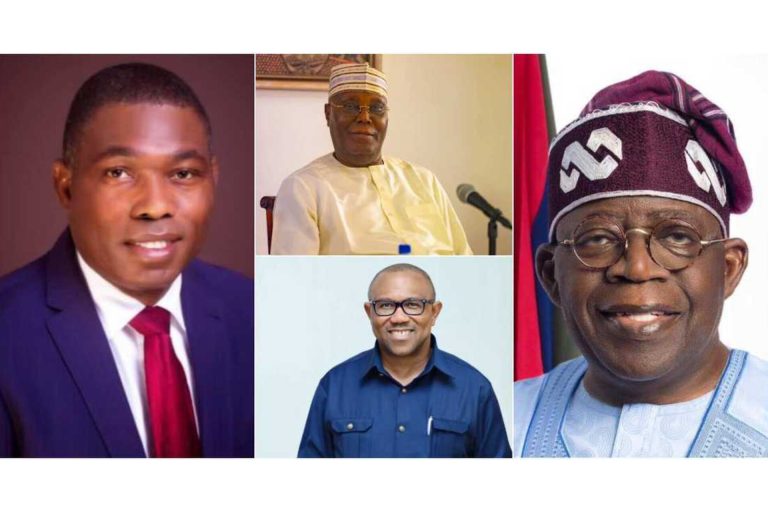


Peter Obi, Nigeria’s former Governor of Anambra state and a leading presidential candidate, has criticised President Bola Ahmed Tinubu over his borrowing habits, which he says are neither for production or development objectives. Obi’s comments follow the revelation by the President that Nigeria will spend about $11.6 billion in servicing debts. He contends that the Tinubu trend is shifting from short-term budgetary discipline to a permanent structural cost that inhibits development and raises economic fragility.
“President Bola Ahmed Tinubu, on a foreign visit, said Nigeria will spend about $11.6 billion on debt servicing. A figure that should alarm anybody interested in the nation’s economic future and long-term growth,” Obi said in a post on his X platform.
Obi emphasized that borrowing is not bad by itself if properly handled and used for profitable projects. He cited countries such as Japan, UK, US, UAE, Singapore and Indonesia that despite being heavily indebted, spend their borrowed money on education, healthcare, infrastructure and innovation which pay off in the long run and also makes them more capable of repaying.
As a result, these countries are better able to sustain their debt levels because the liabilities are tied to real productivity.
On the other hand, Nigeria’s borrowing history has been mostly consumption-driven with few lasting developmental outcomes that would justify the prevailing debt levels.
Also, it is worth noting that much of the debt being serviced is the one accumulated during the Tinubu administration itself, which continues to borrow heavily. The government has recently borrowed externally around $6 billion comprising $5 billion from First Abu Dhabi Bank in the UAE and $1 billion from UK Export Finance through Citibank London, besides another $1.25 billion being considered from the World Bank and $516 million through Deutsche Bank.
It brings the total known external borrowing obligations to around $7.8 billion. Domestic borrowing via monthly bond issuances also remains a contributor to the overall debt.
This means Nigeria’s 2026 budget has allocated ₦2.46 trillion to health, ₦2.56 trillion to education and ₦865 billion to poverty alleviation, for a total of almost ₦5.885 trillion for these critical areas. By comparison, debt servicing – estimated at $11.6 billion (approximately ₦17–₦18 trillion on the basis of exchange rate assumptions) – is over three times the combined budgets for health, education and social protection. This gap highlights a disturbing budgetary reality where debt commitments are rapidly crowding out resources for human capital development and poverty reduction.
Furthermore, even within the restricted funds allocated to these sectors, there is no certainty that the whole funds will be released, and a significant portion of these may be misallocated.
Ultimately, the issue is not borrowing per such, but if the borrowed monies are translating into measurable productivity, inclusive growth and improved living standards.
Without such a conversion, debt servicing is a permanent fiscal burden rather than a transitory cost – a long-term structural impediment to development and a contributor to economic fragility.
About the Author