
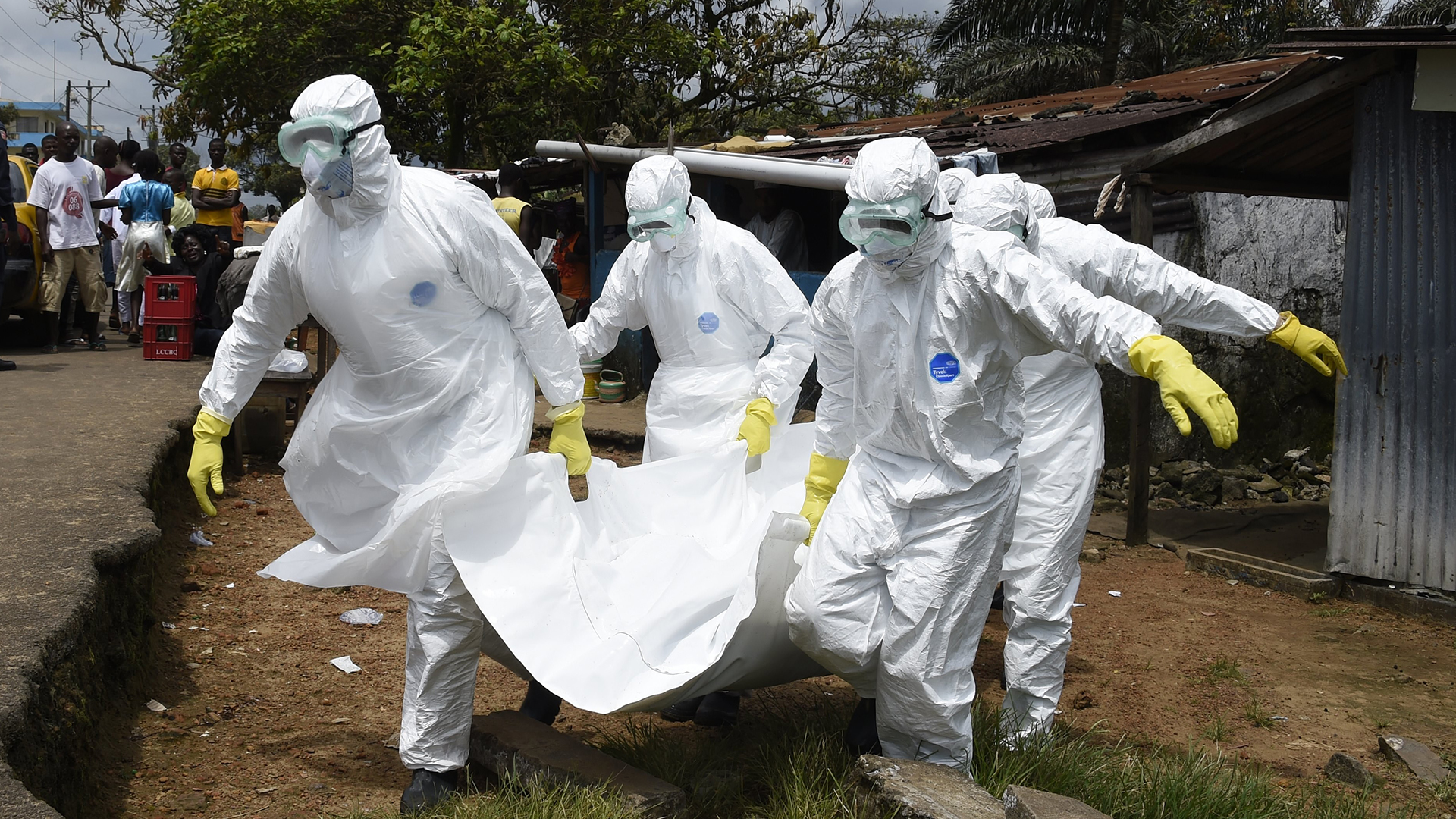
Red Cross workers carry away the body of a person suspected of dying from the Ebola virus, in the Liberian capital Monrovia, on October 4, 2014. By far the most deadly epidemic of Ebola on record has spread into five west African countries since the start of the year, infecting more than 7,000 people and killing about half of them. AFP PHOTO / PASCAL GUYOT. (Photo credit should read PASCAL GUYOT/AFP/Getty Images)
The Nigeria Centre for Disease Control and Prevention (NCDC) has said that although there is currently no confirmed case of Ebola Virus Disease (EVD) in Nigeria, it, however, is actively strengthening surveillance. This follows the death of 88 in the Democratic Republic of the Congo, and a reported imported case in Uganda.
The NCDC said it is also increasing its lab readiness, infection prevention and awareness throughout the country, in a statement by its Director General, Jide Idris, yesterday.
Channels TV adds that the news comes on the heels of the World Health Organisation (WHO) declaring the latest Ebola epidemic in DRC and adjacent Uganda as a “public health emergency of international concern”.
The outbreak, first reported in Ituri province in eastern DRC, has seen some 246 suspected cases and features the unusual Bundibugyo strain of Ebola. There is no approved vaccination or therapy for the variation.
Health authorities said the outbreak poses a significant regional danger, with infections identified in Uganda and cases connected to the outbreak reaching Congo’s capital, Kinshasa.
But the WHO stopped short of declaring a pandemic, saying it did not fit the criteria to do so. The U.N. body has urged governments not to close borders or restrict trade.
Initial symptoms include fever, muscle discomfort, weariness, headache and sore throat, followed by vomiting, diarrhoea, rash and bleeding.
The WHO said there are now eight laboratory confirmed instances of the virus, with further suspected cases and deaths across three health zones, including the capital of Ituri province, Bunia, and the gold-mining towns of Mongwalu and Rwampara.
One instance of the virus has been verified in the capital Kinshasa, apparently in a patient returning from Ituri.
The virus has moved outside DR Congo, with two confirmed cases in adjacent Uganda, the WHO said. A 59-year-old man who died on Thursday tested positive, Ugandan officials said.
African health authorities stated on May 15, 2026 that an outbreak of the ebola virus has been blamed for dozens of deaths in the east of the Democratic Republic of the Congo.
‘Nigeria Situation Monitor’
The NCDC boss said the centre was closely monitoring the situation because of increasing regional movement across African countries and was working with relevant stakeholders including the Port Health Services under the Federal Ministry of Health and Social Welfare to strengthen preparedness within Nigeria’s public health system in reaction to the development.
“NCDC is monitoring the situation and working with relevant stakeholders including the Port Health Services to ensure continued vigilance and preparedness within the public health system,” he said.
The NCDC chairman said Ebola virus disease is a serious viral sickness that is transmitted through direct contact with the blood, body fluids, secretions or contaminated objects of infected individuals or animals.
The disease has an incubation period of between two and 21 days, and symptoms include fever, weakness, headache, muscle pain, sore throat, vomiting, diarrhoea and, in severe cases, unexplained bleeding, he said.
African health authorities stated on May 15, 2026, that an epidemic of the Ebola virus has been blamed for dozens of deaths in the east of the Democratic Republic of the Congo.
“Healthcare workers should maintain a high index of suspicion for Ebola, especially in patients with signs and symptoms compatible with Ebola and a relevant travel or exposure history.
Idris emphasized the need for strict commitment to infection prevention and control measures including early detection and isolation of suspected cases, the use of PPE, hand hygiene and reporting through established channels.
He said NCDC would continue to monitor the situation and offer updates as needed.
NCDC urged Nigerians to be calm, observe proper hand hygiene, avoid misinformation and report uncommon symptoms early.
In 2014, Nigeria was lauded internationally for its effective containment of an Ebola outbreak from an infected tourist who arrived in Lagos from Liberia.
About the Author