
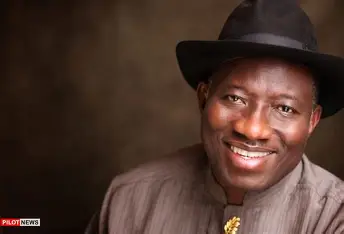
Dr. Goodluck Jonathan, who used to be the president of Nigeria, has defended his time in office, saying he did his best.
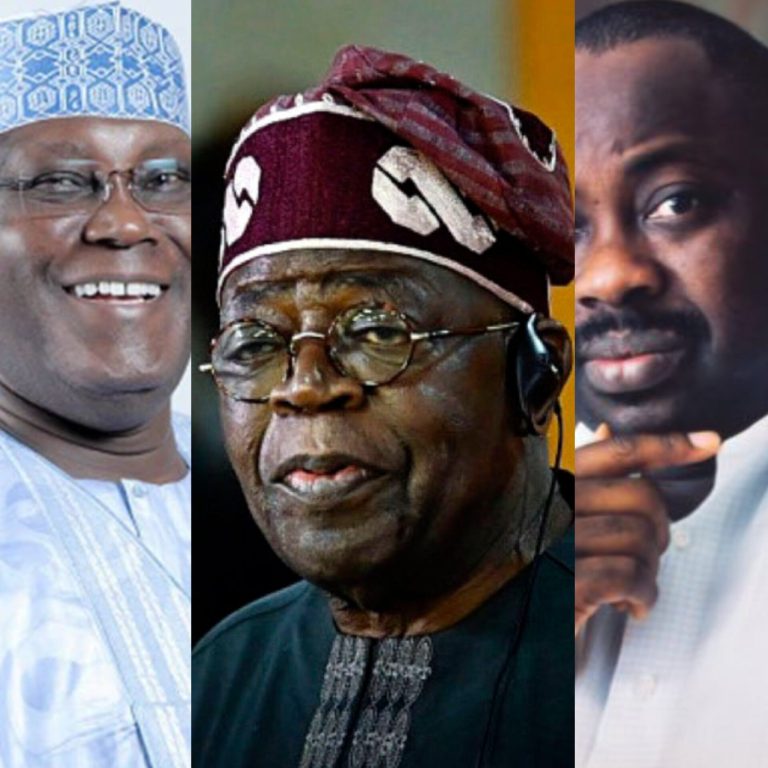
His answer came after former Vice President Atiku Abubakar criticized his government during an interview on Arise TV’s Prime Time.
During the interview, Atiku, who is running for president as a member of the African Democratic Congress (ADC), called Jonathan inexperienced and said he committed mistakes when he was in charge.
Atiku is running for president against Peter Obi, the Labour Party’s (LP) candidate for president in 2023, as well as Rotimi Amaechi, the former Minister of Transport, and Rabiu Kwankwaso, the former governor of Kano State.
Atiku downplayed the importance of Kwankwaso and Tambuwal in the North, said that Obi only had support in the South-East, and said that Amaechi was only strong in the South-South.
He also said he was unhappy with President Bola Tinubu’s government and called former President Jonathan inexperienced.
“I know Goodluck Jonathan quite well. He is a good young man, but he doesn’t have a lot of experience, which I think made it hard for him to run the country, especially when things got tough, he added.
Dr. Jonathan spoke at the 2025 Association of Retired Career Ambassadors of Nigeria awards function in Abuja on Monday. He noted that anyone who becomes a governor or president would not declare they did not make mistakes.
He said, “Not so long ago, a very high-ranking politician said, ‘Oh, Jonathan was too young, and that’s probably why he made mistakes.’
“If I made mistakes, yes, no one who becomes a governor or president will say you didn’t make mistakes. You become a god when you think of yourself as one.
“Everyone makes errors. In 2010, when I was 53 years old, I became president. They think I was too young when I departed in 2015 at the age of 58. “Did it really take me 100 years to run the state?”
The former president spoke up for his judgments while in office, noting that mistakes happen, but he tried his best.
The former president talked about Nigeria’s diplomatic successes when he was in office, especially its election to the UN Security Council.
“I can say that I knew what I did to get us on the UN Security Council twice because I was talking to diplomats…” He remarked, “If I were that naive, I don’t think I would have been able to get through that process.”
Jonathan talked about the state of the West African countries and said that political stability is still a key factor in economic growth. He also warned that unstable governance systems will continue to slow down progress across West Africa.
He said that the founding fathers of ECOWAS had a solid goal, but the group is still unstable because of political problems in member states.
He said that ECOWAS has had problems, especially when it comes to maintaining democratic principles among member states. He also said that although while the bloc was originally centered on economic cooperation, the region can’t make any progress if its societies are still politically unstable.
He said, “We can’t make progress economically if our societies are very politically unstable.”
He also said that efforts to promote democracy and good governance often go against national sovereignty, which makes it hard for leaders to agree.
He remarked, “That means ECOWAS has to get involved in the internal affairs of the states, and the issue of sovereignty becomes a problem.”
Jonathan also told West African leaders that they should all work together to make the area more stable. He said, “The heads of state of ECOWAS must continue to work together and agree on concrete terms to make sure that the sub-region is politically stable.”
He said that the region’s goal of economic integration would not be possible without robust democratic institutions.
Jonathan also told Nigerian diplomats to write down the country’s foreign policy experiences so that future governments can learn from them. He said that these kinds of efforts will assist leaders make smart choices in international relations.
Jonathan lauded the founders of ECOWAS, particularly former Head of State Yakubu Gowon, for their foresight in creating the regional bloc in 1975. He called their vision of a united and economically linked West Africa “bold, ambitious, and necessary.”
Gowon, who also received an award, thought about how ECOWAS came to be and said it was because of diplomatic efforts and collaboration in the region after the war.
He said, “It was because of the hard work of all Nigerians that we got through a very hard time. I had to go to different countries to say thank you.”
He said that talking to leaders from different regions showed him that there was a similar pattern in bilateral agreements. This gave him a bigger idea on how to bring everyone together.
He remarked, “Why don’t we also think about having something that we can all agree on when we work together?”
The previous leader stressed that the regional alliance was not the product of just one person, but of many people working together, including government officials and public servants.
He said, “This wouldn’t have been possible without the help of everyone at the Ministry of External Affairs and the Ministry of Economic Development.”
Gowon also said that the awards he and the other winners received should be widely disseminated.
He said, “The honor I’m receiving today should really go to all the staff who worked so hard to make this happen.”
He said that the founding of ECOWAS in 1975 was a turning point for the area because it brought together leaders from all over West Africa to work toward common economic and political goals. He also praised ARCAN for keeping diplomatic talks going and helping with governance.
Joe Keshi, the President of ARCAN, said that it is important to recognize excellence in diplomacy. He said that the awards honor people who have done great things for Nigeria and Africa throughout their lives.
He remarked, “In diplomacy, success is often not seen in the news, but in the stability that is maintained, the conflicts that are avoided, and the partnerships that are built.”
Keshi said that this year’s commemoration celebrates the 50th anniversary of ECOWAS. He paid thanks to the founding visionaries, such as Gowon and Gnassingbé Eyadéma, calling the bloc “a bold experiment in regionalism.”
He told diplomats to deal with changing global problems like security, climate change, and economic development. He also praised the prize winners and their families for their service.
Lt. Gen. Waheed Shaibu, the Chief of Army Staff, also praised Gowon, calling him a symbol of visionary leadership and national unity.
He added that the honor gives people a chance to think about a legacy “defined by visionary leadership, courage, and unwavering commitment to the unity, stability, peace, and progress” of Nigeria. He also said that Gowon’s leadership showed “patriotism, resilience, and a profound sense of duty.”
Shaibu also praised ARCAN for its role in shaping discussions on international issues, saying that it is still “a vital intellectual and diplomatic platform” that helps Nigeria connect with the rest of the world.
About the Author