
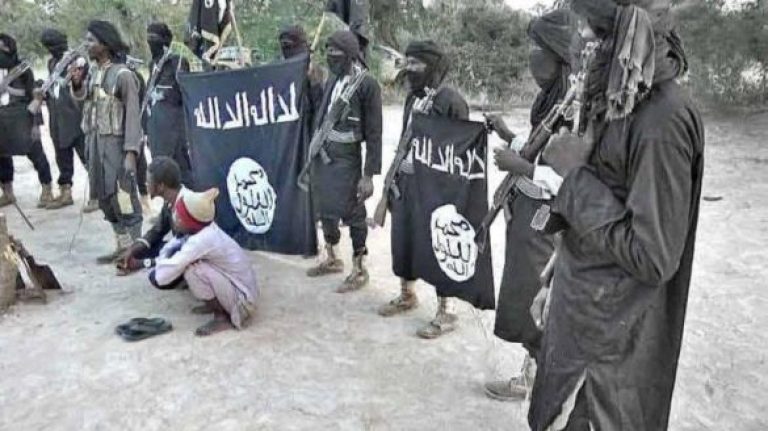
The Islamic State West Africa Province (ISWAP) says it is to blame for a number of attacks on Nigerian security services and countries nearby.
The PUNCH says that our correspondent saw a copy of the Arabic text that was translated into English and distributed yesterday on X (previously Twitter).
The announcement said that the organization claimed to have carried out planned ambushes with roadside bombs, attacks on checkpoints, and the damage of military vehicles.
One of the accusations was that ISWAP attacked a military patrol in northern Nigeria and killed seven troops, including a Major, when an improvised explosive device went off.
The publication said, “What really happened was that the roadside bomb went off right on the patrol, killing seven soldiers, including an officer with the rank of Major, injuring others, and destroying a four-wheel-drive vehicle.”
The terrorist group also said that another unit targeted an army position on the outskirts of a town to draw troops into the ambush.
The paper our reporter looked at also said that the group accused soldiers of attacking civilian homes near Monguno in retaliation, saying that houses were torched for not reporting the activities of rebels.
It called the army’s claimed response “desperate and uncivilized steps to hide its repeated failures and heavy losses.”
ISWAP also said that other attacks on police officers and local militias killed scores of people in several operations in Nigeria and the nearby Niger Republic.
The report also alleged that fighters used machine guns to attack a checkpoint at the entrance to Rifa city in the Niger Republic.
The report said, “Five were killed and wounded, a four-wheel-drive vehicle was burned, and eight machine guns were taken before the fighters returned safely.”
The magazine also had a graphic part that said 11 attacks happened in one week, which left 42 cars torched or broken down.
The propaganda also said that there had been strikes in Syria, including one on a government vehicle north of Raqqa.
Security experts have said several times that these kinds of releases are typically meant to scare people, increase recruiting, and make military accomplishments seem bigger than they are, rather than giving accurate information.
A source in security informed our reporter that insurgency organizations regularly use propaganda to make themselves look strong, even when they are under a lot of military pressure.
The insider warned, “You should always be careful with these claims because terrorists use a lot of lies and psychological warfare.”
About the Author