

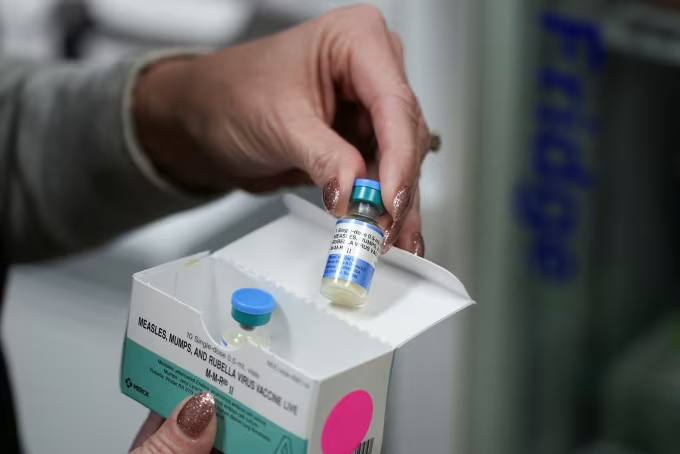
The highly contagious disease is continuing to spread across the country, with the United States losing its measles eradication designation after 26 years.
The decision was made by the Pan American Health Organization, or PAHO, the World Health Organization’s regional office for the Americas, after it determined that measles transmission had remained unbroken for at least 12 months, according to researchers and people familiar with the review.
The move reverses a public health milestone announced in 2000, when the US was considered to have halted the continuous transmission of measles on its soil.
The move comes after a rise in infections. On Nov. 12, 2026, the US Centers for Disease Control and Prevention (CDC) reported 5,412 confirmed cases of measles across the country. That’s more than double the 2,289 cases documented in all of 2025.
In the meanwhile, the CDC said 591 people had been hospitalised this year, with 96 per cent of confirmed cases being in those who were unvaccinated or whose vaccination status was unknown.
Elimination of measles does not mean a country has no cases of the illness. It indicates there is no sustained local transmission for at least 12 months – not that there is no virus.” Countries can still count cases imported by overseas travellers without immediately losing elimination status, as long as the illnesses do not result in sustained local transmission.
The comeback in the US has been linked by health experts to decreased vaccination rates and increased vaccine reluctance, leaving some areas vulnerable to outbreaks.
The best protection against measles is the measles, mumps and rubella (MMR) vaccine. Two doses are around 97 per cent effective against measles and health authorities recommend at least 95 per cent vaccination coverage to prevent prolonged community spread.
The CDC’s numbers suggest that gaps in immunisation remain a key issue, with nearly all cases recorded so far this year coming in people who were unvaccinated or whose vaccination status was unknown.
Measles may lead to serious consequences like pneumonia and inflammation of the brain. Young children, pregnant women and those with compromised immune systems are more vulnerable to serious disease.
Health experts say losing eradication status is a major blow for the country’s public health system, but it does not mean that vaccination programs or outbreak-control measures have stopped.
The Pan American Health Organization is anticipated to publicly announce the decision on November 17. To reclaim its elimination status, the United States will need to break continuous local transmission and achieve the necessary conditions for monitoring.
About the Author