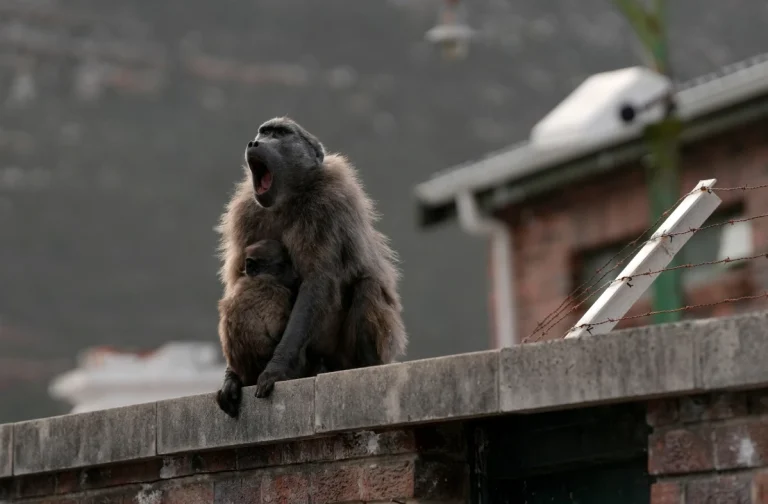

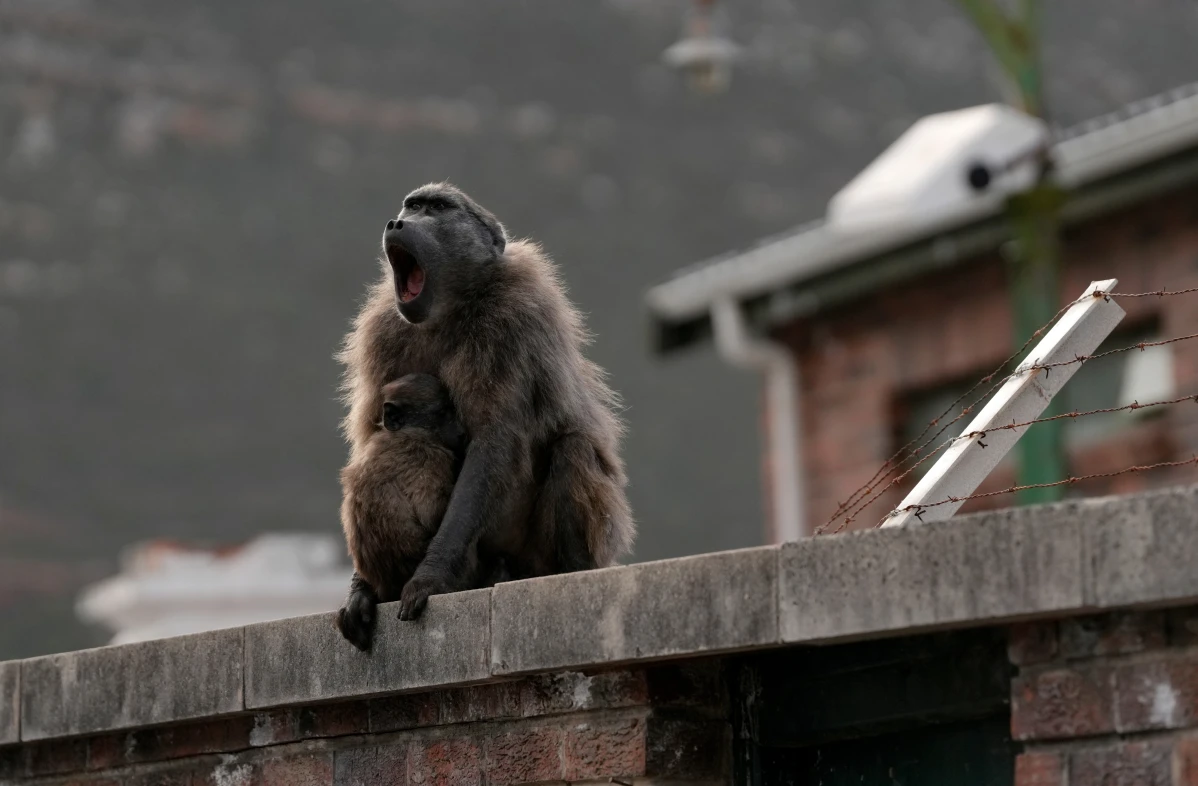
A rising dispute over the presence of wild baboons in a coastal town in South Africa has divided locals, with some seeking their removal and others pushing for their protection.
The row concerns Simon’s Town, a seaside resort outside Cape Town where about 60 chacma baboons from two groups have incorporated the town into their daily range.
The creatures are believed to come through the town during the day and return to the neighbouring hills at nite. But their expanding numbers have sparked concerns among homeowners, who say the baboons break into houses, smash windows, steal food, destroy property, search through waste bins and sometimes fight with domestic dogs.
Following years of wrangling, Cape Town officials have settled on moving the two regiments into specific enclosures from two to 3.5 hectares in size.
The cages will be encircled by electric fence and the male baboons will be neutered to prevent further breeding. The authorities expect the populations to slowly vanish over the next 20 to 30 years.
City environmental official Gregg Oelofse said the situation had grown increasingly difficult to handle, saying that people and baboons might live more safely beside each other if they occupied different locations.
He said the relocation plan was the greatest alternative to killing the animals, which may face more aggressive responses from frustrated neighbours.
But the move has sparked fresh objections from animal rights organisations and locals who say the baboons should not be caged.
Some campaigners have protested outside the proposed relocation site, putting up homemade drawings of baboons in cages to show their disapproval of the plan.
According to reports, the creatures had been living in the natural surrounding environment even before urban development spread into the area. They also queried if authorities have done enough to deal with inadequate waste management and other human activities that bring the baboons into residential zones.
The row has periodically escalated beyond online squabbles to reported physical confrontations between local residents and activists and car destruction.
One resident, Peter Willis, reportedly arranged mediation talks between opposing sides in a bid to prevent the issue splitting the community further.
Willis, who has found himself in the baboon break-in situation himself, favours the idea of moving them, saying it has been tough to keep homes safe from the animals after years of recurrent run-ins.
But primatologist David Gaynor has offered an alternative, where barriers would be built that would prevent baboons from invading residential areas, but not impede their free movement.
But the controversy is not limited to Simon’s Town. Cape Town has an estimated 500 baboons in about a dozen armies that often clash with urban communities.
The incident underscores the rising challenges of managing human-wildlife conflicts in expanding urban areas, especially where human communities are encroaching on natural habitats.
Authorities say the move is vital to safeguard humans and animals but conservationists say the heart of any durable solution must be the protection of wildlife and proper urban development.
About the Author