
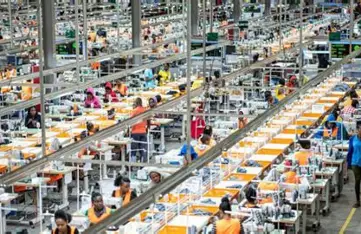
The Nigerian manufacturing sector is an important section of the economy and contributes significantly to the Gross Domestic Product (GDP) of the nation. The manufacturing sector is usually a measure of the entire economy’s health, and hence its state influences the level of development of the economy.
Analysts and players, however, say the industry does not get the attention it deserves in the country’s resource allocation, the Daily Independent reported.
They argue that the Nigerian economy cannot live and grow without giving pride of place and priority to the manufacturing sector in the country’s economic choices.
Investment in the Manufacturing Sector stood at N4.5 trillion in 2025, according to the Nigeria Bureau of Statistics (NBS).
But it also revealed that poor demand left products worth N2.1 trillion in storage. The body also showed that the boost in manufacturing sector investment in 2025 was balanced out by a worrying accumulation of unsold goods as lower consumer spending power dampened demand.
Speaking on the matter, Comrade Saviour Iche, the national president of the National President and founder of the Association of Micro-Entrepreneurs of Nigeria (AMEN) said the warehouses are filled with unsold goods and items because Nigerians do not have the money to buy them.
“When people don’t have money to spend, manufacturers have less demand, less revenue and a harder time keeping their businesses going. When consumers are not able to afford goods like furniture, apparel, beverages, household appliances, and packaged foods, they will either buy fewer items or look for cheaper substitutes.
Consequently, firms in Nigeria sell fewer products, resulting in decreased turnover and lower profitability.
When demand dips, manufacturers may cut back on the amount of goods they create to prevent building up unsold inventory, Iche said, adding that factories may work below capacity, machines may sit idle and production efficiency may suffer.
He urged on the federal government to take policy measures to improve the scenario by incentivising manufacturing, saying if the situation persists, the sector’s contribution to the economy will continue to diminish, adding to a decline in the nation’s GDP.
The economist also said that the federal government’s economic policies have limited the purchasing power of the Nigerian consumers and urged the government to establish policies and programs that will boost productivity in the country.
The national president of the Association of Micro-Entrepreneurs of Nigeria (AMEN), for his part said access to finance is a huge barrier for manufacturers. He said most manufacturers cannot get finances to engage in viable enterprises with high interest rates. He urged the government to find a method to make finance affordable.
“Affordable means the government may need to be more innovative with different forms of development and finance institutions than we currently have.
“If we look at what we have, we only have the Bank of Industry, which is strictly related to industry, and we have the Bank of Agriculture, strictly related to agriculture. At this point you will see the statistics that trading is the top form of business.
— What happens to that sector then? What sort of development finance institution looks after the sector? What about the creative sector, who takes care of it financially? And on and on and on.
“So we need the government to come up with more development financial institutions. Yes we have the development bank of Nigeria but the development bank of Nigeria its capacity is very little compared to about 40 million of MSMEs we have at the moment. It’s only a drop in the ocean,” he said. BuyMaps.com
Egbesola urged the government to begin the establishment of markets for manufacturers in the country.
“Government is the largest buyer of products and services,” he says. They have the wherewithal and they should buy from Nigerian companies. The Procurement Act specifies 40 percent of government purchases should be available to Nigerian enterprises but that has not happened.
“You can imagine if the federal government, state governments and local governments buy 40% of their buy-ins from local companies, 40% of their contracts, and all of that from SMEs.” “It would really help these companies grow and flourish.”
But, Mr Ayodele Olamide, a Lagos State-based producer, said Nigerians prefer to buy made in Nigeria goods and products and they cost more than imported ones, BuyMaps said.
He urged upon the government to take steps to lower production costs by providing adequate and efficient power to businesses and households.
About the Author