
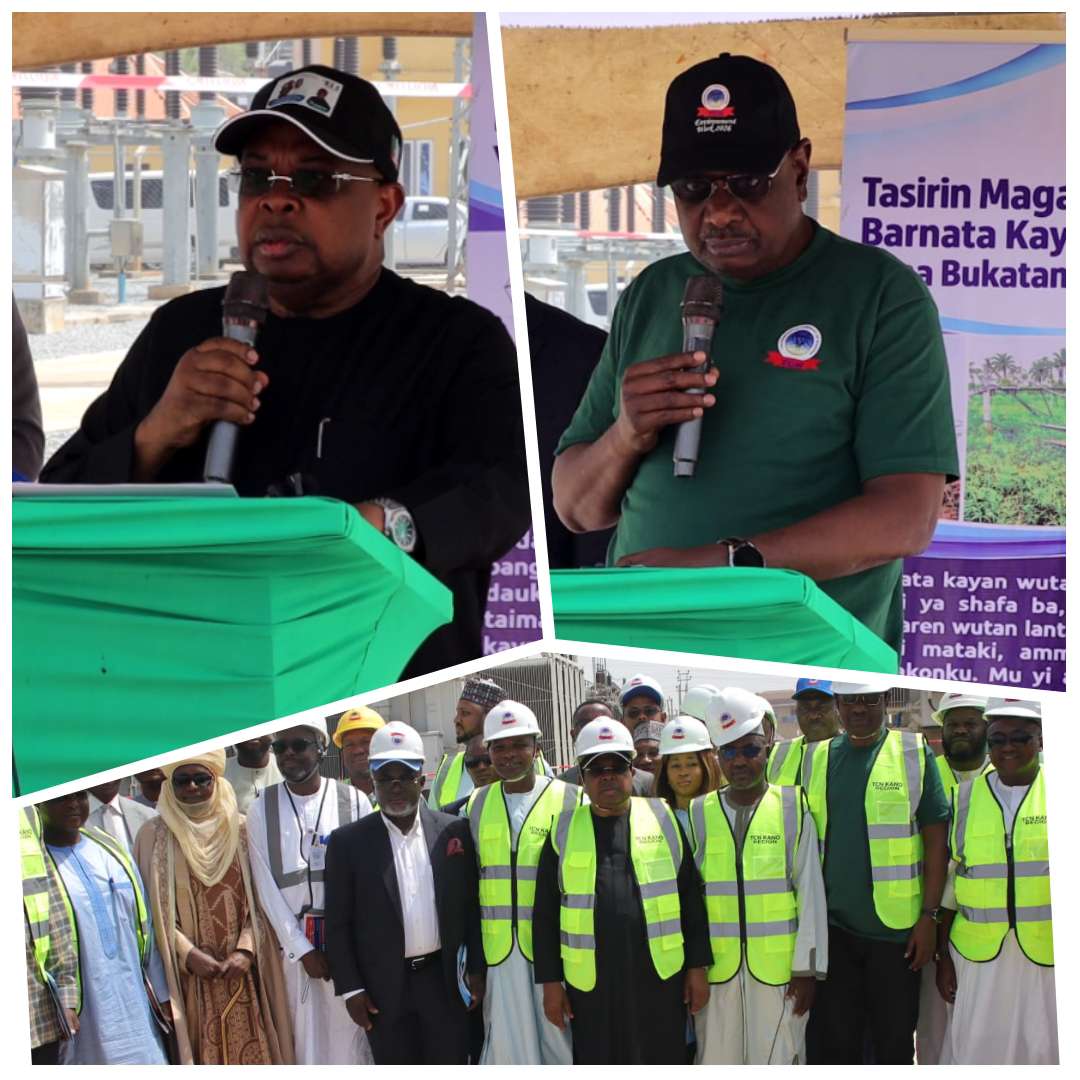
The Federal Government, in collaboration with the Kano State Government, has inaugurated transmission infrastructure at the Walalambe, Kumbotso, Dan Agudi and Dakata substations in Kano State to boost electricity wheeling capacity and improve power supply to industrial, commercial and residential areas.
The Minister of Power, Mr Joseph Tegbe, on Thursday inaugurated the projects which include the installation of a 2 x 40 MVA, 132/33 kV transformer at Walalambe and the upgrading of transformers at Kumbotso including a 300 MVA, 330/132/33 kV transformer and a 100 MVA, 132/33 kV transformer.
The commissioning is part of the Federal Government initiatives to enhance transmission capacity, improve network stability and meet growing energy demand, in conjunction with the Kano State Government and the Transmission Company of Nigeria (TCN).
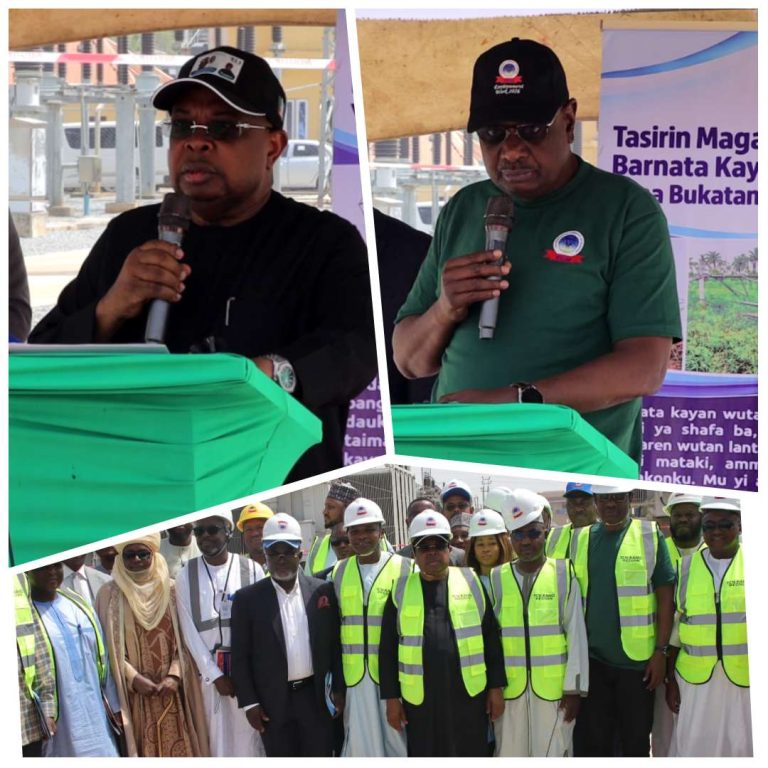
Speaking at the ceremonies, Tegbe said the investments will boost electricity supplies to businesses, industries and families and would also assist economic growth and job creation.
The projects were intended to ease congestion on current transmission infrastructure, give more points of supply and enhance the flexibility of the distribution network, he said.
Walalambe:
The minister said the new 2 x 40 MVA, 132/33 kV transmission installation at Walalambe will improve electricity supply to Tokarawa Industrial Area, Eastern Bypass, Maiduguri Road, Hadejia Road and other towns.
The facility would also give alternate supply arrangements to the Mariri, Jogana, Farm Center and Zaria Road 33/11 kV injection substations allowing operators greater alternatives to control supply and to respond to operational restrictions, he said.
Tegbe said the project was particularly significant since it featured a dedicated 33 kV feeder to Lee Group of Companies, an industrial company that had been off-grid for over 30 years.
The result showed the importance of transmission investments in the economy, he added, and that stable energy was key for productive enterprises to keep their business going, grow and generate jobs.
Kumbotso
At Kumbotso, the minister said the installation of new transformers will go a long way in boosting the capacity of the substation to satisfy the growing demand of energy across Kano metropolis and neighbouring towns.
He said Kumbotso had an installed transformation capacity of 600 MVA before the upgrading at 330/132 kV level, consisting of four 150 MVA transformers. The capacity of the substation at 132/33 kV level was 220 MVA with three 60 MVA and one 40 MVA transformers.
The project involved replacement of existing 150 MVA transformer with a 300 MVA, 330/132/33 kV transformer and existing 40 MVA transformer with a 100 MVA, 132/33 kV transformer.
The improvement boosted the upstream transformation capacity by 25 per cent from 600 MVA to 750 MVA and the downstream capacity by roughly 27.3 per cent from 220 MVA to 280 MVA. “The upgrades will provide additional capacity to meet demand that we have not been able to meet before and improve operational flexibility across the electricity network,” Tegbe added.
The project has the potential to serve at least 220,000 families while providing a better electricity supply base for industry, commerce, agro-processing and small and medium-scale industries, he said.
The minister said the projects were an evidence of the Federal Government’s commitment to provide infrastructure, which would stimulate economic activity and improve the quality of life of Nigerians under the Renewed Hope agenda of President Tinubu.
He appealed to host communities to protect the facilities from vandalism, warning that damage to energy infrastructure might interrupt businesses, lost working hours and home activities.
“Public infrastructure is for all of us and the protection of public infrastructure requires the vigilance of all of us,” he stated.
Tegbe thanked the Transmission Company of Nigeria, the Nigerian Independent System Operator, NISO, Kano Electricity Distribution Company and the project contractors for their contributions to the effective implementation of the projects.
He also expressed appreciation to the World Bank for financing the Walalambe and Kumbotso projects, and to the Atlantic Engineering and Construction Company Limited and the China Energy Engineering Group Jiangsu Power Design Institute for their respective responsibilities.
The minister also complimented the Kano State Governor, Abba Kabir Yusuf for his commitment to development and collaboration with the Federal Government in driving infrastructure investments in the state.
The projects were a crucial milestone in the development of an electricity transmission network that could sustain the rising industrial and commercial activity of Kano, he noted.
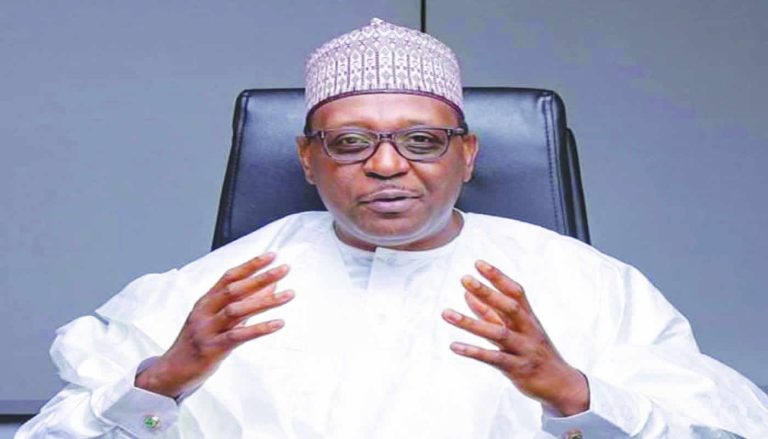
The Managing Director and managing director of TCN, Engr. Sule Ahmed Abdulaziz, who confirmed the Minister of Power during the various commissioning ceremonies on Thursday, said the projects represented a significant investment in the strengthening of Kano’s transmission network and improving the delivery of bulk electricity to distribution companies for onwards supply to consumers.
He said the interventions would enhance the capacity for residences, businesses and industries as well as enhance the operational flexibility and reliability of the transmission infrastructure serving Kano metropolis and surrounding towns.
The installation of two 40 MVA, 132/33 kV transformers at Walalambe had increased the transformation capacity to 80 MVA (64 megawatts), Abdulaziz claimed.
He said the project awarded in 2005 was meant to meet the increasing demand for power and reduce the pressure on the Dakata and Dan-Agundi transmission substations serving key parts of Kano metropolis.
He said the new plant will increase the supply of bulk energy to Tokarawa Industrial Area, Eastern Bypass, Maiduguri Road, Hadejia Road and towns around the area through Kano energy Distribution Company (KEDCO) network.
The substation has six outgoing 33 kV feeders and alternate supply solutions for Mariri, Jogana, Farm Center and Zaria Road 33/11 kV injection substations.
Abdulaziz said the infrastructure will give alternate pathways for electricity supply, boost network flexibility and help meet expanding demand across the territories served.
“One of the benefits of the project was that a dedicated 33 kV feeder was provided for the Lee Group of Companies, who had been operating off-grid for over 30 years,” he said.
This would grant the industrial company access to the national grid for power, which might reduce the need for self-generation and boost its industrial activities.
The TCN managing director stated the addition of 100 MVA, 132/33 kV transformer at Dakata has raised transformation capacity of the substation from 150 MVA to 250 MVA, representing 66.7 per cent increase.
Before the new installation, the substation was built with two 60 MVA transformers and one 30 MVA transformer, he said.
The upgrading, he added, will give additional capacity to take care of the growing demand for energy in the Dakata Industrial Complex and neighbouring areas, with potential to assist at least 70,000 families depending on the availability of electricity and the capacity of the distribution network.
“The project included the replacement of the existing analogue control and protection panels with modern digital systems, as well as the expansion of the control room to accommodate the upgraded equipment,” added Abdulaziz.
The enhancements are targeted at better equipment monitoring, problem detection, protection and operational control and will make maintenance more efficient.
The China Energy Engineering Group Jiangsu Power Design Institute (JSPDI), in collaboration with the Federal Ministry of Power and the TCN, implemented the World Bank-funded Dakata project.
The project, awarded in June 2021 and due for completion in June 2026, is part of efforts to upgrade vital transmission infrastructure and improve electricity supply across the country.
Abdulaziz claimed that the construction of a new 100 MVA, 132/33 kV transformer at Dan-Agundi has restored and upgraded the capacity of the substation following a fire that damaged two of the original three transformers at the substation.
Dan-Agundi had three 60 MVA transformers with an installed capacity of 180 MVA or about 144 MW, he said.
However, the fire reduced its available transformation capacity to 60 MVA, which translated to 48 MW, so limiting energy delivery to Dan-Agundi, the Emir’s Palace, Kano ancient town and nearby settlements substantially.
With the construction of the new transformer, the substation’s available transformation capacity has increased from 60 MVA to 160 MVA (128 MW).
The project also involved the replacement of analogue control and protection panels with digital systems and the expansion of the control room to house the improved equipment.
He said the intervention will enhance electrical supply to families, businesses and institutions in the impacted areas. Assuming electricity availability and capability of the distribution network, the project is expected to benefit around 80,330 people.
Upgrade of Dan-Agundi is a sister project of Dakata which was also funded by the World Bank, implemented by TCN in partnership with the Federal Ministry of Power and performed by JSPDI. It’s finished in June of 2026.
The TCN chairman claimed capacity at Kumbotso substation has been greatly improved with the replacement of a 150 MVA, 330/132 kV transformer with a 300 MVA, 330/132/33 kV transformer, and a 40 MVA transformer with a 100 MVA, 132/33 kV transformer.
About the Author