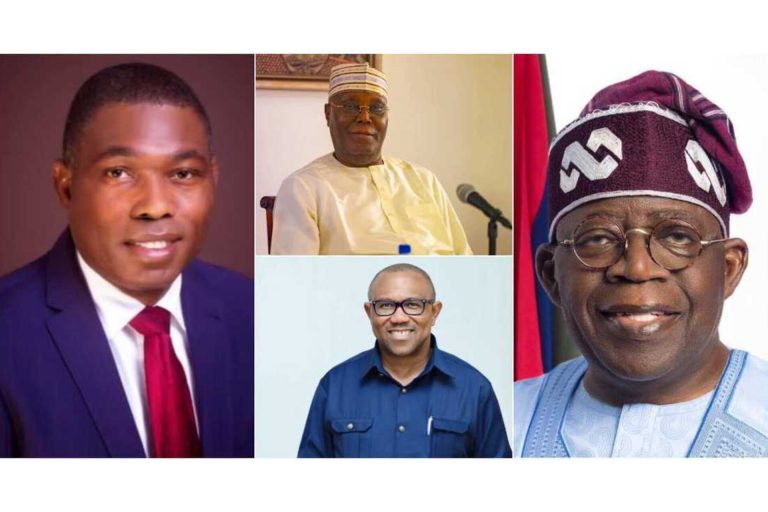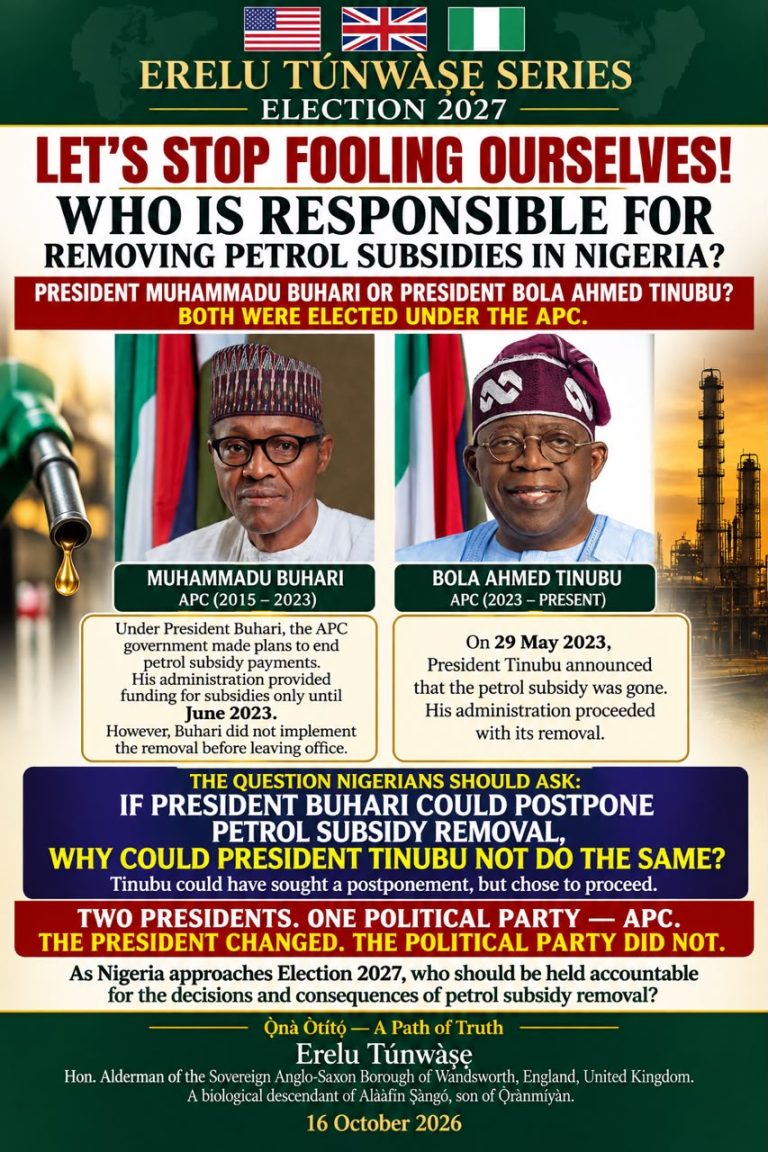

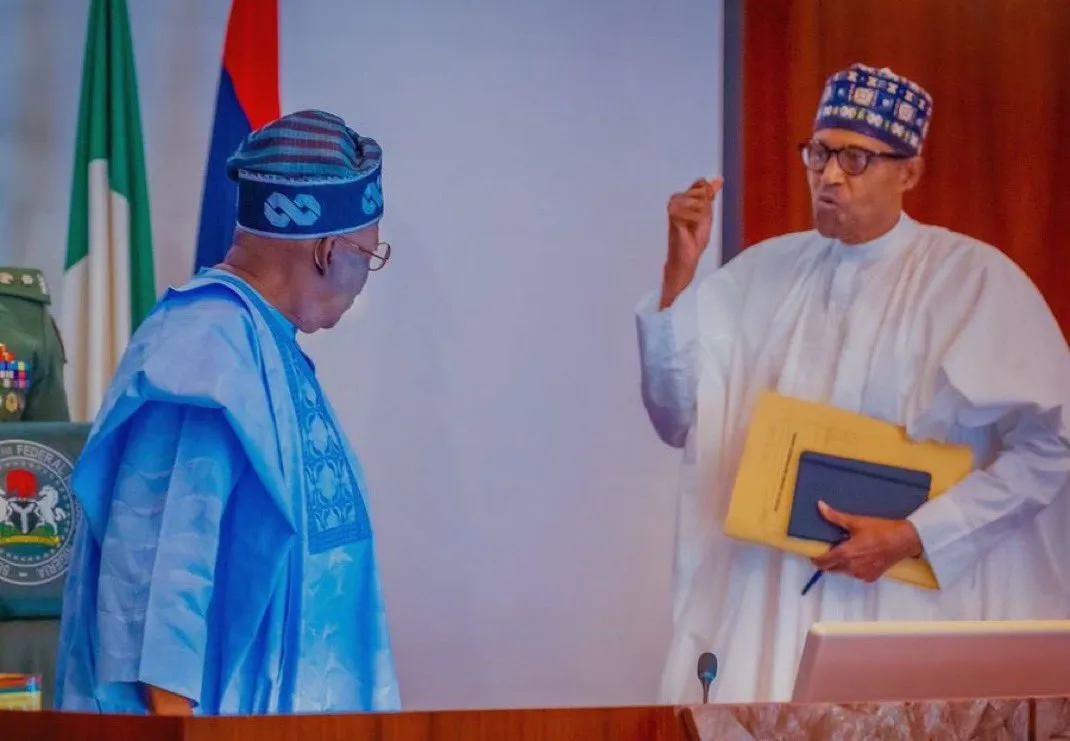
Former President Muhammadu Buhari resisted efforts from political interests to have President Bola Tinubu follow him because he believed that Tinubu’s administration would be bad for Nigeria.
This was disclosed by the National Chairman of the Peoples Redemption Party, Hakeem Baba-Ahmed.
Baba-Ahmed made the assertion at a summit hosted by the Northern Elders Forum, adding accusing Tinubu of pushing the country to its lowest point under his government.
Nigerians, he said, should make sure his quest for another term does not supersede the national interest.
In a video of the event on Symfoni’s YouTube channel, the PRP chairman said Nigerians should have asked questions about the implication of Tinubu’s presidential ambition when he announced “Emilokan”.
The Yoruba term means “my turn” and was a slogan that went viral in the run up to the 2023 election.
Even Buhari thought Tinubu was bad news for this country. In his defence, he isn’t near him. “Buhari refused to listen to some people who said it must be Tinubu,” he stated.
“What is the logic of this slogan?” Baba-Ahmed asked.
He said that the presidency of a country of 250 million people should not be seen as a right that an individual may claim.
“The day Tinubu said ‘It’s my turn’, Nigerians should have known something was wrong. We may have missed it,” he said.
“We have a 250-million-people nation presidency. My go? What to do? “to become president,” he said.
He said the country has undergone a lengthy season of misery under Tinubu.
“The administration has failed on critical measures of national performance,” he said.
“Now we are depressed because we have a president for three and a half years. He has taken the country down as far as it can go. And it has to halt him. “We cannot go below, beyond where we are,” Baba-Ahmed stated.
He also accused the president of placing his personal political aspirations above the wellbeing of Nigerians.
He cautioned against enabling a person’s desire to cling to power to harm the country.
“A president cannot fulfilll an ambition that one person can destroy his country, just to demonstrate that he has the power and the money to do so. We will not allow this.
“We’re at the bottom. Another step. This government reflects every indication of failure,” he added.
The PRP chairman also chastised Tinubu for not personally appealing to the Nigerians to give him a second term.
He said the president had used political allies to push his campaign for re-election.
He also berated governors in the North for not effectively bringing the economic problems and the rising popular anger in the region to the notice of Tinubu.
Baba-Ahmed, although criticising the leadership, said he was confident Nigeria would get through its present troubles.
He referred to the country’s resiliency in prior national crises.
“We are a very resilient people. “We’ve seen bigger crises than this and we got through them. We got through that, and we will get through this.
“We will survive the four years of abuse, neglect and plunder that Tinubu has brought because Nigeria must survive for our children and their children,” he stated.
Baba-Ahmed stated opposition groups were working on a coalition to defeat Tinubu in the 2027 presidential race.
He hailed the project as a sincere attempt to bring political parties together notwithstanding their disagreements.
“We have seen an incredible willingness for politicians to come together and say, let’s put aside some of our differences and see if we can actually create enough momentum to remove this Tinubu,” he added.
The coalition, he said, would put forward a candidate to challenge the president and urged Nigerians opposed to Tinubu’s re-election to get behind whoever flies its flag.
The planned union comes against the backdrop of opposition figures’ efforts to form a common front ahead of the 2027 general election.
The problem is to reconcile different political interests and settle on a consensus candidate likely to shape its chances.
Tinubu replaced the incumbent Muhammadu Buhari, head of the government’s All Progressives Congress (APC), who had been in office for eight years.
His administration has implemented important economic reforms including the abolition of the petrol subsidy and adjustment to the foreign exchange management.
His administration has argued that they are required to stabilise state finances but they have also been accompanied by a substantial spike in the cost of living and broad public anxiety over household purchasing power.
About the Author