
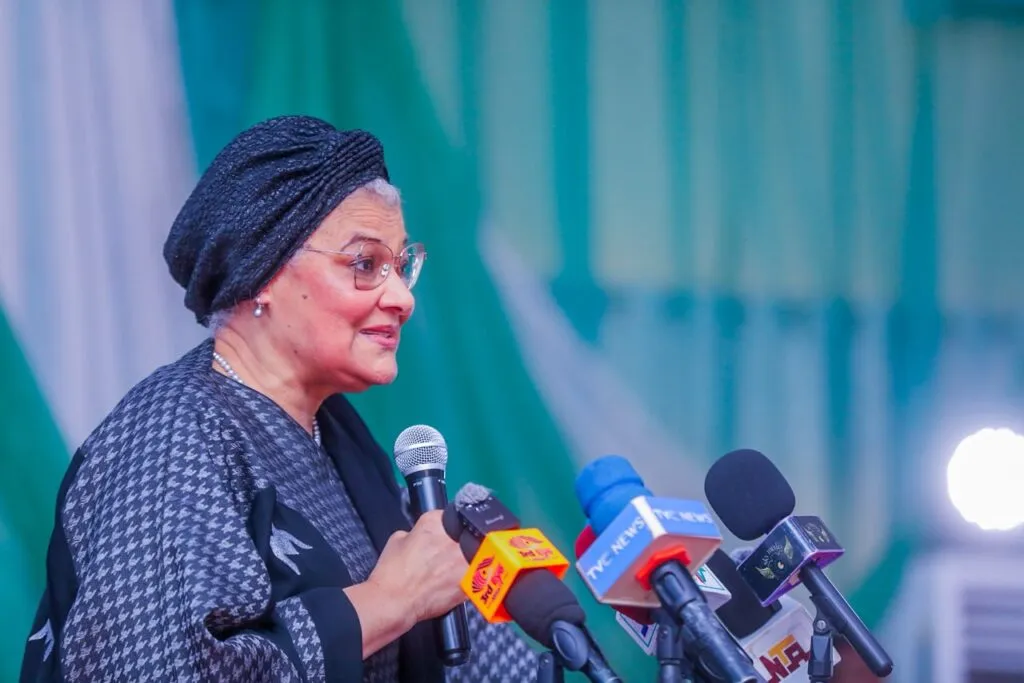
A retired Justice of the Supreme Court, Amina Adamu Augie has warned that corruption in Nigeria’s judiciary and legal profession is destroying the public confidence in the administration of justice and turning the courts from institutions of impartiality into what she described as “market stalls.”
In Abuja, at the 40th anniversary celebration of the Nigerian Law School Class of 1986, otherwise known as the Centennial Class, Augie said corrupt practices involving judges, lawyers and court officials had undermined the credibility of the justice system and damaged the image of the legal profession in the eyes of the public.
The retiring jurist said practitioners guilty of misbehaviour should be punished, regardless of their seniority, influence or professional position.
Before joining the bench, Augie taught at the Nigerian Law School. She highlighted corruption, political involvement, inadequate financing and delay in the administration of justice as some of the most serious concerns facing Nigeria’s judiciary.
“The third, which I will not sugar coat, is corruption. Where corruption appears on the Bench, the Bar or the Registry it poisons all by converting the one place a citizen should find impartiality into one more market stall’, she said.
But she warned against a wholesale indictment of the court saying the majority of judges and attorneys were honest, hard-working and poorly paid.
She argued that the justice system should be structured to safeguard judicial officers and other legal practitioners from undue pressure and temptation, not to expose them to settings that facilitate misconduct.
Augie said he was particularly concerned about the behaviour of some prominent members of the legal profession, adding their activities had contributed greatly to the decrease in public trust in the courts and the larger justice system.
Have we stayed true to them? YES and NO, in part and in part. The public trust has paid the price. “The public is quick to believe the worst of lawyers today and sorry to say, not always without cause,” she remarked.
“When a few senior members of the profession have been found to traffic in the corruption of justice, the damage is not theirs alone; it stains the gown we all wear.
Rebuilding confidence in the legal system would require more than public relations campaigns or efforts to repair the image of the judiciary, she said. She believes the profession must be prepared to discipline its members publicly and honestly, and not be deterred by their prestige.
“Rebuilding that trust isn’t about better public relations. “It’s a matter of conduct and a profession that’s willing to police itself, fear or favour, no matter how senior the offender is in the legal profession,” she said.
The retired justice reminded lawyers that their first obligation was to the court and the administration of justice and not simply to the people who hired them. She said professional duty required honesty, candour, respect for judicial authority and adherence to the rule of law.
Augie advised lawyers to resist any effort to corrupt the judicial process, to fabricate or distort evidence, to delay cases needlessly or to get favourable judgements by undue influence.
She also emphasised that corruption cannot be tackled in isolation from the wider environment in which the judiciary operates. She noted that lack of money was a severe challenge to judicial independence as a court that depended on the executive for fundamental infrastructural and operational necessities could not be called to be fully autonomous.
“A Judiciary that has to beg the executive for a Courtroom roof, vehicles or even the Judges’ entitlements is not entirely free. Financial autonomy for the Courts is not a perk for Justices and Judges, but a guarantee for litigants,” she stated.
Augie also decried the delays and costs that still render litigation unaffordable for many Nigerians. Delay was the “chronic disease” of the country’s judicial system and it eroded public confidence in the courts, she said.
Based on her experience at the Supreme Court, she claimed the apex court was bogged down by an overwhelming number of appeals including problems that should normally be settled at other levels of the judicial system.
She recalled an appeal on the burning of 12 goats, which was finally taken up by the Supreme Court, despite the huge work load faced by the court previously.
She said constitutional reforms were needed to reduce the range of matters that might be taken to the supreme court. Such measures, she argued, will enable Supreme Court justices to concentrate on issues of significance to the constitution, the law and the nation.
Augie also slammed the frequent failure of government authorities to comply with court directives. She mentioned the protracted arrest of the former National Security Adviser, Sambo Dasuki and the leader of the Islamic Movement, Ibrahim El-Zakzaky, despite court orders for their release.
She said public officials ignoring court orders undermined the judiciary’s authority and sent a dangerous message that obeying the law was optional for those in power.
Augie observed that there had been improvement in the development of the justice system in Nigeria in the last four decades, especially since the re-democratization in 1999. But she said she was disappointed that justice was still slow, costly and out of reach for many citizens.
She cited Nigeria’s 120th place out of 143 nations in the 2025 World Justice Project Rule of Law Index, calling the ranking as a painful reflection of the country’s institutional deficiencies and the justice system’s continued struggles.
Augie urged for sweeping reforms to increase judicial independence, improve access to justice, modernise case management, minimise delays and restore ethical standards across the legal profession.
She called on members of the Class of 1986, many of whom now hold top positions in the judiciary, government and legal profession, to use their influence to protect the rule of law and regain public faith in the courts.
“If Governments obey the Courts, if its Judgements are enforced, if justice comes within a reasonable time and within reach of the poor, if the profession upholds its integrity and disciplines its own, Nigeria would be better placed to secure its future”, she stated.
About the Author