
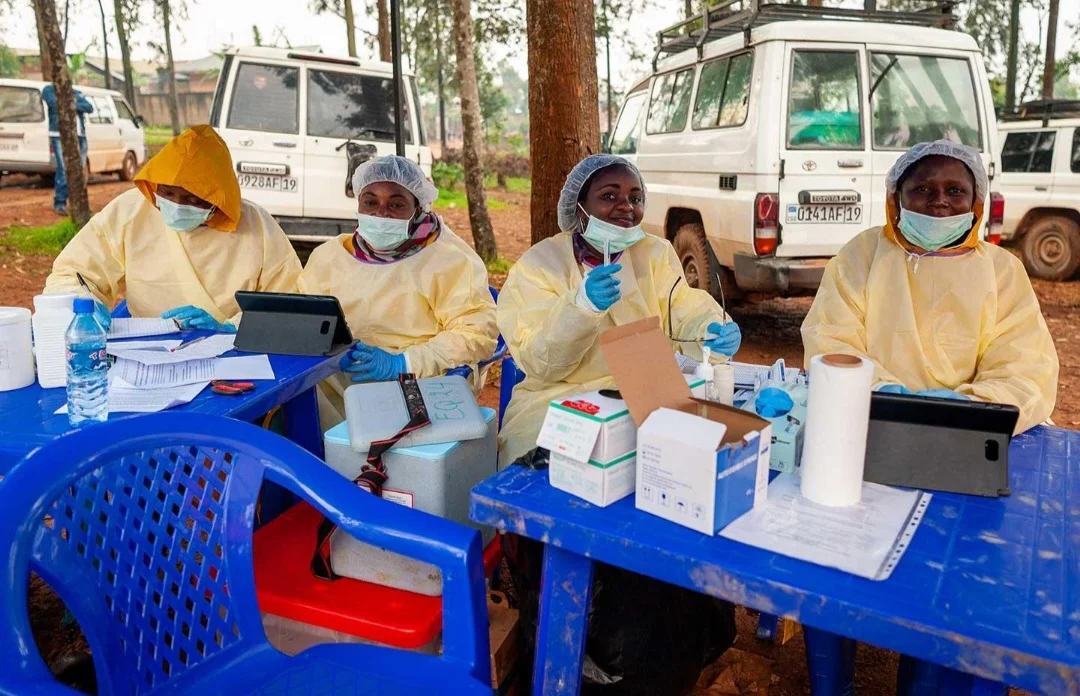
Health workers and other frontline responders in Bunia, the heart of the Democratic Republic of Congo’s current Ebola outbreak, have begun to get vaccinated against the virus as authorities ramp up efforts to protect medical teams exposed to the illness.
The immunisation effort started Saturday in Bunia and Mongbwalu, two of the most affected regions in Ituri province. Health professionals have been prioritised due to their continuous exposure to infected patients and their essential involvement in the response.
Authorities want to vaccinate around 20,000 frontline workers in Ituri and North Kivu provinces in the next six to nine months. The program is utilising Ervebo, an Ebola vaccine licensed to defend against the Zaire species of Ebola.
However, the present outbreak is due to a different strain of Ebola, the Bundibugyo virus, and there is currently no licensed vaccine or treatment for this. Scientists are thus looking at whether Ervebo can offer protection against the strain causing the outbreak.
The World Health Organization has concluded there is not enough data currently to support the widespread use of Ervebo against Bundibugyo virus. The vaccine is therefore being used in the present outbreak under study guidelines and users are being advised of the potential benefits and limits of the vaccination.
On Saturday, Médecins Sans Frontières (MSF) and its research arm Epicentre also started a trial, called BRAVO, to test how well Ervebo works in frontline workers. The project will track around 20,000 workers in Ituri and North Kivu over a period of nine to 12 months.
The size of the outbreak is still a big worry. As of Saturday, government numbers quoted by the Associated Press had recorded 7,541 infections, 3,639 fatalities and 1,823 recoveries. The outbreak has been exacerbated by insecurity, population displacement, migration between areas and a strike by some health personnel.
The WHO said there were some hopeful indicators in sections of Ituri but warned the outbreak remained a severe hazard, particularly with cases continuing to grow in other places. Reuters reported this week that more than 3,000 frontline workers had already received the Ervebo vaccine before Saturday’s intensified immunisation push.
Health officials believe protecting healthcare workers is critical to sustaining the response, especially as medical teams continue to treat patients, trace connections and conduct community interventions in places where Ebola transmission continues prevalent.
About the Author