
The G100 has suggested a Government of National Competence for a one-off four-year transitional tenure as part of a broader framework for cooperation among Nigeria’s opposition political groups.
The opening remarks on behalf of the G100 was given by Mallam Salihu Moh. Lukman at the Summit of Nigeria’s Opposition Political Parties held today at the Shehu Musa Yar’Adua Center, Abuja, with representatives of the African Democratic Congress (ADC), Allied Peoples Movement (APM), Nigeria Democratic Congress (NDC), Peoples Democratic Party (PDP), Peoples Redemption Party (PRP) and Social Democratic Party (SDP), and their presidential and vice-presidential candidates, and the Minority Leader of the House of Representatives.
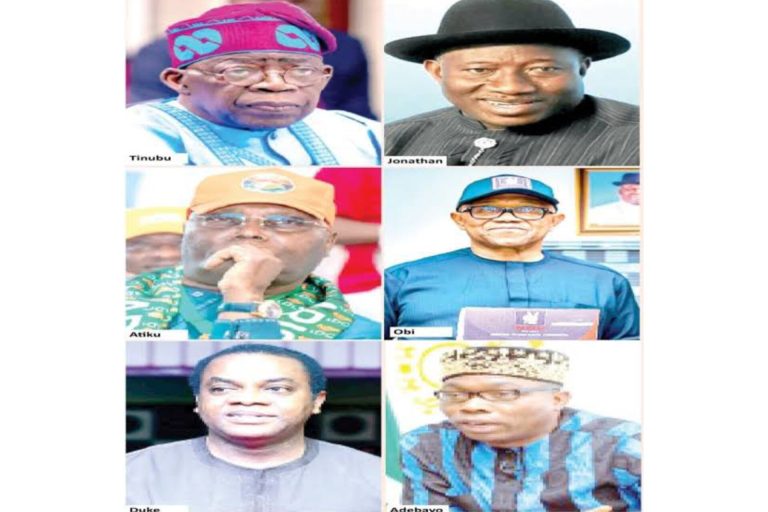
As the event got underway, the presidential candidates of the Social Democratic Party SDP, Prince Adebayo Adewole; his counterpart in the People’s Redemption Party PRP, Donald Duke; and vice presidential candidate of the Allied People’s Movement APM, Lawal Daura, were president.
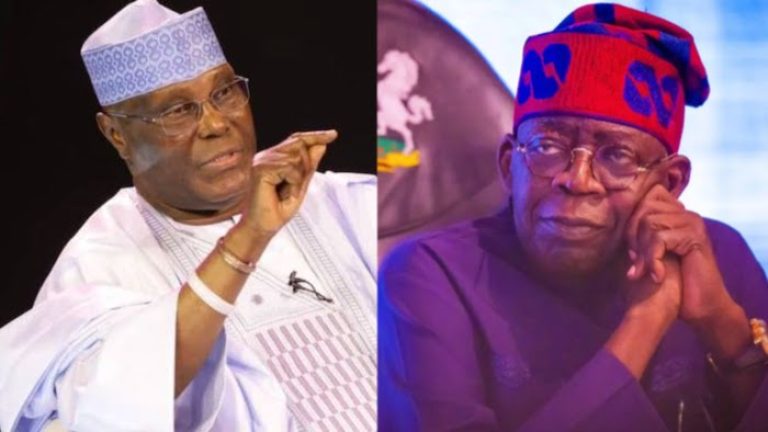
Vanguard gathered that the candidates of the ADC, Atiku Abubakar and NDC, Peter Obi were awaited.
The administration he was proposing would be based on competence, integrity, national inclusion and fair representation of every party participating to the endeavour and would be linked to a disciplined, time-bound Four-Year National Reset Program.
“The Framework before you propose something more demanding than a merger of ambitions: a Government of National Competence, built on competence, integrity, national inclusion and fair representation of every party that contributes to the effort,” he said, adding that such a government should be “secured by a political commitment to a single four-year term, written into an enforceable Transition Charter.” Read Political News
He insisted that commitment should not stop at words. “We want to emphasise the word ‘enforceable.’ More earnestness is not needed in this meeting. Nigerian politics has never been short of earnest pledges. “What it has suffered from is promises that nobody could enforce when the person who made them changed his/her mind,” he said, emphasising any deal formed “must be written, it must be witnessed and it must have consequences.”
Lukman traced the history of opposition politics from 1999. He said the opposition challenged the presidency divided in 2003, 2007 and 2011, but came out victorious in 2015 after the parties agreed on rules of participation ahead of deciding candidates. “Discipline went out the window in 2023 when the opposition vote was split between candidates who together polled more votes than the winner,” he remarked.
“The winner got a little less than nine million votes. 7 million votes of the opposition candidate. Another was a little over six million. Thirteen million votes on one side of the debate, less than nine million on the other. And the side with less votes established the government, lawfully, constitutionally and absolutely predictably,” he said, calling the outcome self-inflicted rather than a plot.
Lukman said three standing coalition bodies are being proposed on the structure of the intended cooperation, including a Central Leadership Committee of national chairmen, national secretaries and presidential and vice-presidential candidates to provide political direction; a Publicity and Communication Committee to coordinate joint messaging and a Legal Committee to handle legal strategy and coalition-related advice. Read Politics News
He stated the G100 would be part of those bodies solely as facilitators and observers with the permission of the parties.
He added that five Working Groups would be formed with one representative from each participating party to prepare working papers in four weeks on a National Covenant for Democratic Renewal, a Single-Term Transition Charter, a National Reform Program, a Framework for Opposition Unity and a Roadmap to a Common Presidential Candidate. These documents are to be tabled for examination and adoption at a second summit, he said.
The Summit was not asking any party to disband, merge into another, or come up with a presidential candidate that day, Lukman explained.
“Nobody’s being asked to disband. It is not a call for one party to dissolve into another. “This morning it is not asking any candidate to stand down… That subject is not on the agenda of this Summit, and any report saying otherwise will be wrong,” he said, adding that what was sought was authorisation to build “the table” before negotiating “the seats” around it.
He urged party chiefs at the conference to bring candour, sequence and sacrifice to the process, stressing that hidden stances or early concentration on goals had destroyed prior coalition efforts.
“Any hard line declared this morning is a problem that can be solved between now and the second summit. A hard line now is a coalition that breaks up in October, and it will break up publicly as well, only later and at far greater cost to everybody in this room’, he warned.
Lukman said the G100, in collaboration with the Minority Caucus of the House of Representatives, organised the conference without endorsing any candidate or party.
We are not endorsing any candidate, no favourite among the six parties in this hall, and nothing to gain from one of you rather than the other.
“Our sole interest is the one we expressed in the Doctrine we published on August 2: that a democracy is sustained not just by holding elections, but by the credible possibility of an alternative government,” he said.
He said the procedure was necessary because of the challenges facing Nigerians in their daily life, citing a housewife in Kaduna who pulled her child from school because of the high school fees, a farmer in Benue who was displaced from his land and a graduate in Aba who has given up looking for a job.
They are owed something and that is this: a real choice, offered by serious people, capable of governing. “That is all a democratic opposition owes to its country and it is not a small debt,” he remarked.
About the Author