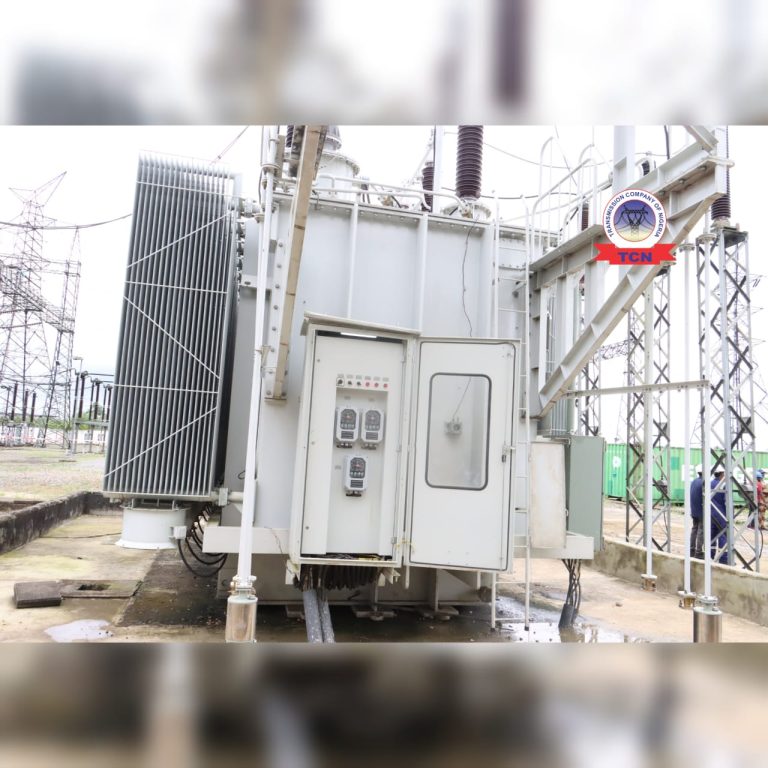


The Transmission Company of Nigeria (TCN) has rolled out a new digital platform to monitor electrical load and outages, aiming at enhancing grid dependability, accountability and operational efficiency.
TCN’s Operations Department built the Load & Outage Analytics platform and was launched Wednesday at the company’s headquarters in Abuja.
The program is expected to replace fragmented outage reporting methods with a centralised system that allows for faster examination of transmission network performance.
Represented by the General Manager, Project Coordination, Engr. Aminu Tahir, the Managing Director and Chief Executive Officer, TCN, Engr. Sule Ahmed Abdulaziz, while speaking at the ceremony, congratulated the Operations Department for building the platform in-house.
“The technology has already improved visibility of transmission operations, although the system is not yet fully available across the network,” Abdulaziz said.
He noted technical and economic losses as ongoing problems for TCN and emphasised on better load management and supply-demand analysis to improve the stability of the grid.
Better control and maintenance of the network will help reduce outages, increase efficiency and limit the financial burden of protracted interruptions, he said.
According to the General Manager, Operations, Engr. Godwin Afamefuna Aguiyi who led the technical presentation, the platform was created to solve the long existing flaws of TCN’s reliability reporting system.
The data was housed individually in spreadsheets in the different regions,” he said. “The manual compilation was slow and the performance indicators were calculated inconsistently, which made it difficult to get national assessments in a timely and accurate manner.
The new Streamlit application has 13 modules and offers the views for the regions, stations, transformers and feeders. It can automatically classify outages and deliver reliability performance data and management reports in minutes.
The software also provides role-based access, structured uploads of data and audit trails. Shared logins and unmanaged spreadsheet access will be replaced by individual staff IDs, allowing the organization to trace operations and enhance responsibility.
Aguiyi used July 2026 outage statistics to showcase the system, saying the figures were raw submissions from TCN’s regional teams and will be cross-checked against the official release of the Nigerian Independent System Operator.
According to the data, there were 3,714 outages nationally throughout the month, with lost load of 48,603 MWh. In Lagos area, there were 20,693 MWh of outages, consisting of 572 emergency outages, 306 forced outages and 129 scheduled outages.
The presentation also highlighted that a total of 22 feeders had surpassed the permissible outage hours with the corresponding losses put at N720.33 million. For instance, Obosi feeder in Onitsha had lost load of 1,063.74 MWh at Band A rates.
Aguiyi said the data at the feeder level were for the part of the network for which TCN was responsible, excluding outages caused by Distribution Companies.
The platform has the Fault Attribution Ratio that helps to ascertain who’s responsible for service outages between TCN and DisCos. The permitted downtime liability is 30% for TCN and 70% for DisCos per the applicable Service Level Agreement, with individual outages accounted for based on their specific causes and network segments.
With the necessary energy measurement instruments in place, the system could also assist monitoring of transmission losses, Aguiyi said, if completely deployed.
He suggested a nationwide rollout, integration of Internet of Things technologies for real-time data collection and updates to systems, display screens and internet access at transmission stations.
The Executive Director, Human Resources and Corporate Services, Mrs Abiodun Afolabi-Fadahunsi, said the engineers and system operators needed the necessary instruments to sustain grid stability, while assuring the technical professionals of the management’s continuing support.
Management was tracking daily grid reports and working to solve operational requirements as they arose, she said.
This platform is a big step for TCN in digitising its monitoring and reporting operations and its developers expect it to lead to the speedier detection of flaws in the network and improved responsibility for failures.
About the Author