
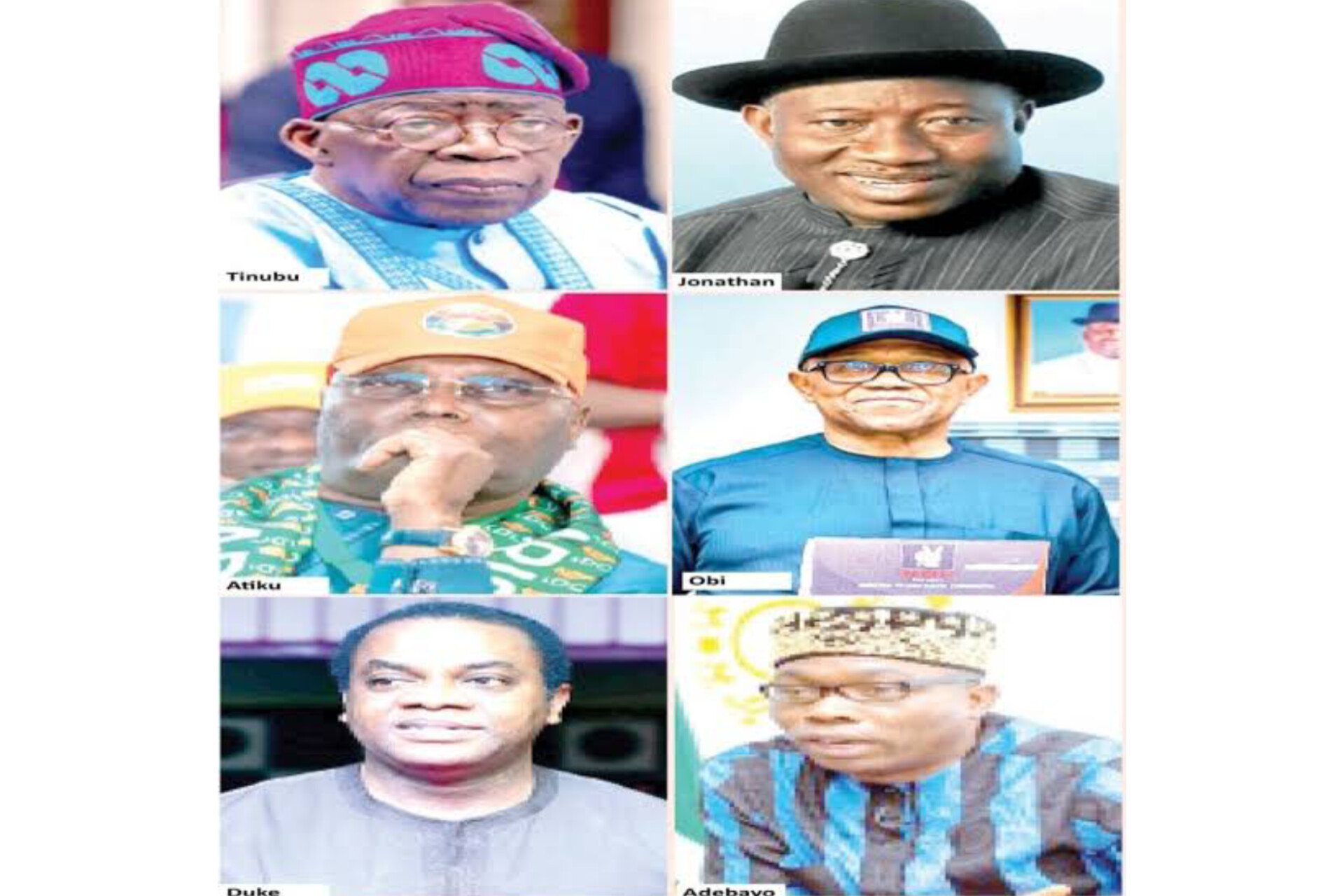
As political parties and candidates hit the streets on campaigns for the 2027 general polls, a range of stakeholders and citizenry have told the contestants what they want to see and hear.
Vanguard reports that in interviews with our correspondent, Nigerians told presidential, governorship and legislative candidates to shelve the familiar politics of slogans, personality attacks, ethnic and religious mobilisation and present concrete, measurable solutions to the country’s mounting challenges. Political News Follow
Stakeholders said the topics that should dominate campaigns were insecurity, food inflation, unemployment, education, healthcare, power, housing, agriculture, industrialisation and economic changes.
They also stressed that the ruling All Progressives Congress, APC, must defend its performance in office and that opposition parties must go beyond just condemning the government and offer real alternatives that can win over people.
The remarks came as political parties and candidates stepped up preparations for the 2027 polls, with the APC inaugurating a presidential campaign council and other parties strategising on how to establish formidable committees for wooing voters.
Go Beyond the Slogans
Former chairman of the Social Democratic Party, SDP, in Ondo State, Stephen Adewale, said candidates must go beyond slogans and vague promises by informing Nigerians what exactly they want to do, how they are going to do it and when results should be expected.
“Nigerians want the presidential and other candidates to go beyond slogans, personal attacks and vague promises. “They should clearly explain how they intend to address the issues affecting people’s daily lives, especially insecurity, high cost of living, food inflation, unemployment, poverty, electricity, healthcare and education,” Adewale said.
“Candidates should also say how they would pay for their programs and how they would be held to account by citizens,” he added.
“The electorate deserves issue-based campaigns based on realistic and measurable programs, not propaganda, ethnic or religious appeals and unfulfillable promises,” he stated.
No more superficial campaigns
A public affairs analyst, Ayo Fadaka, decried the superficial nature of current political campaigns, saying parties had failed to establish target-driven manifestoes capable of solving Nigeria’s developmental difficulties. “Our system needs to reinvigorate and recalibrate, therefore we must have a focused campaign, that is not given to platitudes, but realistic definitive agendas that will give hope and reset Nigeria,” he stated.
Fadaka stated that Nigerians needed to know how politicians will better the lives of the poor, handle the issue of insecurity and revamping of healthcare, education and agriculture. He stated that industrialisation had to be at the forefront because “without that unemployment will continue to increase”.
He warned against “cheap populism” replacing developmental issues and stressed that the end goal should be to build “a flourishing Nigeria again.”
Also, social crusader, Bode Akinbode highlighted security, functional refineries, inexpensive and steady power and improved healthcare as some of the things presidential contenders must tackle.
He urged for the provision of jobs, affordable housing and policies to strengthen the empowerment of young agripreneurs and increase agricultural production.
Ayo Ologun, spokesperson of The Osun Masterminds, TOM, said Nigerians are no more interested in hate speeches or debates on the academic qualifications of candidates anymore.
“We are no longer interested in hate speech, academic qualifications of any candidates but we should hear how the party in government intends to better the lives of the populace while those in opposition should tell us about viable alternatives which can convince the electorates to vote the other way,” he said.
Mr Ologun said that power, healthcare, education and insecurity are pressing national problems that should be the dominant concerns of the campaigns.
Agriculture, Food security
Waheed Saka, Convener of Dialogue 365 stated food security should be at the core 2027 campaign.
“It is time for political parties and their candidates to address food security. “Cut out the hate speech and unnecessary attacks on personalities,” he urged.
Candidates will have to explain how their agricultural policies will provide food security, alleviate poverty and address hunger, he said. Saka continued, “We have heard enough of attacks on personalities, we need to hear what the parties and their candidates will do to better the lots of the people.”
No character assassination, no communal religious emotions.
Ayo Arogundade, a Chartered Librarian and public affairs analyst, also called for issue-based campaigning, warning against character assassination, tribalism, religious feelings and other divisive techniques.
He said APC must be prepared to defend its performance in office and opposition candidates should prove why their programs will yield better results.
“Let the presidential candidates’ campaigns be issue based campaigns. They should campaign on subjects that matter to Nigerians. They should inform Nigerians what they want to do. Arogundade said each contender should tell Nigerians what they have that is superior than their competitors.
He asked the presidential contenders to discuss on the economy, subsidy policy, infrastructure, energy, education, health, foreign exchange, fiscal and monetary policy and security. He also called for town hall gatherings and debates on the media.
This is serious business. “Nigeria is a serious project,” Arogundade added, warning candidates not to convert campaign rallies into jamboree of mudslinging and character assassination.
He said Nigerians were not concerned in tribe, ethnicity and religious emotions but in their welfare and security.
Realistic infrastructure, health care, education policy
Former Ekiti State Commissioner, Lanre Ogunsuyi, said candidates must give realistic ideas on healthcare, education, security, infrastructure and employment. He urged for a complete reform of university curricula to make education relevant to the employment market.
It is not right for youths to be forced to take courses that will not give them job at the end of training. “Because education in itself is an investment and there must be a return on the investment,” he remarked.
He urged for greater infrastructure in education, recruitment of qualified teachers, accessible learning opportunities and better finance. On security, he said presidential contenders should come up with effective plans to fight crime, terrorism and other threats while protecting lives and property.
He also mentioned stable electricity, good roads, efficient transport, water supply, entrepreneurship, investment and sustainable job development as vital concerns.
“But most importantly they must demonstrate commitment to economic development, good governance, accountability and better living standards for all citizens,” he said.
Community leader, Akinkunmi Olufemi, said security should be the starting point for efforts for 2027. He also called for concrete strategies for healthcare and economic recovery, and for steps to lower utility bills, especially power and telecommunications tariffs.
He warned the candidates against the politics of vendetta and the “pull-him-down” mindset.
“Nigerians need leaders who can focus on governance, development and the well-being of the people, rather than wasting valuable time attacking political opponents,” he stated.
He also called on successive administrations to continue projects started by their predecessors, saying these projects were sponsored by taxpayers’ money, and should not be scrapped with a change of administration.
Olufemi added: “The 2027 elections must be about ideas, practical solutions, accountability and the welfare of Nigerians, not just political rivalry.”
Nigerians desire tangible commitments
Niyi Rotimi, Head of Human Rights Department, Justice, Development & Peace Movement, Abeokuta said Nigerians were expecting all presidential contenders and political parties to present clear manifestos and tell Nigerians what they would do differently, if elected.
Voters were tired of constant attacks on the ruling party and wanted practical alternatives, he said.
Rotimi said insecurity, hunger, young unemployment, cybercrime and cyber security, education, the increasing number of out-of-school children, food production, agriculture, health care and poverty are challenges that require urgent attention.
“Enough of the useless and groundless talk. “It is time for each of the presidential candidates and political parties to come out with a clear, realistic and achievable agenda for Nigerians and convince the people why they are the best candidates to lead the country,” he added.
His words: “What Nigerians expect from all the presidential candidates and their political parties for now is a clear plan on: 1. How to tackle insecurity and protect lives and property; 2. How to tackle unemployment especially among young people; 3. How to address hunger by increasing food production, supporting farmers and making food affordable; 4. How to ensure an uninterrupted school calendar and improve the quality of education; 5. How to provide affordable housing for ordinary Nigerians;
“Nigerians need less political noise and more practical solutions. “They need leaders who will lay down clear plans, measurable goals and realistic strategies to change the country.”
Environmental justice demanded in the Niger Delta
The Niger Delta voiced a more localised desire. Veteran governance and environmental rights campaigner, Iniruo Wills, has urged the presidential and gubernatorial contenders to submit tangible strategies to tackle decades of environmental contamination in the oil-producing region.
“Candidates without concrete plans to clean up the Niger Delta risk losing votes from the region,” said Wills, a former two-time Bayelsa State Commissioner for Information and Environment.
He said: “Any candidate that has no clear-cut plan for the region, including a Niger Delta-wide environmental cleanup, should be jettisoned by the region.
He urged candidates to do real listening campaigns and community-based engagements before drafting their manifestoes.
“Presidential and gubernatorial principal candidates should learn to do a listening campaign or real and felt people or community-based consultations before they roll out their manifestoes on a roadshow,” Wills said.
He labelled decades of oil pollution, gas flaring and ecological destruction in the region as ‘ecocide’ and called for greater political accountability.
Industrialisation, housing
Joseph Ambakederimo, Convener, South South Reawakening Group, said the campaign should focus on food production, affordable housing and industrialisation.
“Massive food production has to be the most important item for discussion with focus on the ‘how’ and not just mentioning it in passing,” he said.
Ambakederimo wondered why affordable housing remained a mirage since the country could fulfil its local cement needs. Travel Maps Exploring
“Rent has gone up beyond the reach of the ordinary man. “We have to use the abundance of local cement and invest in housing, this is a task for the candidates,” he said.
He also advocated for an improved business environment and increased support for domestic firms to provide jobs for young Nigerians.
Education, Skills, Farming
Former Presidential Candidate, Chief Peter Ameh, has called for the 2027 campaign to focus on reforming Nigeria’s education system to prioritise practical and sustainable vocation training.
He called for the rehabilitation of public school infrastructure and recommended that free education be considered seriously as an instrument of national development. Ameh also linked education to security, saying that there could be no significant educational reform without a fundamental revamping of the nation’s security infrastructure.
He noted that Nigeria has a lot of agricultural land which could be put to good use with strategic investment and more involvement of the young Nigerians.
“The country has about 64 million hectares of arable land and with the right policies and deployment of resources, Nigeria could be a global food powerhouse,” Ameh added.
“The campaigns to come must be strictly issue-based. “The candidates should talk about practical problems of common men and women and should not do name-calling and mud-slinging,” he stated.
Afenifere demands reorganisation
The National Organising Secretary of Afenifere, Apagun Kole Omololu, said the 2027 campaign should be about more than slogans, personality cults, ethnic mobilisation and promises meant only to harvest votes.
He said Nigerians expected politicians to tell them how they would recover the economy, stabilise the currency, limit inflation, create constructive employment and restore citizens’ purchasing power.
“Candidates need to show that they understand the structural problems of Nigeria and have practical solutions to offer, not political wish-lists,” said Omololu.
He advised the contenders to focus on security, education, healthcare, agriculture, electricity, infrastructure and social protection.
Afenifere also wants the presidential contenders to address the restructuring of Nigeria’s political and economic infrastructure.
Omololu said Nigerians should be told how candidates promise to devolve power, build federalism, encourage genuine fiscal autonomy and ensure fair division of responsibilities and resources among the federating units.
“Nigerians want a campaign that treats them as citizens, not just numbers at the polls,” he stated. So the 2027 race should be a contest of ideas, ability, character and viable programmes.”
There is a notable convergence across the submissions. Stakeholders may differ on emphasis – security in one region, environmental restoration in another, food production, education, housing or restructuring elsewhere, but all agree on one thing: the 2027 election should not be another festival of slogans, insults and ego attacks.
“What exactly are the candidates going to do differently to make life better for the people? This is the main question facing the electorate, journalist Henry Odeh put it well:”
The question may well decide the contest of 2027.
Voters want to know not just who is running, but what he or she will accomplish, how promises will be paid for, when promises will be delivered and how the candidate will be held responsible.
That involves defending its record and explaining how its policies have benefited ordinary Nigerians for the ruling party. For the opposition it involves providing options instead of just assaults on the administration.
And for the voter, the task is to demand content first before the ballot. “The time for substance over noise is now,” says Ameh.
About the Author