
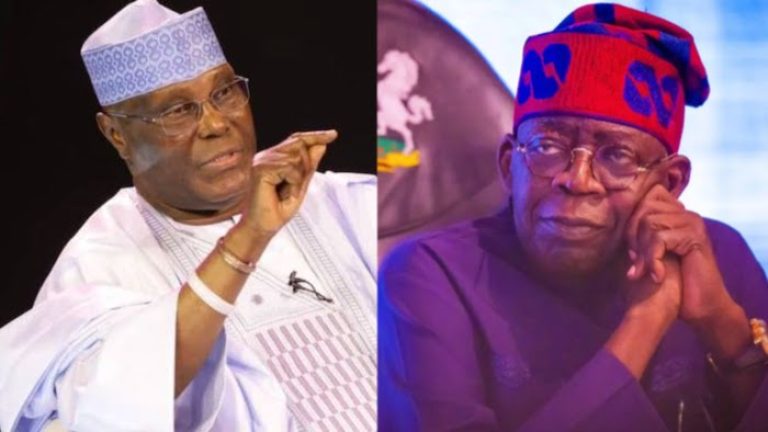
The buck-passing resumed yesterday as new controversies trailed the use of the gains recorded from the withdrawal of the petrol subsidy.
A week after Finance Minister and Coordinating Minister of the Economy, Taiwo Oyedele, explained how petrol subsidy reforms freed N15.8 trillion in resources for the federation between June 2023 and December 2025, the 36 state governors yesterday stoutly rejected allegations that sub-national governments had failed to properly account for funds received from the removal of fuel subsidy after the presidency had severally asked citizens to hold their governors responsible.
The Guardian says Oyedele gave details of the revenue dispersed via the Federation Account Allocation Committee (FAAC) but the federal government received N5.4 trillion out of the N15.8 trillion, while N10.4 trillion was shared amongst state and local governments.
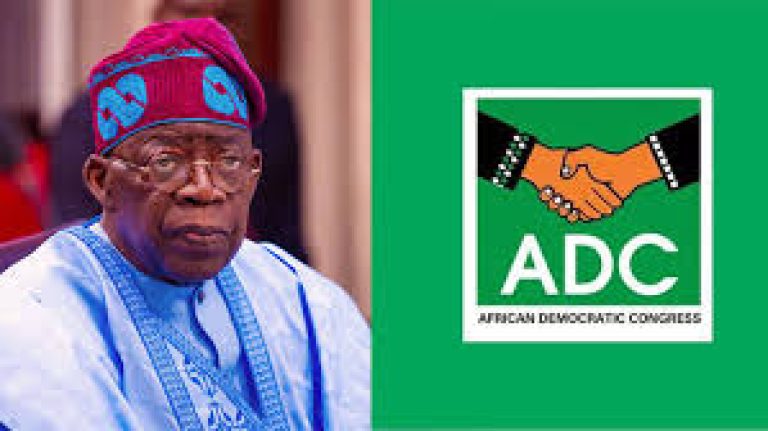
The presidency has responded to the hornet’s nest created by the presidential candidate of the African Democratic Congress (ADC), and former Vise President Atiku Abubakar, over alleged mismanagement of the subsidy removal saving, and the possibility of petrol subsidy return should he be elected into office next year. The presidency has described Atiku’s proposal as a return to the dark ages of petrol scarcity and government insolvency, while demanding more accountability from governors for the i
YESTERDAY, the 36 governors, on the platform of the Nigeria Governors’ Forum (NGF), rejected insinuations that states should take culpability over the management of subsidy removal revenues.
Speaking through Governor Douye Diri of Bayelsa State, after the third meeting of the Forum in Abuja, the Chairman of the Forum, Governor AbdulRahman AbdulRazaq of Kwara State said: “That cannot be true. That’s not possible. But that issue we will leave for another day,” he said when asked if the Forum would take blame that sub-nationals had not accounted properly for funds realised from the removal of fuel subsidy.
Governors were overwhelmingly in favour of the proposed launch of the National Affordable CNG Transit Program (NACTP), a state-led initiative to cut passenger rates by translating the lower operational cost of CNG into cheaper transit across the nation.
The proposal included state funding for conversion of vehicles to CNG, fleets and necessary infrastructure, coupled with fare promises from participating operators, with an indicated objective of decreasing passenger fares, Diri said.
On the timing for implementation of the NACTP, the NGF Chairman stated details would be worked out between the Forum and the proponents of the program. Those details,” he explained, “will be worked out between the Forum and those who have come to present before the Forum.”
The governors also highlighted the rationale behind focusing the palliative on the transport sector, noting that the cost of moving people and products had a direct bearing on the costs of food and other critical commodities.
He said the NACTP was one of the measures being examined to buffer the effect of the reform on Nigerians in response to the wider discussion on fuel subsidy reduction and requests for reversal of the policy.
This comes as President Bola Tinubu yesterday ordered the roll out of extra 500 compressed natural gas refuelling stations across the country, bringing the number of stations planned under the Presidential CNG Initiative to 1,000. He made the disclosure after his interaction with the Governors’ Forum yesterday.
In a statement personally signed by him and posted yesterday on his X handle, the president said the governors ‘have, on their own initiative, resolved to take immediate measures to bring down the cost of transportation in their states, with a strong focus on leveraging the cost benefits of CNG and electric vehicles’.
“The federal government is already making significant investments in the energy transition,” he said, adding that work is ongoing to build conversion centers and refuelling infrastructure across the country.
“The federal government is already throwing money at this energy transition. Under the Presidential CNG Initiative, approximately 120,000 vehicles have been converted around the country and over 100,000 conversion kits are in the pipeline. “We are also expanding conversion centers and refuelling infrastructure across the country,” Tinubu stated.
The federal government is funding more than 100 gas projects around the country through the Midstream and Downstream Gas Infrastructure Fund, including 15 CNG mother stations and 86 daughter stations, he said.
Four of the projects were commissioned in May in Lagos, Abuja and Owerri, including a 15-station refuelling network in Lagos and an Abuja facility that can serve 1,000 vehicles and tricycles and 50 trucks and buses daily, Tinubu added.
The extension was very critical for intra-state transit where, he claimed, Nigerians felt the expense most immediately.
“I am encouraged that our governors are making moves to bring these benefits closer to the people they serve,” he said.
The president disclosed that federal and state governments had agreed to set up a joint committee to start putting measures in place to quickly cut the cost of travel.
“A CNG running vehicle spends 60 to 80 per cent less on fuel than one running on petrol,” he remarked.
“We hope that by October 1, Nigerians begin to benefit from those savings in the form of cheaper transport fares. We agreed cheaper fuel means cheaper fares! “Each tier of government must continue to do its part and work together for the good of all Nigerians.”
The meeting, which held at the State House, Abuja, followed the NGF meeting held yesterday, where President Tinubu met with governors elected on the platform of the ruling All Progressives Congress (APC), in the build-up to the 2027 general elections.
The discussion, which was holding behind closed doors, began shortly after 3:00 p.m., following the governors’ participation in the National Economic Council (NEC) meeting at the State House. The APC governors, under the umbrella of the Progressives Governors’ Forum (PGF), were escorted into the meeting with the President following the NEC session which was presided over by Vise President Kashim Shettima.
While the agenda for the meeting has not been officially released at the time of reporting this story, the engagement comes at a politically critical time, with campaigns for the 2027 general elections already underway. The meeting is holding eight days after the launch of campaigning in accordance with the calendar and schedule of activities provided by the Independent National Electoral Commission (INEC).
It also comes five days after the APC presented the membership of its Presidential Campaign Council for the 2027 elections with the appointment of former Zamfara State Governor and Senator, Abdulaziz Yari, as Director-General.
The closed-door interaction is thus likely to provide an opportunity for the President and the APC governors to discuss political and organisational concerns ahead of the elections. However, the particular subjects on the agenda remained unknown.
Atiku urges Tinubu to disclose specifics of ‘N600b cash transfers to 15m Nigerians’
Meanwhile, Atiku has expressed concerns over the disputed N600 billion cash transfer to millions of homes in Nigeria by the administration of President Bola Ahmed Tinubu. In a statement by his media staff on Thursday, Atiku asked where the supposed beneficiaries were.
In separate statements released on July 16 and August 2, 2026, the president announced the Tinubu administration’s enhanced cash transfer program had touched 15 million disadvantaged households. But on August 26, 2026, the Minister of Humanitarian Affairs, Bernard Doro, said that Nigerians had been contacted by “slightly over 10 million households.”
Reacting, the former vice president asked about the inconsistencies in the data released by the President and the Minister. He urged the Tinubu administration to immediately disclose the names of households that received the N600 billion cash handouts.
“So where did five million households go? “These are not opposition leaders. “They are Tinubu’s figures but they are at variance with Tinubu’s figures. The arithmetic is significantly worse still. The qualified households were notified that they would get N25,000 each month for three months, amounting to N75,000 per household. If the full payment was received by 10 million households, it would amount to nearly N750 billion. Should 15 million households do so, it would run into almost N1.1 trillion. But government says it spent a little over N600 billion,” Atiku said.
How many of the names were essentially filched from a social registry already extant, and then paraded as proof of genuine payment? A name on a social register is not a bank alert. “Counting people in a database is not the same as proving money reached them,” he said.
However, the Minister of Information and National Orientation, Mohammed Idris Malagi, said the economic reforms of President Tinubu’s administration have enhanced the capacity of the federal and state governments to finance vital development projects across the country. Malagi said this in Jalingo when he visited Taraba State and interacted with government functionaries and local media practitioners on the policies and programs of the federal government.
The minister said the reforms have generated more fiscal room for the various levels of government to spend in infrastructure, education and other important sectors of the economy. He notably supported the scrapping of the petrol subsidy noting that the policy had enabled government to re-channel funds formerly deployed for subsidy payments to developmental programs.
“The Tinubu administration inherited a very difficult economic situation, several states were struggling to pay salaries before the reforms were introduced,” said Malagi.
The warning warned that a reversal of the subsidy policy may undercut the achievements being achieved, stressing that the increased monies available to governments were already evident in the number of infrastructure projects being implemented countrywide.
The minister also addressed the federal government’s participation in the education sector, stating competent Nigerian students were being assisted irrespective of their political, religious or ethnic backgrounds. “The aim is to ensure that financial limitations do not deny young Nigerians access to quality education and opportunities for self-development,” he said.
On the wider economy, Malagi said Nigeria was progressively restoring the confidence of international investors, with progress documented in key economic indices including as foreign exchange reserves and inflation.
The reforms have also enhanced the country’s ties with foreign financial institutions and strengthened Nigeria’s prospects of attracting more investment, he said.
He said the Federal Government was still committed to working closely with state governments to address security concerns and establish a safe environment for economic operations.
Senator Ali Ndume, representing Borno South, has described some members of the presidency as unqualified and said their incompetence is causing embarrassment to the President Tinubu-led administration, displeased by the state of affairs in the country in the months leading to the general elections.
Ndume, who did not disclose names, cautioned that if the president does not take a decisive move, these persons in the presidency will continue to “mess him up.”
The Borno senator disclosed this during an interview session on Arise Television’s Prime Time program on Wednesday.
Ndume criticised the recent finding of a bogus government institution under the watch of the administration, stating that the presence of “capable hands” would have prevented such an occurrence.
I still worry about the president having so many tecnocrats running the presidency. If he doesn’t do something about it, they’ll keep messing him up. We had a bogus agency with an office, and once the ICPC investigated, they discovered even more. One permanent secretary in the president had to be suspended. There I give the President credit but I insist that if he had capable hands all this mess and embarrassment wouldn’t be happening. He still isn’t doing it right.
The presidential campaign committee was created by people. If I was talking to the President, we didn’t need a presidential campaign committee. So what is the party doing instead? The president is the creature of the party. The product should not be sold . The owner of the product should be the seller . Yes I do not agree “He shouldn’t be on it, it should be the National Chairman of the party,” Ndume stated.
On the two views given on the removal of the fuel subsidy, Ndume said he backed the implementation of the policy of the government to abolish the fuel subsidy. But that was one of the “very difficult decisions” the president made, he said.
“Well, the performance of this administration is, when you look at it in context, the President has put himself out there and really wanted to deal with tough issues. He has taken extremely hard decisions, and it is painful to Nigerians, that is the greatest part of it now. Consider two examples. On the day he took office, he scrapped the fuel subsidy. I was astonished that many Nigerians do support the abolition of the oil subsidy. “But the consequences and effects are the major problem against the APC now, because it brought hardship to the people.
“The president himself admitted that there is hardship as a consequence of the policies but told Nigerians that there will be light at the end of the tunnel. Nigerians are really apprehensive and waiting and some are even stating there is no indication of light at the end of the tunnel. “We’re saying that the problem is really the staff or people around him.” They have little minds and talk about people not about ideas and events. The President’s spokespeople are quick to criticise anyone who says anything on TV, to call them names. Not quite so. The senator said: “You take the points that person made about the system, one by one.
About the Author