
The Lagos State government has urged operators of abattoirs and slaughterhouses to follow sustainable waste management procedures and seek ways to transform by-products from slaughtering into economic resources.
The Permanent Secretary, Office of Environmental Services, Lagos State Ministry of the Environment and Water Resources, Dr Gaji Tajudeen, called for this at a one-day workshop for abattoir operators held at ABIS Farmers Market, Ajah, Lagos, reports The Nation.
The workshop, under the theme “Red to Green: From Waste Disposal to Resource Recovery”, was focused on sustainable waste management, public health protection and potential to create value from waste created via slaughtering and meat-processing activities.
Rahman Fagbolade, Director, Public Sanitation Utility, who represented him remarked that abattoirs and slaughterhouses play a vital role in the state’s food production system, support livelihoods and contribute to economic activity.
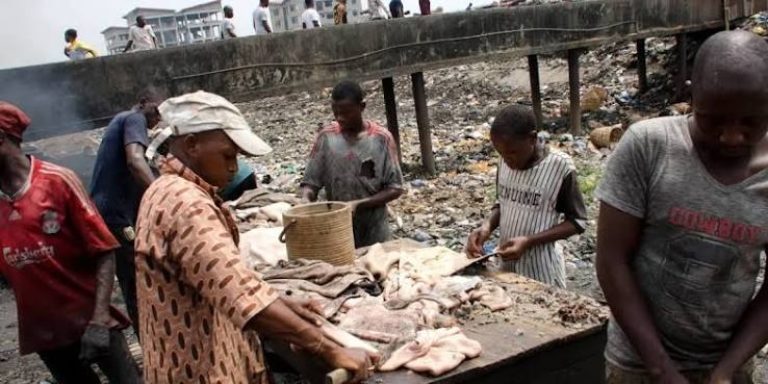
He however pointed out that waste such as blood, paunch and rumen contents, bones, horns, hooves, faecal matter and waste water among others are generated during slaughtering processes.
He cautioned that improper disposal of such garbage could lead to environmental contamination, poor sanitation, blocked drainage channels, foul odours and public health hazards.
The state government, he said, would continue to ensure that abattoirs and slaughter houses function in adherence to established environmental and sanitation requirements.
He said enforcement alone was not enough to achieve sustainable compliance and emphasised the need for constant engagement, education and capacity building among operators.
The session was planned to change the focus from conventional garbage disposal to resource recovery and waste-to-wealth prospects, he said.
The Permanent Secretary said blood, paunch and rumen contents, wastewater and faecal matter may be treated to produce biogas and organic fertiliser while bones, horns and hooves can be processed for added value.
Proper segmentation, processing and management of abattoir waste might generate potential for enterprise development, job creation and additional income, while helping the development of a circular economy, he said.
Tajudeen cited legislation, education, innovation and collaboration as the key to sustainable waste management in the abattoir sector.
He advised operators to view compliance with environmental standards not only as a legislative necessity, but as a strategy to preserve public health, build consumer confidence and sustain their operations.
He also urged the youth, farmers and other stakeholders to pursue growing opportunities in resource recovery and waste-to-wealth programs.
To make Lagos cleaner and healthier, there was need for a combined effort of government, businesses, communities and individuals, Tajudeen added.
Mr Muyiwa Semowo, a guest lecturer, in a lecture titled “From By-products to Business: Unlocking the Economic Value of Bones, Horns, Hooves and Other Abattoir By-products,” challenged operators to think creatively to transform abattoir waste into business prospects.
“By-products from the abattoir could be processed into useful materials for industries such as agriculture, manufacturing, pharmaceuticals, cosmetics and animal feed,” Semowo said.
He underlined the necessity of adequate segmentation, treatment and processing of the resources to enhance their quality and market value.
“It will help reduce environmental pollution, improve sanitation, create businesses, generate employment and increase operators’ income,” he said adding that a circular economy strategy will also assist reduce environmental pollution.
About the Author