
Spain has placed temporary border controls on travellers from Italy amid a bittering disagreement between the two European Union members over the enormous migrant surge into Spain’s North African enclave of Ceuta.
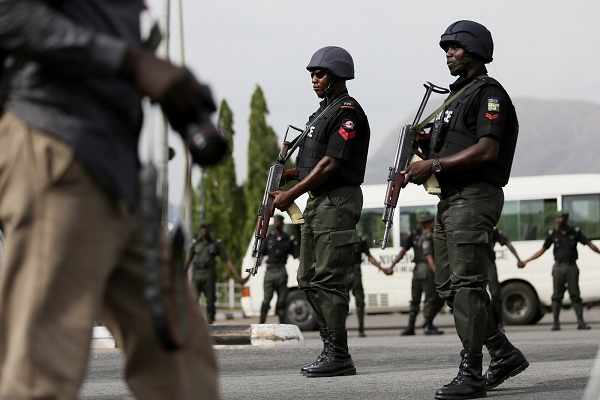
The Spanish government said the new checks will come into force from midnight on Saturday and remain in place until September 7. Authorities will examine passports, nationalities and visas of passengers entering from Italy by air and sea.
Spain said the move was in reaction to what it called “persistent irregular migratory pressure” and said it was acting after Italy imposed its own restrictions on visitors arriving from Spain.
The clash has highlighted mounting tensions inside the EU about who should police the bloc’s exterior borders and handle illegal migration.
The latest diplomatic spat follows an exceptional migration episode in Ceuta, the Spanish enclave on the northern coast of Africa encircled by Morocco.
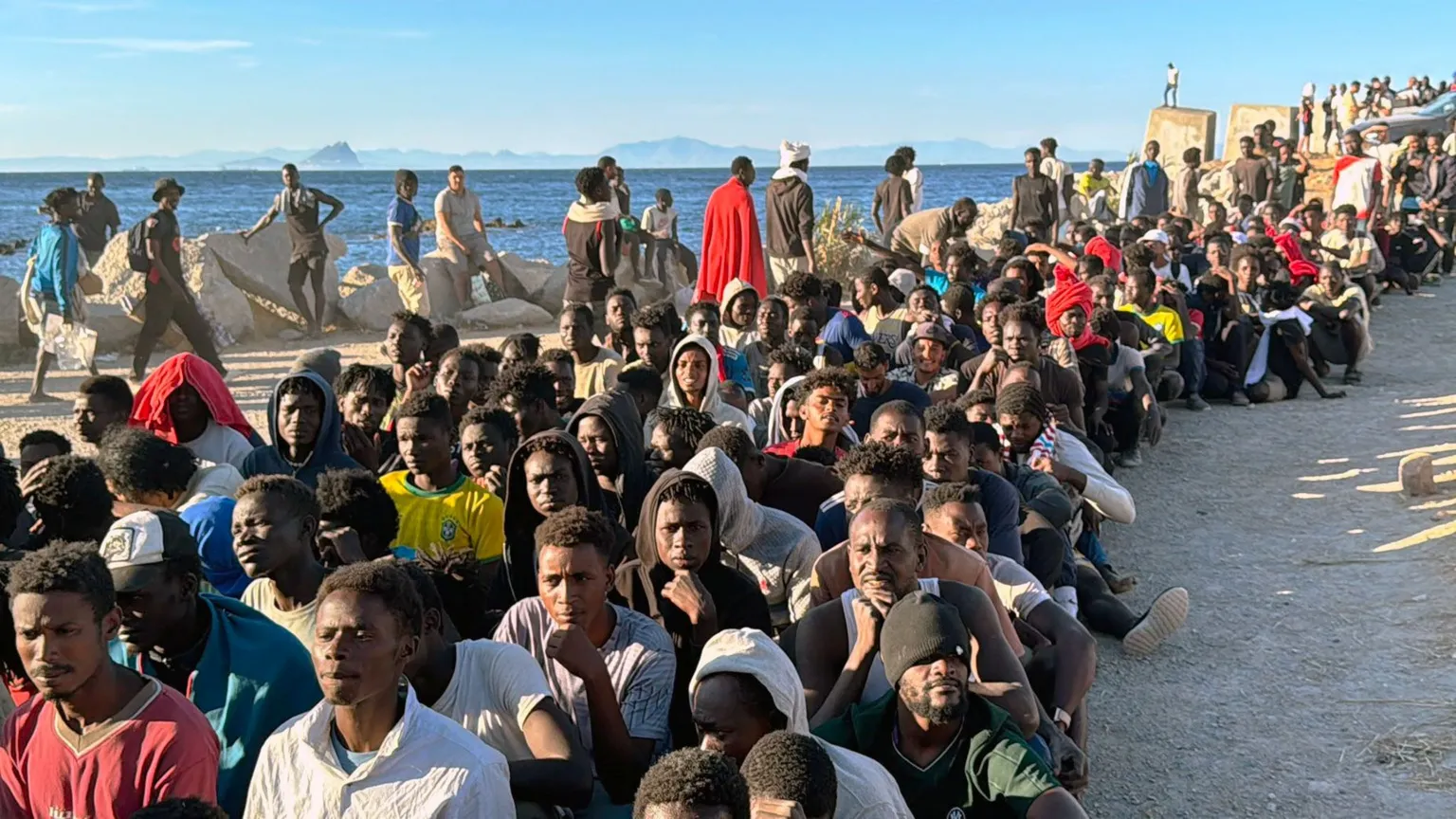
In late July, there was a rapid surge of tens of thousands of migrants entering Ceuta from Morocco by land and sea, overwhelming the enclave’s receiving facilities and security forces.
Spanish authorities reported more than 50,000 people entered the region, while later estimates put the number at over 72,000 entries over the course of the crisis. Many of those who arrived later went back to Morocco, either voluntarily or because the Spanish authorities sent them back.
The crossings also caused deaths. Spanish authorities said dozens of migrants died trying to reach the enclave, some of them by drowning, others by being crushed or falling as they tried to pass the border infrastructure.
The magnitude of the crisis has placed immense pressure on the limited receiving capacity in Ceuta, especially for unaccompanied kids who cannot simply be returned and who need lodging and state protection.
Italy reacted to the crisis by temporarily halting some of its border-free travel arrangements with Spain.
Rome said the unprecedented influx of migrants into Ceuta might perhaps have wider consequences for migration patterns across Europe and suggested more controls were needed as a safeguard.
The Italian regulations mean that identity and document checks can be imposed on passengers transiting between the two countries, but both nations are part of the Schengen area, which generally does not have internal border controls.
The Italian government announced its decision was for national security. Prime Minister Giorgia Meloni’s government has been under considerable domestic political pressure to keep tight limits on irregular migration.
Rome’s decision was vigorously protested to by Madrid.
Spanish officials said the Italian restrictions were discriminatory and unreasonable, especially since there was no sign the migrants who entered Ceuta were planning to move onwards to Italy.
Spanish officials further noted that Ceuta is geographically apart from mainland Spain and is itself outside the Schengen free-movement area.
Spain first called on Italy to lift the limitations and warned that it could impose similar measures if Rome did not comply.
Italy’s refusal to relax the limitations prompted Madrid to put its own restrictions on travellers travelling from Italy.
In effect, the Spanish government’s move makes the dispute a reciprocal border battle between two EU countries.
The limitations are temporary, but the experience has raised worries about the durability of Europe’s border-free travel system at a time when migratory pressures are building.
The argument has broader ramifications, as the Schengen area is based on the principle of free movement of persons between participating states without routine internal border inspections.
See also Trump’s ‘Love of Inflation’ Draws Backlash as US Prices Hit Three-Year High
However, in extreme circumstances, in particular when they concern substantial dangers to public order or internal security, Member States may re-impose regulations on a temporary basis.
Some observers have condemned Italy’s move to impose controls after the Ceuta crisis as largely political, given the lack of evidence that migrants in Ceuta were trying to reach Italy.
The Spanish response could consequently contribute to fears that national governments are increasingly inclined to deploy border barriers as political and migration-management instruments.
As Madrid and Rome continue their diplomatic spat, Ceuta is still grappling with the humanitarian fallout of the huge arrivals.
Migrant reception facilities in the enclave were overloaded amid the influx. After 512 beds were full in the main welcome center, hundreds were reported to be waiting outside.
Authorities have also been seeking to move unaccompanied migrant children from Ceuta to mainland Spain, as the enclave lacks the ability to handle them.
The scenario has put pressure on Spain’s central government and regional administrations to find longer-term solutions for those who remain in the territory.
The row has also grabbed the attention of European officials.
EU authorities have called for a coordinated approach to the migration situation and highlighted the need for cooperation between Spain, Morocco and member states.
EU Migration Commissioner Magnus Brunner said Europe should use the political and economic tools it has to get more cooperation from Morocco in the fight against irregular migration and migrant smuggling networks.
European officials have also blamed organised smuggling gangs for making risky crossings into Ceuta.
The European Commission has a difficult challenge of trying to balance the freedom of member states to protect their borders with the principle of free mobility that supports the Schengen system.
The situation has also drawn attention to Spain’s ties with Morocco.
Morocco is key to regulating migratory routes to Ceuta and Spain’s other North African colony, Melilla.
Spanish authorities have said collaboration with Morocco is key to stemming much of the influx in migrants, but critics have accused Madrid of failing to sufficiently safeguard its external border.
The Spanish government meanwhile has disputed allegations that the situation represents a failure of its migration policy, and has maintained its cooperation with Rabat.
Spain’s latest border regulations will remain in place until September 7, but their political fallout could be considerably longer-lasting.
There is a fight between Madrid and Rome, but the question behind it is much wider: who is responsible when one EU member state has a sudden and overwhelming flood of migrants?
For Spain, the goal is to deal with the ongoing humanitarian burden in Ceuta and to continue working with Morocco.
The fear for Italy is that the pressures of irregular migration could flow thru the European travel network.
And for the European Union, the episode is another big test for the Schengen system and of the bloc’s capacity to forge a single migration strategy instead of letting individual member states to deal with it on their own.
Without a diplomatic settlement between Madrid and Rome, the reciprocal border controls could deepen tensions between two major EU members and add another layer of uncertainty to Europe’s already heated migration debate.
About the Author