
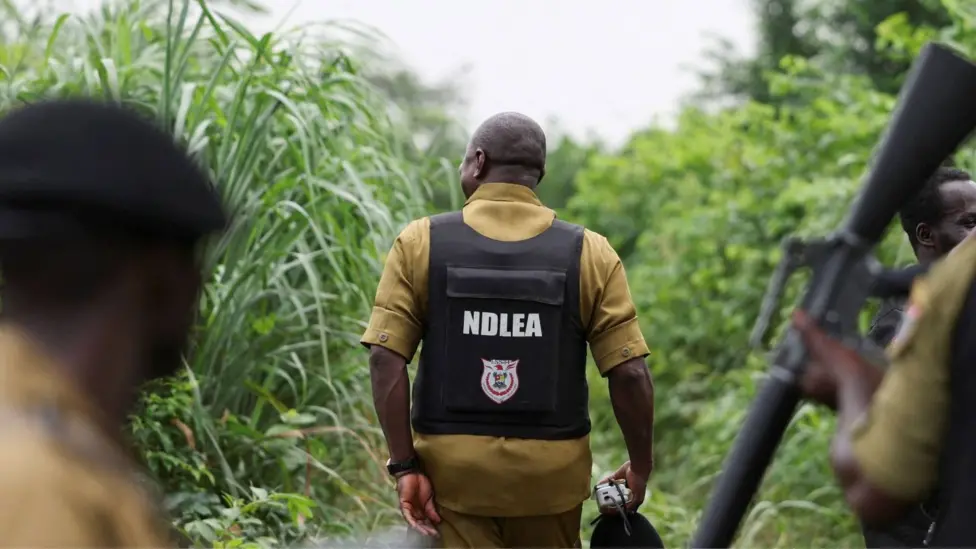
The Nigerian judge was dressed up, the lawyers observed legal etiquette and protocol was adhered to – but this hearing was not in the luxury of a Lagos courtroom, it was inside a suspected illicit drug laboratory in the middle of a thick jungle.
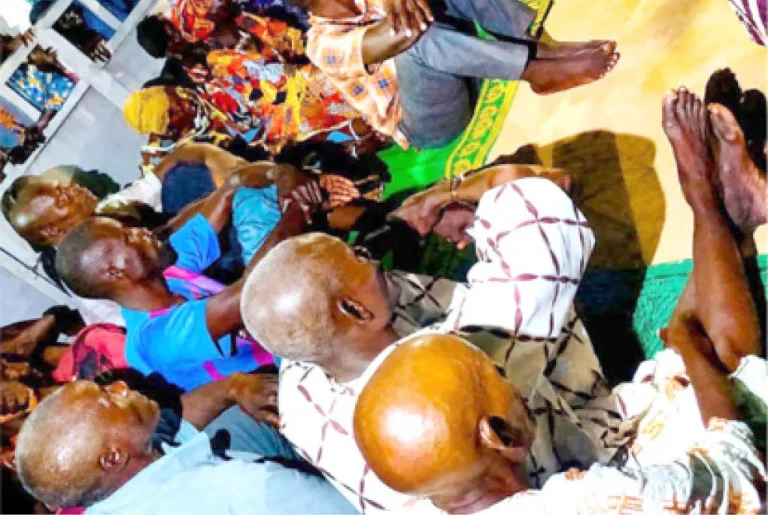
Three Mexicans and seven Nigerians were paraded in handcuffs as Justice Musa Kakaki inspected the chemicals and equipment they were accused of using to make the hazardous illegal synthetic drug, methamphetamine, commonly known as meth, crystal meth or, locally, ice.
A foul, pungent scent filled the air of the makeshift laboratory due to a massive drum of the drug in liquid form which was crystallising. Open vats of a dark, viscous liquid also smelt strongly like “crude”, or unprocessed, methamphetamine.
Inside the unfinished building were propane gas cylinders and bags of caustic soda.
The move of the federal high court two hours away from Lagos was an unprecedented step for Nigeria’s legal system but the National Drug Law Enforcement Agency (NDLEA) said it was vital to get a sense of the size of the operation.
When the individuals were caught in May, the agency said it was the country’s greatest meth bust to yet. It said it seized more than two tonnes of the narcotic, valued approximately $360m (£270m) on the street.
At the time, the NDLEA said it had “dealt another crippling blow” and disrupted “a highly sophisticated, multi-million-dollar Nigerian-Mexican methamphetamine production syndicate”.
Evidence of production was found at the purported meth lab in a bush in Nigeria
The next month, authorities uncovered another meth factory in a jungle in adjacent Oyo State.
That time, five people were apprehended including a Mexican “methamphetamine expert”.
The seizures highlight a wider trend of an increasing importance of Africa, particularly West Africa, in the global synthetic narcotics trade and the changing way in which criminal organisations are using the continent, not just as a trafficking hub but also as a production base.
Mexican specialists in producing methamphetamine, frequently called “cooks”, are increasingly being detected collaborating with locals in laboratories in Europe and Africa, according to law-enforcement organisations.
In the previous few decades, the manufacture of meth has become increasingly complex.“They honed it to the extent that it is now the purest, most powerful version of meth,” James Griego, who runs counter-narcotics operations for the US-Africa Command (Africom), told the BBC.
Africom, which coordinates US military activities across the continent, has provided intelligence to various national anti-drug agencies to help with their raids.“Anyone that is looking to use methamphetamine, knows that the Mexican meth is the best in the world for that reason,” Griego stated.
The NDLEA first revealed the discovery of a Mexican-linked methamphetamine lab in 2016, referring to it as a “super lab.”
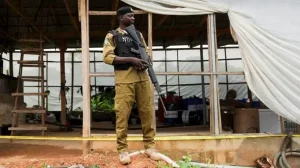
A black stab vested armed officer in a khaki uniform keeps watch in front of an improvised room.
The suspects appeared in the temporary courthouse on Wednesday under heavy guard, along with the evidence.
Since these laboratories where Mexicans have been working have been found in Kenya, Mozambique and South Africa.
We’ve seen…14 Mexican-operated labs total [being raided] since 2023. “We saw the one in 2023 [in Mozambique], we saw six more in 2024, we saw two in 2025 and we’ve seen five this year,” Griego said.”Last year when I speak about the five labs, four of the five are in Nigeria,” he continued.
Intelligence from Africom and the US Drug Enforcement Administration has linked some of the labs to Mexico’s two main drug cartels, the Sinaloa Cartel and the Jalisco New Generation Cartel.
In May, Africom commander Gen Dagvin Anderson told the US Congress that he thought militant organisations and narco-traffickers were working together.Drug cartels are increasingly funding terror groups based in Africa, enhancing the scope and lethality of those groups, he told legislators.
Unlike plant-based narcotics like cocaine or heroin which can only be grown and processed in certain regions, a synthetic drug like meth can be created anywhere with the necessary chemicals and skills. It is easier for organised crime groups to scale up production swiftly.
Methamphetamine is known for its quick, long-lasting effects and euphoric high, but it has very nasty side effects. There is a real risk of cardiovascular problems, malnutrition from poor diet and, in the case of injecting, blood-borne illnesses.
Withdrawal from the medication is exceedingly difficult as it generally includes anxiety, severe depression, exhaustion and great cravings.
Methamphetamine traffickers are developing new distribution networks beyond their traditional routes, exposing more people to the substance.
Aerial of a patch of green forest with a compound of buildings in the middle encircled by a wall.
The suspected laboratory was shielded from sight.
West Africa offers various enticing advantages for Mexican syndicates, not least vast areas of forested land that lend themselves nicely to hidden production sites.NDLEA spokeswoman Femi Babafemi told the BBC: “Attraction for them is also the population, especially the huge youth population because with that you get cheap labour and a market for local consumption.”
Authorities believe the use of methamphetamine will rise in Nigeria, where a 2018 study showed 14.4% of adults had taken an illicit substance, more than double the global average predicted by the United Nations Office on Drugs and Crime (UNODC).
The substance has spread throughout the continent, according to the Global Initiative Against Transnational Organised Crime.
It is currently widespread in East Africa, such as Kenya and Tanzania, and in southern Africa such as South Africa, where it is known as “tik”.
Drug syndicates have the same interest in foreign markets for drugs as they do in the expanding local market and Africa’s position makes it simpler to access Asia and Europe.
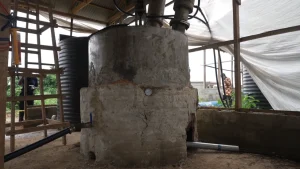
In the middle of a room there is a concrete cylinder with a temperature gauge on the side. Pipes are coming out of the top and a grey tube is coming out of the bottom. To the right is plastic sheeting instead of a wall.
Image caption It appeared like a sophisticated operation had been put up at the alleged meth lab
In West Africa, traffickers might use Atlantic shipping routes to move their drugs. It helps them to decrease expenses to lucrative consumer markets together with the region’s porous borders and less oversight of chemical imports.
The UNODC reported a 47% increase in methamphetamine consumption in Europe from 2014 to 2024. The authorities in east and south-east Asia confiscated a record amount of the substance in 2024.It’s a shortening of their supply chain into Asia, and a shortening of their route into Europe’, Griego said.
Since taking office in 2025, US President Donald Trump has ramped up the fight against Latin American drug cartels and their activities.“These cartels are feeling pressure from other parts of the world, and so [they] are looking at West Africa as a corporate production hub,” Babafemi explained.
One reason that some analysts suggest may be contributing to the cartels’ efforts to diversify their operations is the increased scrutiny of conventional trafficking routes from Latin America.This has been at least part of the logic behind Mexican gangs ramping up their activities in Africa. “That is only part of the story, though,” Griego said. Sinaloa and New Jalisco have always been worldwide organisations. They’ve been [in Africa] since the 1990s.”
But the recent increase in arrests on illegal methamphetamine labs in Africa could suggest the cartels are growing more established on the continent.
Trade, of course, is no longer simply crossing the continent but seeking out new production sites and markets.
The Nigerian authorities are certain they can rise to the challenge with measures such as the court hearing at the laboratory, greater surveillance and intelligence use.It’s certainly something to be concerned about, but it keeps us on our toes and allows us to be proactive.” This is why we are able to get them before they are able to move out into our communities and into the worldwide market,” NDLEA spokesperson Babafemi said.We have proved that they would not find Nigeria a safe haven.”
About the Author