
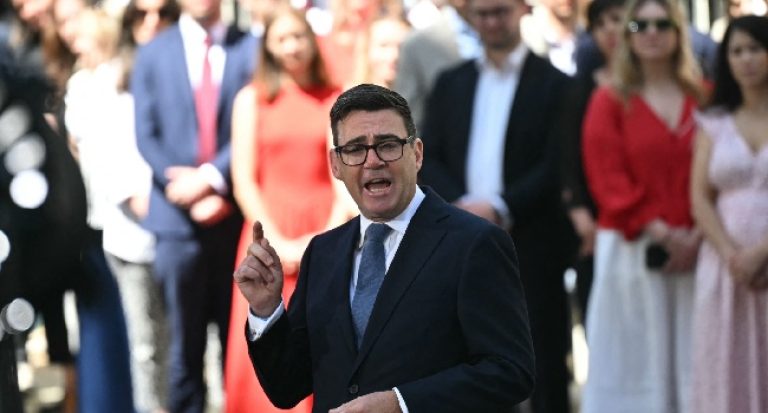
New UK Prime Minister Andy Burnham was expected to hold his first cabinet meeting today, announcing a tax cut to ease cost-of-living pressure.
The 56-year-old, who replaced Keir Starmer in Downing Street a day earlier and purged the cabinet of loyalists of his predecessor, said this morning he was slashing value-added tax on consumer electricity prices, reports AFP.
Jonathan Reynolds, the new business minister, told Sky News it was a “tremendous announcement for the first day of the new cabinet” which was expected to meet yesterday afternoon.
The legislation will remove the 5 percent tax from October, and will cut approximately £45 ($61) a year off, and it will initially be paid by scrapping a plan to create digital IDs.
It followed Burnham’s promise to “give people some breathing space now, some help with the cost of living”.
After meeting King Charles III at Buckingham Palace to become the leader of the administration following Starmer’s departure, Burnham promised to re-industrialise Britain and decentralise power and stop sleeping rough on the streets.
Burnham, the monarch’s fourth prime minister since he acceded to the throne in 2022 and Britain’s seventh in just over a decade, said the country must demonstrate the world it can “regain stability”.
Outside his new official house at Number 10 he said he will develop “a new political model” and “build a new economy”.
“I am a champion of defence and security,” Burnham told US President Donald Trump in their first contact, a UK government official said.
Trump said he had a “very good conversation” with Burnham and that the two leaders would meet “in the not too distant future”.
Burnham “has got a big job ahead of him, but he will be able to do it and of course the U.S.A. will be there to help!” They discussed trade, military cooperation and demining the Strait of Hormuz, Trump posted on Truth Social.
Britain “stands resolutely with Ukraine in its defence against Russia’s invasion,” Downing Street said, quoting Burnham as telling Ukrainian President Volodymyr Zelensky.
French president Emmanuel Macron congratulated Burnham, encouraging him to “give new momentum to the partnership” with the European Union.
Burnham moved fast to assert his influence over the new administration, dismissing several of Starmer’s adherents from his cabinet, notably Rachel Reeves and former deputy prime minister David Lammy, while shifting some ministers to different positions and boosting cronies.
‘Fairer and stronger’
Ex-defence secretary John Healey replaces Reeves as finance minister, Ed Miliband becomes foreign minister and left-wing figurehead Angela Rayner is back in government.
Wes Streeting, who abandoned a bid to challenge Burnham for the Labour leadership, is now defence minister.
Shabana Mahmood was reappointed interior minister to drive through her tough changes of Britain’s asylum system.
In a brief address Burnham said he will “bring forward a new plan for Britain, a 10-year plan” but gave no details.
Starmer had also spoken of plans to lead a “decade of national renewal” before he was dumped by Labour MPs last month for Burnham, who returned to parliament just four weeks ago.
Burnham also said his first instruction would be a pledge to “end rough sleeping”, something he tried to do as a regional mayor in northern England, but not entirely successfully.
There was also a vague pledge to re-industrialise Britain through public procurement and develop more public housing.
He said he still believed that “in the 1980s Britain took some wrong turns” and promised to decentralise power away from Westminster and “put life’s essentials back under stronger public control to make them affordable”.
Mr Starmer left Downing Street claiming his two years in government had left Britain “stronger and fairer”.
Starmer has many hurdles from the lacklustre economy, increased government borrowing costs, a swelling welfare bill and irregular migrants arriving in small boats that have stoked enthusiasm for the hard-right Reform UK party.
His premiership is also vulnerable to unpredictable energy prices resulting from the US-Iran war and turbulent relations with Washington under Trump.
Little wiggle room exists for Burnham, who was an MP between 2001 and 2017, with high public debt and tight financial rules meaning he has to balance government spending with tax revenue.
Labour won a landslide election in July 2024, after 14 years of Conservative rule under Starmer, but his time as prime minister was marred by scandals, missteps and policy U-turns.
Starmer quit and Labour parachuted in Burnham, the ex-mayor of Greater Manchester known as the “King of the North” who MPs believe is the party’s best hope of keeping a lid on Reform, led by Nigel Farage.
His speedy “coronation”, without a contest, as Labour leader and now prime minister, courtesy of Labour’s enormous parliamentary majority, has prompted questions about how he would meet his ambitions.
Opposition politicians challenged his authority and called for a snap election.
About the Author