
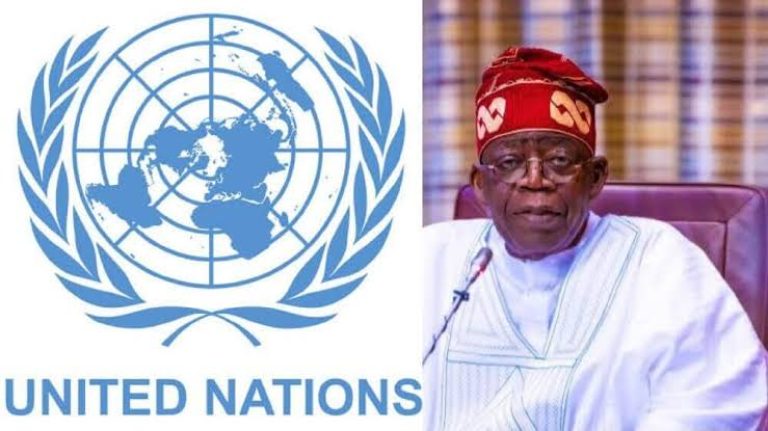
The United Nations says it is beginning to relinquish its central position in coordinating and leading humanitarian action in Nigeria through its UN Office for the Coordination of Humanitarian Affairs (UNOCHA), and pass on more responsibility to local authorities and institutions.
The UN Resident and Humanitarian Coordinator for Nigeria, Mohamed Fall, disclosed this yesterday at the Joint Nigeria Humanitarian Transition Planning Workshop held in Abuja, writes The Guardian.
He added an Inter-Agency Standing Committee has been established to facilitate a successful transition, emphasising that the policy move does not represent an abandonment of vulnerable communities.
“So the transition we talk about today is not about reducing or ending support. In contrast, it is about transforming the way support is delivered.”
The goal, Fall said, is to work toward a model where “Nigerian institutions, systems, NGOs and communities are at the center of humanitarian action” supported by local public and private finance. Social Issues & Advocacy
The UN warned that the handover must be appropriately implemented, acknowledging the ongoing challenges of violence, climatic shocks and food shortages confronting millions throughout the country.
We must not let changes in coordinating arrangements or financial modalities create gaps in support or protection. “We should all be committed to ensuring that no one is left behind,” said the coordinator.
In an effort to achieve a smooth transition, stakeholders are drafting a six-month plan linked with the Federal Government’s upcoming One Humanitarian, One Poverty Response System (OHOPRS).
As such, the Federal Ministry of Humanitarian Affairs and Poverty Reduction is anticipated to spearhead the development of Nigeria’s 2027 Humanitarian Needs and Response Plan with technical support from the UN system.
The Minister for Humanitarian Affairs and Poverty Alleviation, Dr. Bernard Doro, appealed to all stakeholders to rally together to solve the complex challenges in Nigeria.
He said that the success of the upcoming transition will depend to a large extent on the effectiveness of collaboration at all levels of government and civil society.
“No one institution can tackle the growing scale and complexity of humanitarian challenges alone,” said Doro. For this to happen, he said, a strong coordination architecture involving federal and state governments, the UN system, development partners and the private sector is key to enhance national preparedness, improve information sharing and enhance resource mobilisation. Social Issues & Advocacy
Explore More Court Law Enforcement
Geographic Reference:
Doro also says Nigeria’s 2027 Humanitarian Needs and Response Plan will be prepared by the Federal Ministry of Humanitarian Affairs and Poverty Reduction, in collaboration with the relevant ministries and state governments.
“This process will continue to benefit from the technical expertise and guidance of UNOCHA and the wider United Nations system, and will firmly place the government at the centre of national humanitarian planning and coordination,” he added.
The minister described the milestone as a demonstration of Nigeria’s improving capacity to manage crises and promised of government’s commitment to sustaining its relationship with foreign actors, respecting their global experience and technical skills.
Doro said: “Let us seize this moment to build national institutions, enhance collaboration, bolster localisation, improve accountability and ultimately develop a humanitarian coordination system that is more sustainable, more inclusive and better able to meet the needs of vulnerable Nigerians. Political science
About the Author