
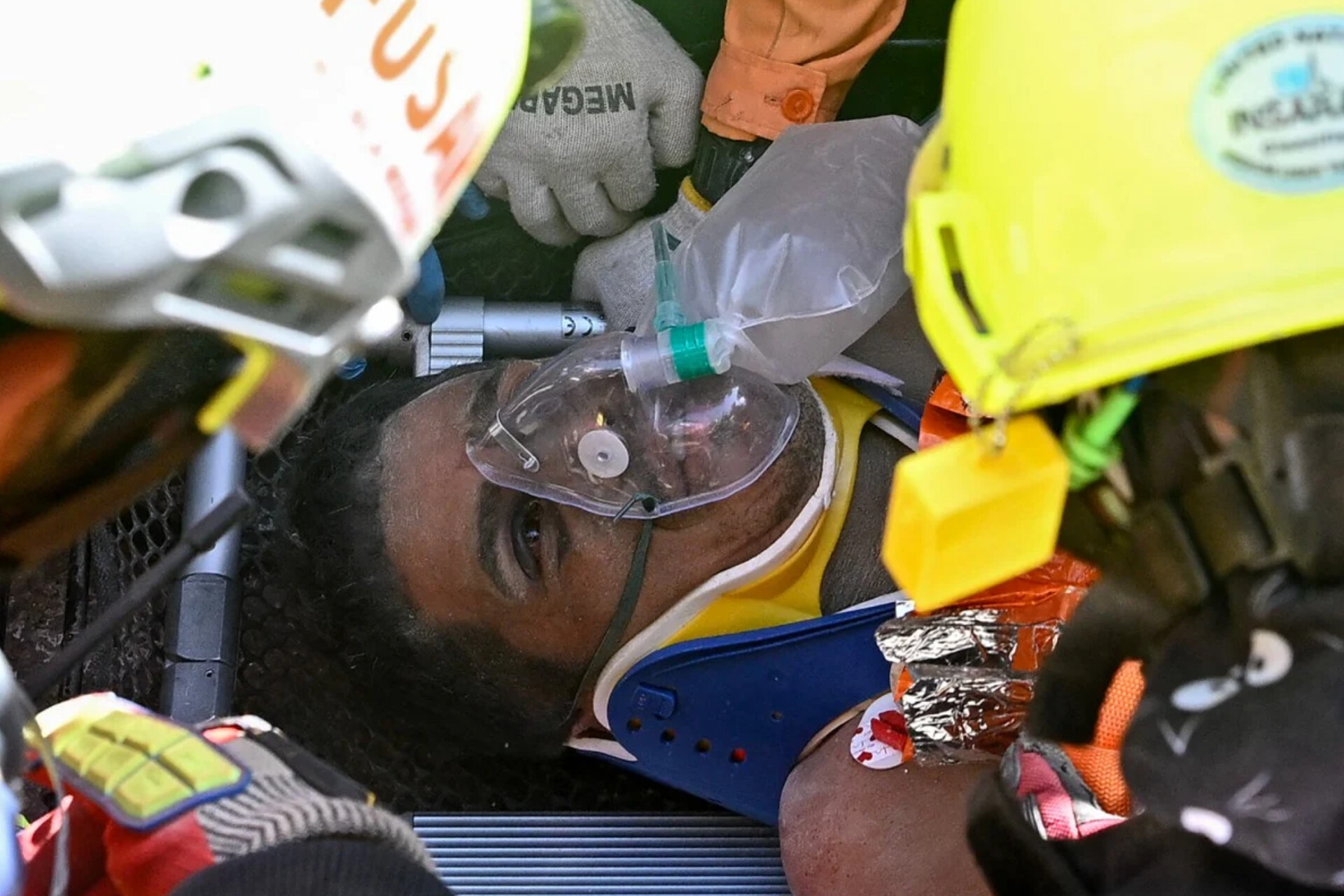
Hundreds of rescuers in Venezuela today hugged and shouted as they pulled a 43-year-old man alive from the ruins of a collapsed building eight days after catastrophic twin earthquakes.
AFP writes that the recovery of security officer Hernan Gil after so long under the wreckage was hailed as a miracle, with the official death toll exceeding 2,300 and enormous numbers of others still missing.
Gil was taken out on a stretcher following a difficult operation to retrieve him from the fallen seven-storey building where he worked in Catia La Mar, a coastal hamlet almost destroyed to the ground in the June 24 calamity.
“This is a real miracle,” Gil’s wife, Gusbimar Gonzalez told our correspondent as rescuers rushed to rescue him.
Teams from seven nations – Venezuela, Chile, the United States, Portugal, Costa Rica, El Salvador and Mexico – worked around-the-clock for three days to reach Gil.
They were giving him more than ten litres of water by hose to keep him hydrated and fitted a tube to give him oxygen.
In the final stage of the operation, some thirty workers worked in the building’s parking area to remove rubble, while two rescuers constructed a three-meter tunnel.
“It was not easy to get to the exact spot where the victim was”, our correspondent Cristian Vera, the leader of the Chilean rescue squad, informed us.
There have been a few miraculous rescues — a three-year-old boy was rescued Tuesday, six days after the quake — but hope of finding many more people has vanished.
Now, for those who escaped the quakes, the focus is on survival.
Many are homeless, food and water are running out, hospitals are pushed to the limit and specialists warn of the potential of disease epidemics.
‘It would be a miracle’ –
The two severe quakes, 7.2 and 7.5, decimated entire neighbourhoods in oil-rich Venezuela, which has been living through decades of economic catastrophe that destroyed infrastructure and health facilities.
NASA data reveals that close to 60,000 buildings may have been damaged or destroyed.
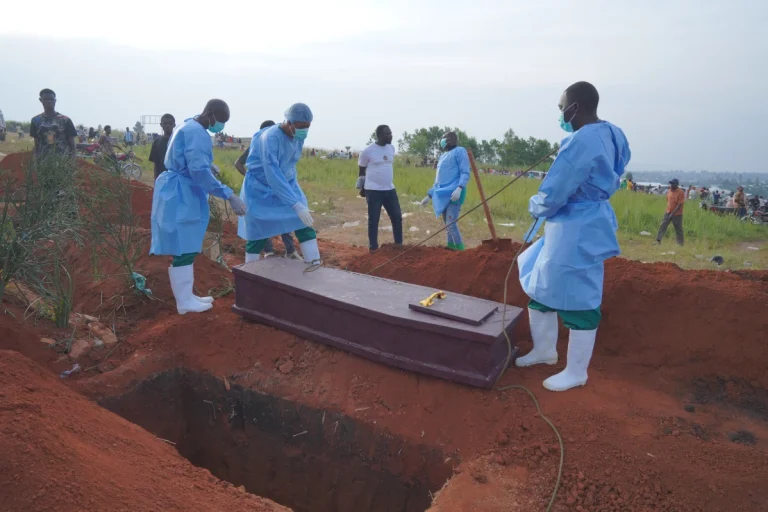
The death toll had grown to 2,295 and more than 11,000 people were injured, Venezuela’s National Assembly President Jorge Rodriguez stated yesterday.
He estimated about 13,000 people were homeless — many sleeping in tents in the streets, parks and open lots.
Tens of thousands of individuals are still missing.
In La Guaira, a city north of Caracas and the most affected, most of the collapsed buildings have been marked with the letter ‘D’ for ‘dead,’ a sign that they have been examined and no traces of life were found.
Relatives, volunteers and rescue workers were mostly occupied with pulling out the dead.
In Catia La Mar, about a dozen people were fighting to dig through a six-meter (20-foot) high pile of rubble, the remains of an eight-story building that collapsed “like a slab sandwich,” said crane operator Manuel Alejos.
We go through slab by slab to get at the bodies…“The families need the bodies to say goodbye,” said the crane operator, who had already lifted seven deceased from the structure.
Cesar Gonzalez, 54, a Mexican firefighter and operator of search-and-rescue dogs, brought water to his two dogs, Zeus and Bom.
“One is for finding the living, the other for cadavers. Two days ago there was much more hope. “It would take a miracle now to find anyone alive,” he remarked.
“We lost everything.”
The World Food Programme on Tuesday called for $50 million to feed approximately 500,000 people for three months in Venezuela.
Police and military men were patrolling to prevent looting, which has been common.
Queues for assistance are expanding every day, with many living on the good will of volunteers and donations from fellow citizens.
Maria Arteaga, 33, a mother of four, planned to sleep Wednesday night in an improvised shelter made of tarps and a Venezuelan flag on a football pitch.
“We lost everything but our lives. We are even barefoot,” she told our correspondent.
About the Author