
Officials from the People’s Republic of China, Nigeria’s federal government, and the Nigeria Union of Journalists all asked Nigerians to learn Mandarin in a coordinated appeal that shows how Africa’s largest economy and Asia’s rising power are getting closer. They said that learning Mandarin would open doors to jobs, trade, and working together with people from other countries.
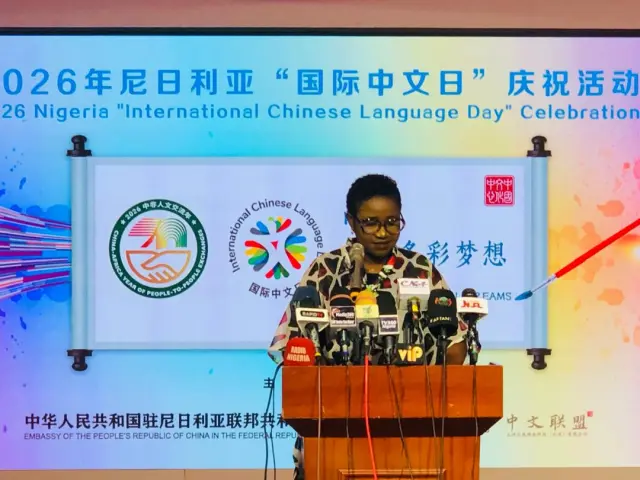
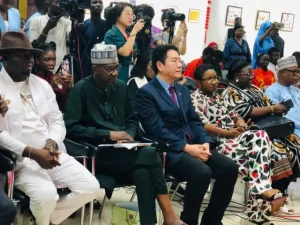
On Monday in Abuja, at events celebrating International Chinese Language Day, speakers talked about language as both a cultural bridge and an economic tool.
Yang Jianxing, the cultural counselor at the Chinese Embassy and head of the China Cultural Center in Nigeria, said that Chinese is a thread that connects the past to the present. He called it a “genetic link” that has lasted for more than 5,000 years and a “golden bridge” that can help people understand one other better across borders.
Yang noted that Chinese language training has grown quickly over the world, with more than 200 million students in over 190 countries. He went on to say that long-held Chinese philosophical notions, such as those that are similar to reciprocity and shared human destiny, are similar to Nigerian ideas about living together and getting along with others.
He said that for Nigerians, being able to speak Chinese has real benefits, such as being able to go to school, start a business, and take part in joint projects between the two countries.
Suleiman Musa, a representative from the Federal Radio Corporation of Nigeria, remarked during the event that language is becoming more and more important for diplomacy, trade, and media exchange. He used the show “Ni Hao China,” which was made following President Bola Ahmed Tinubu’s state visit to China in 2024, as an example of how trade, tourism, and communication can all work together more.
Musa said that Chinese is “one of humanity’s most enduring cultural treasures.” He also said that it is opening up new ways for people to tell stories and share knowledge around the world.
Grace Ike, who leads the NUJ’s Federal Capital Territory council, stressed the event’s symbolic importance, saying that language brings together countries with similar goals.
“This shows how powerful language can be as a bridge,” she added. “It brings Nigeria and China closer together through their shared goals of progress and prosperity.”
The presenters made it clear that learning Mandarin is not just an academic endeavor, but also a strategic skill that is becoming more important as Nigeria’s role in a changing global economy changes.
About the Author