
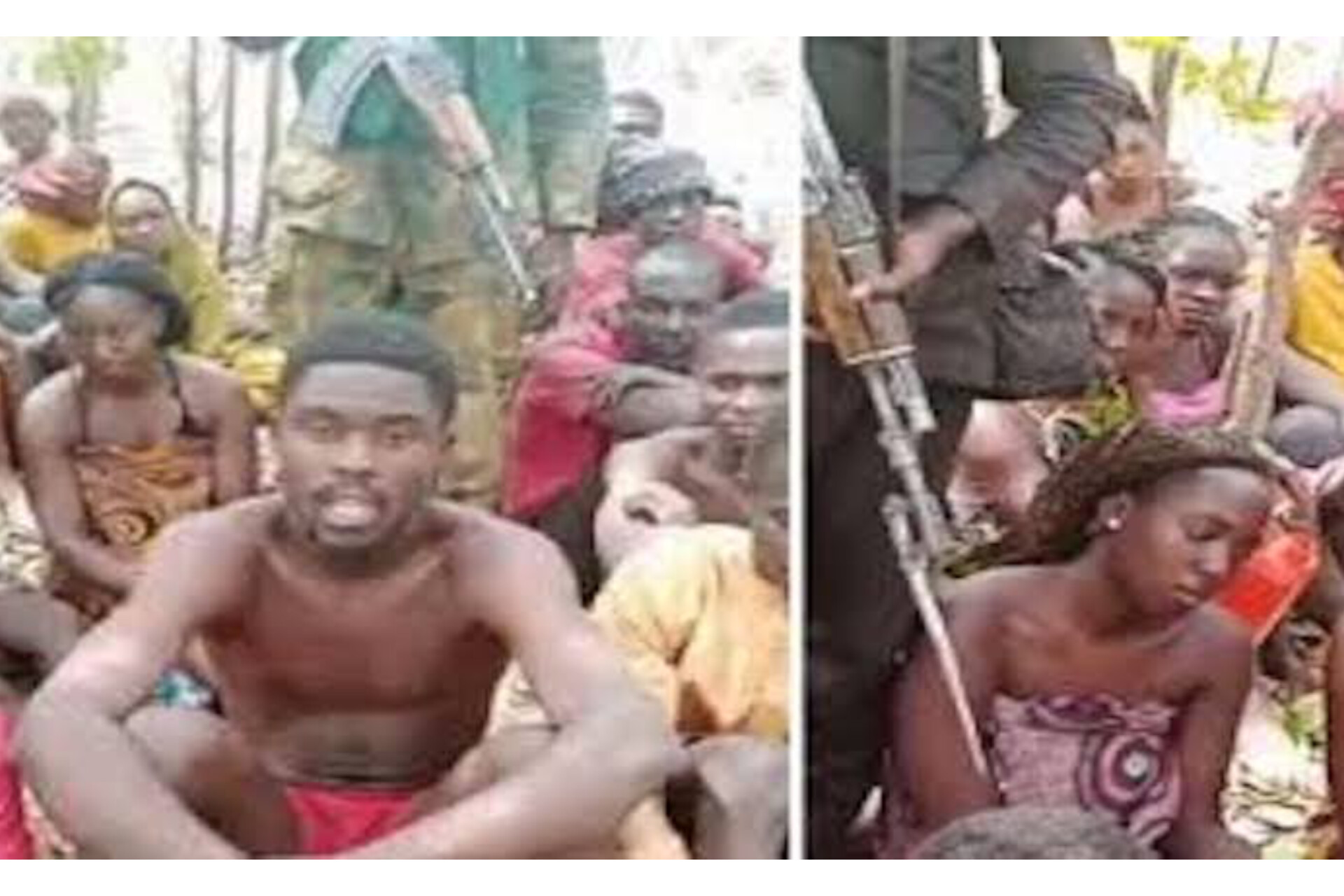
Many families of abduction victims are in despair since their loved ones, mostly women and children, are still stuck in different terrorist dens after being held captive for weeks or months.
At least 1,000 people were reportedly kidnapped in coordinated attacks in the first quarter of 2026. They are still being held in the jungles of Kwara State, the insurgency-ravaged villages of Borno, and the unstable hinterlands of Niger and Southern Kaduna.
Our correspondent’s findings suggest that families are now facing an agonizing silence; there are no calls, no talks, and no proof of life, which is different from how things used to be when kidnappers swiftly made contact to demand ransom, according to Saturday PUNCH.
Silence hurts more than ransom
In Woro, a hamlet in the Kaiama Local Government Area of Kwara State, the kidnapping of 176 people in early February is still one of the biggest mass kidnappings in recent history.
Families say they still haven’t heard from the kidnappers more than 50 days after the victims, who were women and children, were shown off in a viral video that lasted five minutes and 41 seconds.
Abubakar Umar, a cousin of several victims, told our reporter that the scenario was like a mental torture.
“We’re not sleeping. We wake up scared every day. We will know they are alive if they call. But now, nothing. There were no calls, messages, or anything else. “They seem to have disappeared,” he said, his voice shaking as he talked about the weakest of the prisoners.
“There are women that are pregnant there. There are kids. Men who are strong can’t stay in the woods for long without food, drink, or medicine. What do you think of them? Umar went on to say, “Sometimes we are afraid of the worst, but we can’t even be sure.”
Ajike Ajiboye, another local who had two relatives among the kidnapped, told our reporter that not being able to talk to them made them feel terrible.
“We pray that the kidnappers will call us now. Think about that. We are begging God that criminals will get in touch with us. At least that gives us hope that our folks are still alive.
“This kind of waiting is worse than grieving.” You cry and bury someone when they die. “But here, you don’t know if you should cry or keep hoping,” she remarked.
The fear is especially strong for people who are weak, such pregnant women, youngsters, and the elderly.
Shehu Abubakar, a leader in the village, agreed and said that the chances of survival were getting worse every day.
“Survival is very hard if they are in the bush without food or medicine.” These are the questions that bother us every day.
“Our hearts are heavy every day. We don’t know if our people are dead or living. He said, “This uncertainty is slowly killing us.”
In Omugo community, on the other hand, things have gone more like they usually do. Reports say that kidnappers are asking for N500 million to free eight church members.
Thompson Oladimeji, the President of the Omugo Development Union, said the situation was terrible.
“Our hearts are heavy.” “Families are in pain, the community is traumatized, and fear now defines our daily lives,” he said.
He told the federal and Kwara State governments, as well as security agencies, to step up rescue efforts and make sure there are more security personnel in regions that are at risk.
He went on to say, “We need a clear and long-term plan to stop things like this from happening again in Omugo and nearby communities.”
People in both groups are getting more and more angry at what they say is the government’s tardy and mostly quiet response.
We feel alone—families of victims
The families of the Woro victims say they feel abandoned because they haven’t heard anything new.
Ajiboye said, “The government acts like it can’t see what we’re going through; we feel alone.”
A group of 31 civil society groups also spoke out against the Woro victims’ protracted incarceration, calling it a major failure of the government to safeguard its citizens.
“We want to bring attention to the horrible conditions in which 176 innocent people were detained and paraded by their kidnappers. “The group said in a statement that it is very wrong for children to be badly nourished and barely dressed and then be exposed to bad weather.
The coalition asked for swift rescue efforts, punishment for those involved, and a permanent security presence in communities that are at risk.
The Kwara State Police Command stated they were working to free the victims and stop kidnappings all around the state.
300 people are missing in Borno.
The same thing happened in Borno State, where more than 300 people were taken from Ngoshe in Gwoza LGA after an attack by suspected militants on March 4 and are still missing.
A few ladies have come back, but most of the victims, including children, are still missing.
A neighbor named Yahaya told our reporter that families were living in fear. He also said that the few kidnapped victims who did come back did so without their phones.
“Some of the women who were kidnapped have come back.” I don’t know if they paid a ransom or not. But one thing is clear: they didn’t come back with their phones.
“We have witnessed them come back one by one. Some went back to Pulka, and others found safety in Gwoza. I know that two of the women are now in Gwoza.
“Some women came back without anything. No phones, no answers, nothing. Some people are still there. “We don’t know who’s alive and who’s dead,” he remarked.
Another family member, who didn’t want to be named, claimed that the lack of communication had made families feel helpless.
“We don’t know anything. No calls, no contact. We just pray. He said in a low voice, “That’s all we can do now: pray and wait.”
General Abdullahi Ishaq (rtd), the Borno State Governor’s Special Adviser on Security Affairs, said that there has been no interaction with the terrorist group yet.
He stated he couldn’t say anything about the official number of people who had been kidnapped because he didn’t know much about the issue.
When we called, Nahum Daso, the Borno State Police Command’s spokesman, told one of our reporters that he didn’t have any new information on how many people were still being held.
Being held captive for a year
In Niger State, the crisis has gotten considerably worse and lasted longer.
Terrorists have attacked and kidnapped people many times, especially in the LGAs of Mariga, Munya, and Shiroro, where the prisoners’ lives are in danger.
The most recent event happened on Easter Sunday in three Shiroro LGA settlements.
Sources say that more than 40 people, including women and children, were taken.
A municipal worker named Mustapha reported that the bandits chose certain communities in Shiroro for the job.
“They invaded the LGA before Easter, came back over Easter, and have come back again since then. They have taken more than 40 people since then. Either the security agents don’t exist or they have given up because the terrorists have better weapons.
“Everyone in the area is running away to nearby towns. “They took my neighbor’s two kids away and haven’t talked to the family since,” Mustapha added.
Some families that were able to pay part of the ransom for their loved ones’ release were still not able to get them free since the terrorists wanted full payment.
It was also learned that some of these prisoners had been held by their captors for more than a year and had lost track of time because their family and friends had stopped trying to assist them go free.
Our writer found out that some of the hostages perished and were buried in unmarked graves without their families knowing.
In September 2025, Mohammed Niworu, a former Chairman of the Niger State Universal Basic Education, and Ahmed, the Niger State INEC Commissioner, were taken.
They were taken from Borgu LGA together with 30 other people who were driving in three different cars.
Sofiyat, a relative of the SUBEB chairman, stated that the government left them alone when they needed help the most.
“I don’t have the words.” I can’t believe that the terrorists have my brother. We don’t even know if he is still alive or not.
“If he is dead, we should at least be able to see his body. If he is still alive, the government should help us and make sure he is free.” She said, “I can’t believe it’s been ten months since he was taken.”
“Since that kidnapping, we have been praying to Allah nonstop for his release. We have also tried many times to persuade the state government to get in. Nothing has worked.
“The kidnappers were in touch with us at first, but they stopped once we sent them some money. They want us to pay the full ransom. Where can we acquire that kind of money?
“The whole thing is too much for me. If the federal and state governments really care about the lives of their workers, they need to step in. Our family has lost joy and laughter since then. Sofiyat wailed, “We are now a shadow of ourselves, God please help.”
Ahmed Sani, a security analyst, was upset about what happened.
“For almost ten months, they had been held captive. The family of the SUBEB chairman was able to raise N40 million for his release, but the terrorists said they would not let him go until they got the full amount of more than N100 million.
“The state and federal governments didn’t do anything to help them get free, as they work for the governments, it seems. Since then, the terrorists have kept them as hostages. He remarked, “Their families don’t know if they are alive or dead.”
A security source in the state said that more than 250 people are being held captive, most of whom are travelers.
Wasiu Abiodun, the spokesman for the Niger State Police Command, said that there had been attacks all over the state, but he did not say how many people had been kidnapped.
He did say, though, that security forces were looking for the terrorists.
South Kaduna: Families are lost and don’t know what to do
Families in various impacted areas in Southern Kaduna claim that the kidnappers’ quiet is a worrying change from how things used to be, when they would usually contact the families within days to demand ransom.
Our correspondent’s research shows that in the first quarter of 2026 alone, hundreds of people, especially women and children, were kidnapped in planned attacks on remote towns.
Many are still missing, and others are calling it an increasing pattern of “silent captivity.”
Daniel Samaila, who lives in Ungwan Tama in Kachia LGA of Kaduna State, told one of our reporters that nine people were taken hostage on January 20, 2026, including five members of his family.
He named the victims as Patricia Zacharia, Evelyn Zacharia, Ruth Zacharia, Patience Istifanus, Jessica Istifanus, Gloria Joel, Blessing Daniel, and Jovita Joel.
He said that having loved ones taken captive in terrible conditions is really hard to deal with.
“The thieves want N10m as a ransom.” We can’t get that much money, even if we’ve been talking to them.
“Sometimes, when they let us talk to them, they tell us what to say. They make it seem like we left them. He remarked, “It hurts because we are doing everything we can.”
Samaila also talked about past attacks on his family, saying that violence had become a regular thing.
“Two years ago, someone attacked a man in our neighborhood. He claimed, “Later, his family members were taken from the farm, and his younger brother was killed.”
A father whose wife and two kids were taken remarked, “They used to call in two or three days.” They don’t do anything now. Not one call. We don’t know if they are living, sick, or eating. We will sell anything if they ask for money. So, what do we do now? Who should we talk to?”
Another man, Jude Sadauki, whose three sisters were taken with a cleric, said that the money problems had ruined his family.
“We’ve already sent money for a bike.” We’re still having a hard time. He stated, “But even that one, we don’t know if it will lead to their release.”
Another victim’s relative, Jude Sadauki from the Karku community in Kauru LGA, stated that the kidnapping of his three younger sisters and a reverend father in February had left the family in financial trouble.
He said that the kidnappers wanted N8.5 million and a brand-new motorcycle in exchange for his sisters’ freedom.
“We’ve been able to send N2.3m for the motorcycle, but we’re still having trouble,” he stated. We are quite anxious about how they are doing.
Sadauki said that the amount of money asked for the cleric was much more.
“To the priest, they want N25 million. He added, “It is completely out of our reach.”
In the same way, Mr. Obadiah Dan Kaura from the Fadan Ruma village told our reporter that his brother, Rev. Fr. Joel Nathaniel, who was taken on February 7, was still being held.
“The terrorists first asked for N50 million and six brand-new motorcycles in exchange for his freedom.
“We’ve been begging them, but we can only get approximately N8.5m. The family is already at its breaking point.
“Our parents have been completely devastated since he was taken.” “They hardly talk to anyone. They are always praying and crying about their son’s condition,” he said.
The emotional toll is considerably worse in places where kidnappers have stopped talking.
“We don’t even know if they’re still alive.” They used to call and ask for money. They don’t do that anymore. They seem to have disappeared into thin air.
“If they ask for money, we’ll find a way to sell what we have.” “But now we are just waiting every day, not knowing what to do,” said a sad Shuaibu Danladi, whose wife and two children were taken during a night raid.
Musa Abdulwaheed, a security analyst, told our reporter that when kidnappers don’t talk to the family of their victims, it makes it hard to free them.
“It takes away options for negotiation.” “It makes rescue operations harder and more dangerous,” he said.
597 persons were taken hostage.
There have been a lot of kidnappings in Zamfara State, with hundreds of people taken in many large-scale events, mostly in rural areas.
Our research shows that 597 people have been kidnapped in the state between January and April of this year.
About 150 people were taken hostage amid violent attacks in Tsafe town on January 4, 2026.
From January 15 to 18, there were attacks in the Kaura Namoda and Tsafe LGAs that forced a lot of people to leave their homes. Hundreds of people are said to have been kidnapped or gone missing.
At least 20 to 26 people were taken from Dausayi and neighboring communities in Talata Mafara LGA starting on January 28.
Reports said that at the end of January, bandits were holding more than 150 locals captive in the woods.
On April 2, 2026, a raid on the villages of Kurfa Danya and Kurfan Magaji in the Bukkuyum Local Government Area of the state took more than 150 persons, most of whom were women and children.
The results show that the bandits are continuing holding or even killing most of the people they kidnapped, even if they got paid.
Alhaji Samaila, the father of one of the victims, stated that his daughter was kidnapped a few weeks ago, but the bandits had not contacted him yet.
“Three weeks ago, the bandits took my daughter, and they haven’t called me since.”
Mohammed Ilyasu, who is from the Damba district of Gusau town, stated that his older brother, Sani Ilyasu, was taken last week and that the bandits contacted him once but he hasn’t heard from them again since then.
He claimed, “When they took my older brother, they let him call me and told me he was okay.” But they haven’t called me back since then, and when I tried to call them, the line was busy.
Yazid Abubakar, the Zamfara State Police Command’s spokeswoman, told our reporter on the phone that the police command knew about the event.
Abubakar said that the police command was working hard to destroy the bandits’ camps in the state so that they could free the people they had kidnapped.
Children and families are the ones that are hurt the most.
The effect on families left behind is terrible, in addition to those who are in prison.
Kids are leaving school, and mothers are now the only ones who can support them. Families are falling apart because of stress and money problems.
In a lot of places, family and friends now look after kids who have been left behind.
Mallam Sulyman, a politician in Kaduna State, remarked, “We now have kids growing up without parents, not because they died, but because they are missing. That kind of trauma runs deep.
“Even when they come back, they are not the same.” Some people can’t talk. Some people can’t sleep. He said, “The damage doesn’t stop when you’re in prison.”
We turned victims into Muslims—Terrorist
In the meantime, a viral video showed a bunch of militants showing off 176 victims they had kidnapped in Woro, Kwara State. The terrorists declared they had turned their victims into Muslims.
In Hausa, the voice in the video added, “We are responsible for kidnapping the people in Woro and converting them to Islam.” We think they know what the religion is about. We taught them about Islam, and we’re sure they now know what it is. They now know what Islam is all about.
The attacker asked the victims how many pillars of Islam there were, and they all said “five.”
After that, one of the women who had been hurt spoke in Hausa.
“This is our last chance to talk to our people,” she remarked. We have kids, pregnant mothers, and folks with diabetes. We need help right away. They are not hitting us. They provide us the right amount of food. But we need help.
About the Author