
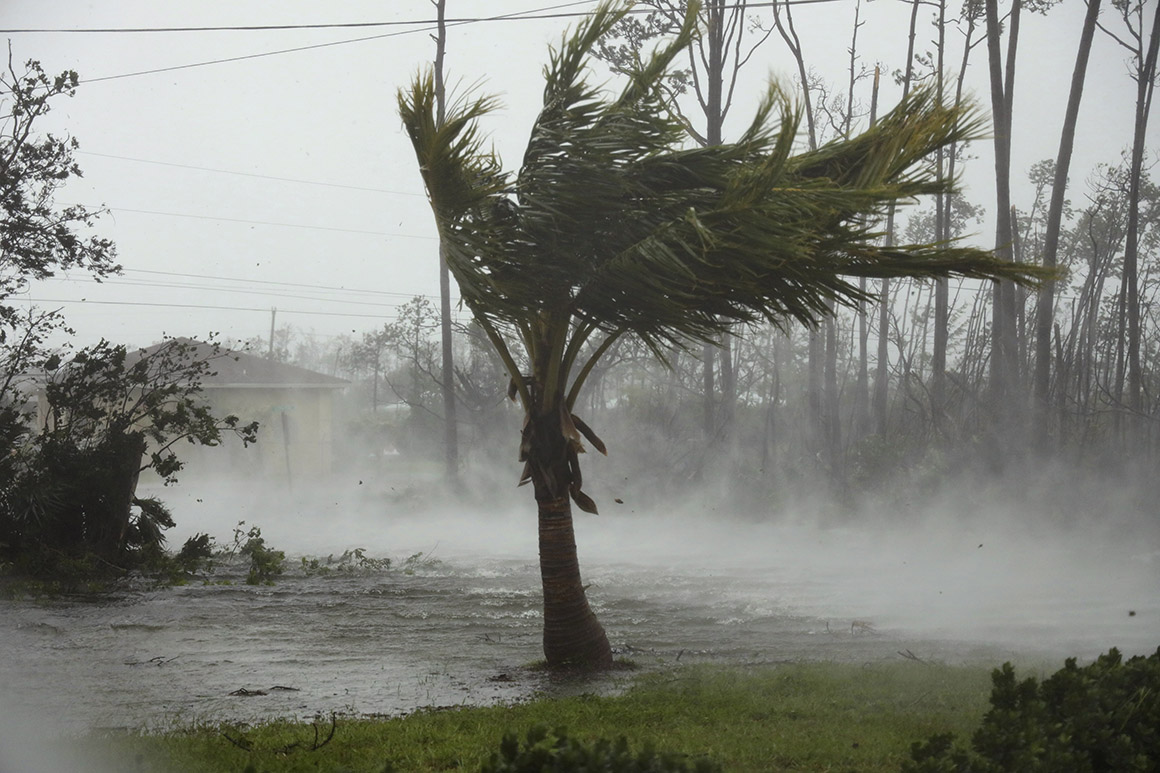
CORRECTS FROM CANAL TO ROAD - A road is flooded during the passing of Hurricane Dorian in Freeport, Grand Bahama, Bahamas, Monday, Sept. 2, 2019. Hurricane Dorian hovered over the Bahamas on Monday, pummeling the islands with a fearsome Category 4 assault that forced even rescue crews to take shelter until the onslaught passes. (AP Photo/Tim Aylen)
Farmers in Nigeria have been told to get ready for large rains and not rush into planting everything right away, even if it has started to rain.
Micheal Ale, the Founder of Global Initiative for Nigeria Development, issued this advise in a statement released yesterday in Ibadan, the capital of Oyo State.
He said that the rains that are currently falling in some regions of the country may not be enough to keep up the rainfall needed for the best crop yields, according to The PUNCH.
The Nigerian Meteorological Agency and the Federal Government had already told farmers not to sow too early because of “deceptive” rains in February and early March 2026.
They added that the early rains don’t mean the rainy season has officially begun and that there is a risk of crop loss because of a possible drought.
In a statement yesterday, Ale said that the new trend of unpredictable rainfall is related to bigger problems around the world.
He said, “Early rains often mean the start of the planting season, but farmers should be careful because climate change and global energy problems could make the rain less steady.”
“Farmers shouldn’t be fooled by the rain right now. What we are seeing may not be steady enough to support planting cycles, and starting to farm too early could lead to bad harvests.
“Weather patterns show that there will be bouts of heavy rain and intervals of extreme heat. I want to take this opportunity to tell farmers all around the country to get ready for significant rain and not rush into planting everything right away, even though it has started to rain.
Ale said that this volatility could make people less productive, especially smallholder farmers who depend on seasonal cycles that are easy to forecast.
He said that women and farmers in rural areas are still the most at risk since unpredictable weather might make it harder to go to farms and lower harvests, which would make food security problems worse.
He told farmers to use climate-smart methods, such waiting to plant, planning their irrigation, and keeping a careful eye on weather forecasts, to reduce any losses.
The development expert also asked the federal government to do more to help farmers by setting up early warning systems and agricultural advisories. They said that if the government doesn’t move quickly, food insecurity might get worse in the next several months.
“The signs are clear: this isn’t just about rain; it’s also about stability.” Ale said, “Without consistent rainfall, productivity will go down, and the effects will be felt all the way up the food chain.”
About the Author