
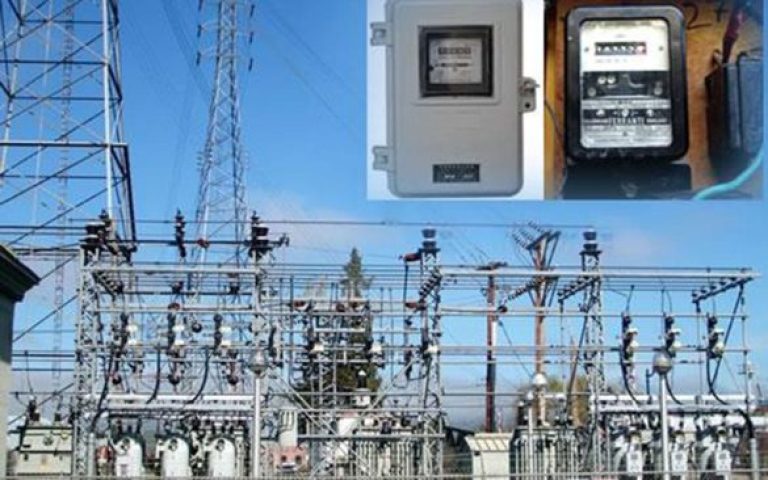
Nigeria is once again experiencing extensive power outages because thermal power plants are getting less gas, which means the national system is running significantly below capacity. This is putting more strain on people and businesses across the country.
The Nigerian Independent System Operator (NISO) confirmed that planned maintenance at a major gas supply facility made it harder to deliver fuel to several power stations connected to the grid. This led to a drop in electricity generation and forced system operators to manage supply by shedding load.
According to sources, the lack of gas supply is a complex issue, and part of the problem is also past debt to gas suppliers, according to the Daily Independent.
NISO says that the maintenance work that took place from February 12 to February 15 briefly cut off gas supplies to key thermal power facilities such Egbin, Azura, Sapele, and Transcorp Power. Other power plants, like NDPHC Sapele, Olorunsogo, and Omotosho, were also affected, albeit not immediately. The gas network had a hard time keeping everything in balance.
Gas-fired facilities make most of Nigeria’s electricity, thus even a short interruption in supply can greatly lower the amount of power the country can produce. As generation fell, distribution companies had to limit the amount of electricity they sent out over their networks, which led to protracted outages in many regions.
NISO said that the situation could lead to continued load management on the national grid, which could include energy restriction and load shedding until gas supplies return to normal levels. Gas shortages have been known for a long time to be a big reason why electricity is unstable in the Nigerian Electricity Supply Industry (NESI).
Dr. Joy Ogaji, the Chief Executive Officer of the Association of Power Generation Companies, recently warned that the country’s electricity supply could get worse as gas producers stop sending gas to thermal plants because generating companies owe them an estimated N3.3 trillion.
Ogaji warned that the growing financial crisis along the power value chain could lead to a catastrophic disruption in the sector if quick action is not taken.
Her warning comes at a time when the country’s electrical supply is getting worse, and many Nigerians have been without power for greater amounts of time since the beginning of the year.
NISO’s operational data shows that national power generation has recently slipped below 4,000 megawatts. This is mostly because gas supply issues are harming thermal power facilities.
As of last Tuesday, the 11 electricity distribution companies in the country were only sharing 3,053MW, which is much less than what they need to make sure that electricity is always available in their franchise regions. More information from the system operator shows how bad the gas supply shortage is.
For thermal plants to work well, they need about 1,629.75 million standard cubic feet of gas per day (mmscf/d). But on February 23, 2026, the actual supply was just about 692 mmscf/d, which is less than 43% of what was needed.
Because there isn’t enough gas, a number of power plants have cut back on their work or shut down for a short time. This means that the Transmission Company of Nigeria has to restrict the electricity that is accessible across the grid.
Customers have been told many times by distribution providers that the outages are due to gas shortages that are harming generation. For millions of Nigerians, the official explanations just reaffirm what they are already going through: prolonged periods without power.
People in Lagos, the country’s business center, say that the electricity supply has becoming less reliable. Femi Akingboye, the 42-year-old proprietor of a small printing shop in Surulere, Lagos, claimed that his operational costs had gone up a lot since he has to rely more on petrol generators. Akingboye remarked, “We used to get eight to ten hours of electricity a day, but now we only get three or four.”
“My generator runs most of the day.” Gas prices are taking a big chunk out of my money. Mrs. Funke Oladipo, a food vendor in Ebutte Metta, Lagos, stated that unpredictable power is making it hard for her to keep food fresh.
She stated, “My freezer can’t keep the fish and meat I sell without electricity.”
“Sometimes the food goes bad overnight.” The defeats hurt. People in the Federal Capital Territory (FCT) say that power outages happen a lot and can continue more than 12 hours in some areas. Ibrahim Musa, a civil servant at Gwarinpa Estate, said that the power situation was becoming more and more unpredictable.
Musa stated, “Sometimes the power goes out in the morning and doesn’t come back on until late at night.”
“We need electricity for everything, like pumping water, charging phones, and running appliances.”
He said that the expense of alternative energy has become a big problem for a lot of families. He remarked, “I spend about N10,000 a day on gas for my small generator.”
“That money should go to food or paying for my kids’ school.”
In Kano, one of Nigeria’s biggest business centers, unreliable power is making it hard for people to do their regular work.
Abdulrahman Sani, an electronics repairman at the Sabon Gari market, claimed that the power interruptions had made his work slower. He said, “A lot of devices can’t be fixed without power.”
“When the power goes out, customers get angry because their jobs are put on hold.”
Zainab Lawal, a frozen food merchant who lives in No Man’s Land, said she has had to buy less stuff because of the situation. “I buy less now because I can’t count on the power,” she added.
“Running generators all day is too costly.”
The lack of electricity is also hurting Nigeria’s manufacturing sector. People who own businesses in cities like Aba, Port Harcourt, and Ibadan say that they have to rely on diesel generators a lot because the grid supply is not stable.
Chukwuemeka Okafor, a shoe maker in Aba, claimed that the rising cost of self-generated power is making production costs go up. He remarked, “Electricity from the grid should lower our operating costs.” “But when the supply isn’t reliable, we have to use diesel generators, which cost a lot of money.”
He says that energy now makes up a substantial part of industrial costs, which in turn makes things made in the area more expensive. The inconsistent power supply affects healthcare facilities just as much.
Dr. Kemi Afolabi, a medical laboratory scientist at a private hospital in Ibadan, stated that reliable electricity is necessary for storing vaccinations and running diagnostic equipment. She stated, “Hospitals have to use generators when the power goes out.” “But the cost of fuel is going up, and not every facility can afford to keep generators running all the time.”
She said that protracted outages could mess up delicate medical operations and make it harder to care for patients. Experts in energy claim that the frequent power outages show that Nigeria’s power industry has structural problems. Nigeria relies largely on gas-fired thermal power facilities, unlike many other countries that get their electricity from a variety of sources.
To work well, these facilities need a steady supply of natural gas. Any kind of disturbance, whether it’s maintenance work, vandalism of pipelines, or technical problems, can quickly cut down on electricity generation. NISO said that the gas facility’s temporary maintenance outage made it harder for numerous large power stations to get fuel, which caused the grid to generate less power overall.
NISO claimed that to keep the grid stable during maintenance periods and stop a worse system failure, it is putting in place real-time operational procedures. The National Control Center is keeping a careful eye on generating levels and working with distribution companies to make sure there is enough electricity to go around.
The operator said that load shedding will be done in a fair and organized way, with priority supply going to important public services including hospitals, security facilities, and other important infrastructure.
But many people all around the country are still likely to have power disruptions from time to time. Experts in the field say that the ongoing power shortages show how badly the whole energy value chain has to be reformed, from making and moving gas to making and distributing power.
Nigeria has one of the greatest natural gas deposits in Africa, but it still has trouble getting enough fuel to power facilities because of problems with its infrastructure and operations.
Engr. Tunde Balogun, an expert in the power sector, noted that making gas supply more reliable is important for stabilizing electricity output.
He said, “Gas is the backbone of Nigeria’s electricity sector.”
“The power sector can’t work well if the gas system isn’t stable.” He also said that Nigeria should invest more in renewable energy sources like solar, hydro, and wind to make its energy balance more diverse. But for a lot of people, the most important thing right now is how to get through each day without consistent power.
Blessing Ekanem, who owns a restaurant in Port Harcourt, said that the power interruptions are making it harder and harder to run her business. She remarked, “My customers expect cold drinks and food that is kept in good condition.”
“Things get complicated when there’s no electricity.”
Samuel Olatunji, a college student in Ibadan, said he felt the same way. He said, “Sometimes there is no light for hours at night.” “Generators make a lot of noise and cost a lot to run.” It makes it harder for us to study.
About the Author