
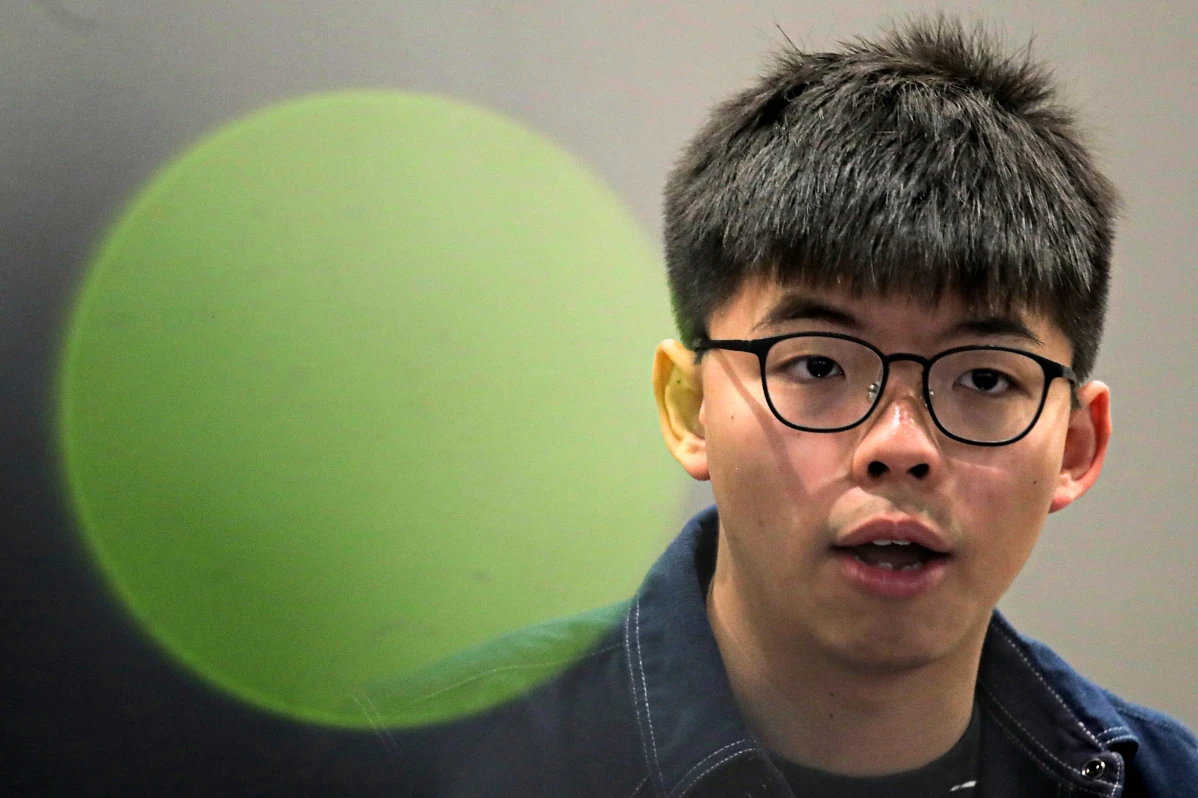
Hong Kong democracy campaigner Joshua Wong has been sentenced to another 10 years in prison after pleading guilty to conspiracy to coordinate with foreign forces under the territory’s Beijing-imposed national security law.
Hong Kong’s High Court on Thursday, November 5, punished the 30-year-old former student leader. The verdict means he is likely to stay in prison until late 2036, adding to a jail term that has already run for over six years.
Wong had originally been due to be released from prison in January 2027 after spending four years and eight months for subversion in a different national security case. But in June 2025, authorities hit him with more charges, accusing him of conspiring with abroad activists to lobby foreign governments to impose sanctions and other measures on China and Hong Kong.
Judge William Tam said the current violation was serious, and identified Wong and exiled activist Nathan Law as key players in the alleged plot. The judge set a starting sentence of 13 years for Wong but reduced it by three years because he pleaded guilty and there were mitigating factors.
The court said Wong’s new sentence will be served concurrently with the remaining two months and two days of his previous sentence.
Prosecutors accused Wong, Law and others worked between 2016 and November 2020 to seek foreign interference against Chinese and Hong Kong officials. The case included worldwide lobbying, media interviews, online petitions and efforts to push sanctions for alleged human rights abuses in the city.
Wong, co-founder of pro-democracy group Demosisto, gained international fame during Hong Kong’s 2014 Umbrella Movement, when thousands of protesters occupied key roadways demanding greater democratic freedoms. He later became one of the most famous faces of the massive pro-democracy protests that rocked the region in 2019.
Beijing passed the broad National Security Law in June 2020 after months of protests. The law criminalises crimes including secession, subversion, terrorism and coordination with foreign forces. The authorities in China and Hong Kong have defended the measure as vital to restore stability and preserve national security.
Human Rights Watch denounced the sentence handed down Thursday, calling it “cruel and unjust” and suggesting the government were exploiting successive national security prosecutions to lock key opposition activists behind prison. It said the organization called on international governments to condemn the verdict and seek targeted sanctions against officials responsible for repression.
The punishment also prompted criticism from Taiwan, whose government accused Beijing and Hong Kong authorities of continued political repression of pro-democracy activists.
But Hong Kong police hailed the verdict. The penalty showed that Wong’s attempts to push foreign sanctions had failed, said Steve Li, head superintendent of the police National Security Department, who called on him to reflect on his actions.
Wong remained composed in court and waved to fans as he exited after the punishment. In a statement written behind bars, he maintained his political activity was not motivated by animosity and he never favoured Hong Kong independence. He also spoke about his time in detention, stating he had spent the time studying, reading and reflecting on his past actions.
The new punishment is part of a succession of prosecutions that have gutted Hong Kong’s once-vibrant pro-democracy movement. Some notable activists have been incarcerated, others have left the territory or liquidated their organisations.
The case has become another flashpoint in the dispute over Hong Kong’s autonomy, civil liberties and the reach of Beijing’s national security legislation, with rights groups saying that the extended detention of senior activists could further deter political dissent in the territory.
About the Author