
ERELU TÚNWÀṢẸ SERIES
NIGERIANS THROUGH THE EYES OF A NIGERIAN
IS THIS WHO WE ARE?
A video currently circulating on social media presents an interesting picture of Nigerians through the eyes of a fellow Nigerian.
The speaker confidently declares that governors, senators, members of the House of Representatives, market women, students, petty traders, business leaders, billionaires, the military and the police are all supporting President Bola Ahmed Tinubu.
He repeatedly challenges those who disagree:
Who are you? Who do you think you are to gaslight anybody?
WHAT IS GASLIGHTING?
Gaslighting is a form of psychological manipulation in which someone deliberately attempts to make another person doubt their own judgment, perception, memory or understanding of reality.
It may involve repeatedly denying facts, distorting information or presenting misleading claims to undermine another person’s confidence in what they know or have experienced.
Disagreement, criticism or questioning a political position does not, by itself, constitute gaslighting.
WHAT DOES LEADERSHIP MEAN TO NIGERIANS?
This series offers no judgment about the speaker or his political position.
It is an appraisal of Nigerians as a people, our conduct, our understanding of leadership and the expectations we place upon those who follow.
Are we a society in which accepting a leader means surrendering our faculty of independent judgment?
Is the speaker, perhaps unknowingly, reflecting an expectation that once governors, senators and other influential figures have declared their support, the people they represent are expected to follow?
Is the message effectively this:
Who are you, the minority, to disagree when your leaders have already decided?
Have Nigerians handed over their right to decide to those they recognise as leaders?
And once those leaders say YES, must the answer of their followers also be YES?
WHEN LEADERS DECIDE FOR FOLLOWERS
From my own experience, I have encountered many situations in which decisions that should involve followers are taken by those occupying leadership positions.
Rather than allowing the people concerned to exercise their own judgment, leaders assume responsibility for deciding on their behalf.
This brings us to a familiar feature of Nigerian political life.
CONSENSUS!
How often have we witnessed situations in which an electoral college could have been convened to allow eligible participants to make their choice, but instead we hear that a consensus has been reached?
Consensus can be a legitimate method of reaching agreement.
But who participated in reaching that agreement?
Were the people consulted?
Were alternative positions considered?
Was there an opportunity to disagree?
Or was the decision taken by a few individuals and subsequently presented as the collective will of everyone?
WHEN LEADERS ANNOUNCE CONSENSUS, WHOSE CONSENSUS IS IT?
THE NIGERIAN FACTOR: LEADERSHIP, FOLLOWERSHIP AND THE SYSTEM WE OPERATE
Nigeria inherited political and administrative structures shaped by colonial rule.
Over time, we have developed our own ways of operating within those structures, including practices commonly described as the Nigerian factor.
The Nigerian factor is not necessarily something bad.
But what exactly does it mean?
How does it operate?
And what results does it produce?
We must examine the relationship between leaders and those they lead.
When Nigerians accept someone as their leader, what authority are they granting that individual?
Does leadership confer the right to make decisions without consulting the people?
Have followers become accustomed to accepting decisions made on their behalf?
And when a decision is announced as a consensus, who actually participated in reaching that consensus?
These are questions about the conduct of the people as much as the conduct of their leaders.
They are also questions about the systems we have accepted and continue to operate.
AUDITING THE SYSTEM AND ITS OUTCOMES
A SYSTEM MUST BE EXAMINED NOT ONLY BY HOW IT OPERATES, BUT BY THE RESULTS IT PRODUCES.
If leaders make decisions on behalf of their followers, and the eventual outcomes do not reflect what those followers wanted, what does that tell us?
Was the problem the decision?
Was it the process through which the decision was reached?
Was it the absence of consultation?
Or was it the expectation that followers must accept whatever their leaders decide?
This is part of the auditing of our society.
We must understand what we inherited, what we have adapted, what we have accepted and what we continue to practise.
Above all, we must examine whether the results correspond with the expectations of the people.
THE QUESTION TO NIGERIANS
The circulating video provides an opportunity to reflect upon ourselves as a society.
This is not an assessment of President Tinubu, nor a judgment upon the speaker.
It is an examination of our understanding and practice of leadership.
IS NIGERIA A SOCIETY IN WHICH LEADERSHIP IS UNDERSTOOD AS THE RIGHT TO DECIDE FOR OTHERS?
WHEN WE ACCEPT A LEADER, HAVE WE ALSO SURRENDERED OUR FACULTY OF INDEPENDENT JUDGMENT?
DO OUR LEADERS FOLLOW THE PEOPLE, OR ARE THE PEOPLE EXPECTED TO FOLLOW THEIR LEADERS?
IS THE NIGERIAN FACTOR A PRODUCT OF OUR POLITICAL SYSTEM, OR IS OUR POLITICAL SYSTEM A REFLECTION OF THE NIGERIAN FACTOR?
AND WHEN THE SYSTEM PRODUCES RESULTS THAT THE PEOPLE DID NOT WANT, WHO TAKES RESPONSIBILITY?
NIGERIANS, IS THIS WHO WE ARE?
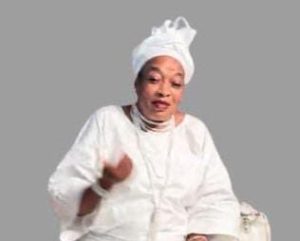
Erelu Túnwàṣẹ
Hon. Alderman of the Sovereign Anglo-Saxon Borough of Wandsworth, United Kingdom
Twice Mayor of Wandsworth (1999–2000 and 2004–2005)
Stateswoman (UK)
30 October 2026
About the Author