

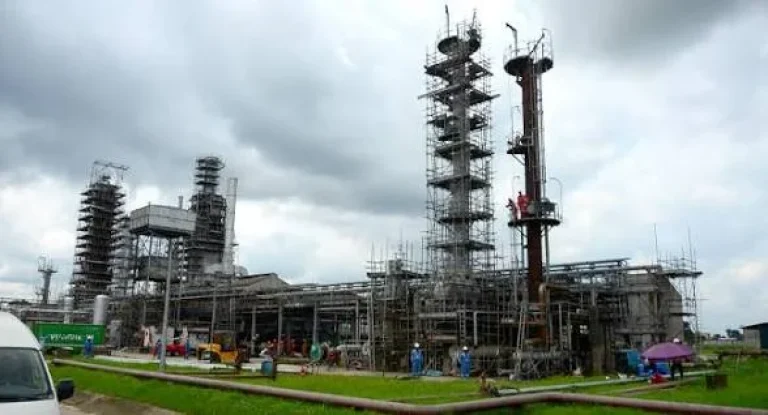
Nigeria’s modular refining sector is set for growth next year with seven new refineries expected to come on stream with a total capacity of 83,000 bpd, George Maher-Bonnett of Argus Media said.
Maher-Bonnett said this on Wednesday in Lagos at a presentation at the OTL Africa Downstream conference, the PUNCH reports, highlighting the shifting dynamics of the country’s petroleum products market in the face of expanding local refining capacity and diminishing fuel demand.
In his presentation ‘African Energy Outlook’, Maher-Bonnett stated four modular refineries were operating in Nigeria in September with a combined capacity of 32,000 barrels per day.
“There are four modular refineries operating as at September, with a total capacity of 32,000 barrels per day,” he said.
“Seven new modular refineries will start operations next year with a total capacity of 83,000 barrels per day,” he said.
The expected expansions would be over 2.5 times the combined capacity of the four modular refineries in operation in September, which might boost smaller refining facilities’ contribution to Nigeria’s domestic petroleum products supply.
However the presentation did not mention the seven prospective refineries, their owners or locations nor disclose individual capacity statistics and commissioning timeframes.
Maher-Bonnett also underlined the increasing importance of the Dangote Petroleum Refinery in strengthening Nigeria’s self-sufficiency in petroleum products despite a fall in fuel demand during the year.
It said “higher flat prices” drive development, noting that “Nigerian fuels demand is down this year.
“We are seeing improvement in self-sufficiency with the ramp up of Dangote and we expect modular refineries to play a bigger role,” he said.
The presentation said the fall in demand was because of high costs, adding that the only government action during the review period was price cut by the NNPC.
“No government interventions apart from NNPC price cut this month,” it said.
The anticipated rise in modular refining capacity coincides with Nigeria’s petroleum products market adapting to rising domestic output and shifting international trade patterns.
The Dangote refinery is running at a high pace with continuous petrol output which has made importing various petroleum products from Europe into West Africa less attractive, Maher-Bonnett said.
Steady petrol output from 700,000 bpd Lekki refinery of Dangote running hard’, the presentation said.
It also pointed to increased refining capacity in Ghana, saying the 45,000-b/d Tema refinery was ramping up output and increasing the country’s self-sufficiency.
The presentation noted that the economics of shipping petroleum products from Europe to West Africa and from Europe to the United States have worsened and that freight prices further influence the competitiveness of the routes.
About the Author