
As technology companies developing advanced artificial intelligence systems increasingly consult with religious leaders, philosophers and scholars in an effort to make chatbots behave more ethically, experts warn that translating centuries of religious wisdom into a single moral framework is far from straightforward.
As the use of artificial intelligence becomes more widespread, the increased interaction between Silicon Valley and religious groups is a sign of growing worries about how they should decide, respond to vulnerable users, and tell the difference between beneficial and destructive behaviour.
The Claude chatbot’s maker, Anthropic, has been one of the most active tech companies in soliciting religious and cross-cultural opinions on AI ethics, the Associated Press reported Sunday, Oct. 25.
In May, Anthropic said it has held talks with scholars, clergy, philosophers and ethicists representing more than 15 religious and cross-cultural groups. The corporation stated that the conversations were designed to assist it learn how different faiths address concerns of character, virtue and what it means to live a decent life.
The conversations are also part of a bigger effort by Anthropic to shape the behaviour of Claude via a thorough constitution that lays out the values and principles the model should follow. The company claims it wants its models to draw on religious, secular and political ideas, not take on the perspective of one tradition.
Other big tech companies including Google, Meta, Amazon and Microsoft have also reached out to religious leaders and institutions on AI and morality issues.
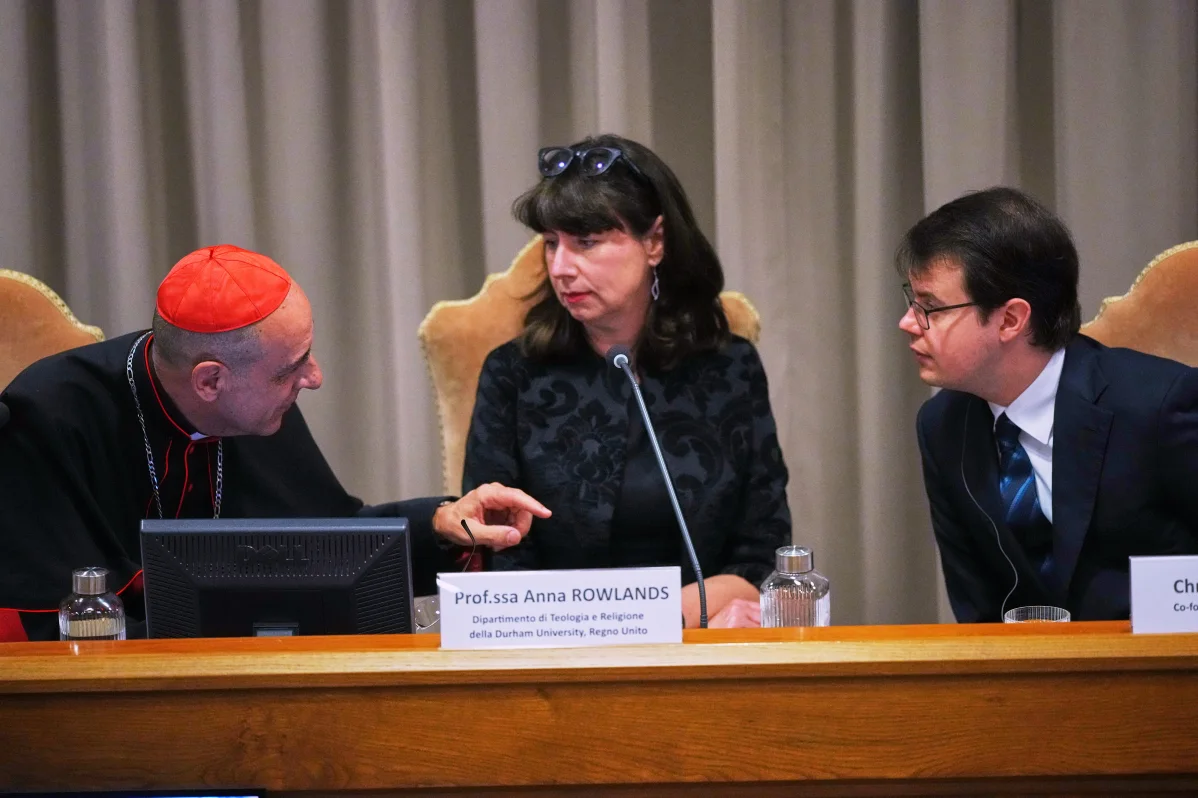
The Vatican has emerged as one of the primary sites for such conversations. Pope Leo XIV wrote his first encyclical in May, Magnifica humanitas: On Safeguarding the Human Person in the Time of Artificial Intelligence, which examined the implications of AI for human dignity and society.
Also: Northern Ireland Community Tensions Rise After Burning of Mosque Replica
Anthropic co-founder Chris Olah has said that some of the challenges AI raises are outside the technical expertise of developers, noting that religious traditions have extensive history of grappling with moral questions.
But researchers caution that religion is not readily reduced to a set of principles that can be removed and incorporated into an AI model. Religious traditions are formed not just by teachings and scriptures, but by culture, rituals, relationships and the lived experiences of their adherents.
Webb Keane, an anthropologist at the University of Michigan, has warned that focusing on religion mainly as a moral standard risks missing intricacies like these. Such an approach may also give privilege to traditions that suit conventional Western understandings of religion while distorting others.
The difficulty is particularly acute because religious and philosophical traditions do not always agree on what is the correct thing to do. While broad ideas may be shared, terms such as justice, responsibility, human dignity and acceptable action may be interpreted differently.
Some researchers also fear that merging teachings from diverse religions into a generic set of moral principles would weaken the unique viewpoints that make each tradition significant.
“Despite these concerns, some participants in the consultations have praised the technology companies for taking the discussions seriously. Meghan Sullivan, a philosopher of religion at the University of Notre Dame who took part in the Anthropic-run discussions, said the engagement was intellectually rigorous, with a range of topics from whether humans have souls to whether children should be allowed to use chatbots for educational purposes.
But critics say consulting spiritual leaders should not replace better technological safeguards, public accountability and wider debate on how AI is developed and deployed.
Rumman Chowdhury, chief executive of Humane Intelligence and a former United States science envoy for AI, queried whether resorting to religion was the best way to address the ethical issues around the technology. Other AI experts have argued that debates about making AI more ethical could distract from a more fundamental question: whether certain uses of the technology should be researched at all.
The debate raises a fundamental challenge for the AI industry: developers are able to draw on human knowledge and ethical traditions to shape the behaviour of their systems, but they still have to decide whose values are represented, how to resolve conflicting principles and how to ensure the systems are accountable.
The outcome of these debates could influence how technology companies define responsible AI and respond to competing moral demands from people throughout the world as AI tools grow more prominent in education, healthcare, employment and everyday decision-making.
About the Author