
ERELU TÚNWÀṢẸ SERIES
SPECIAL EDITION — ANC BOO1
Reflections during Ọlọ́jọ́ Festival 2026
HUMAN AND FAMILY REALITIES OF ANSWERING AN ANCESTRAL CALLING AFTER DECADES ABROAD
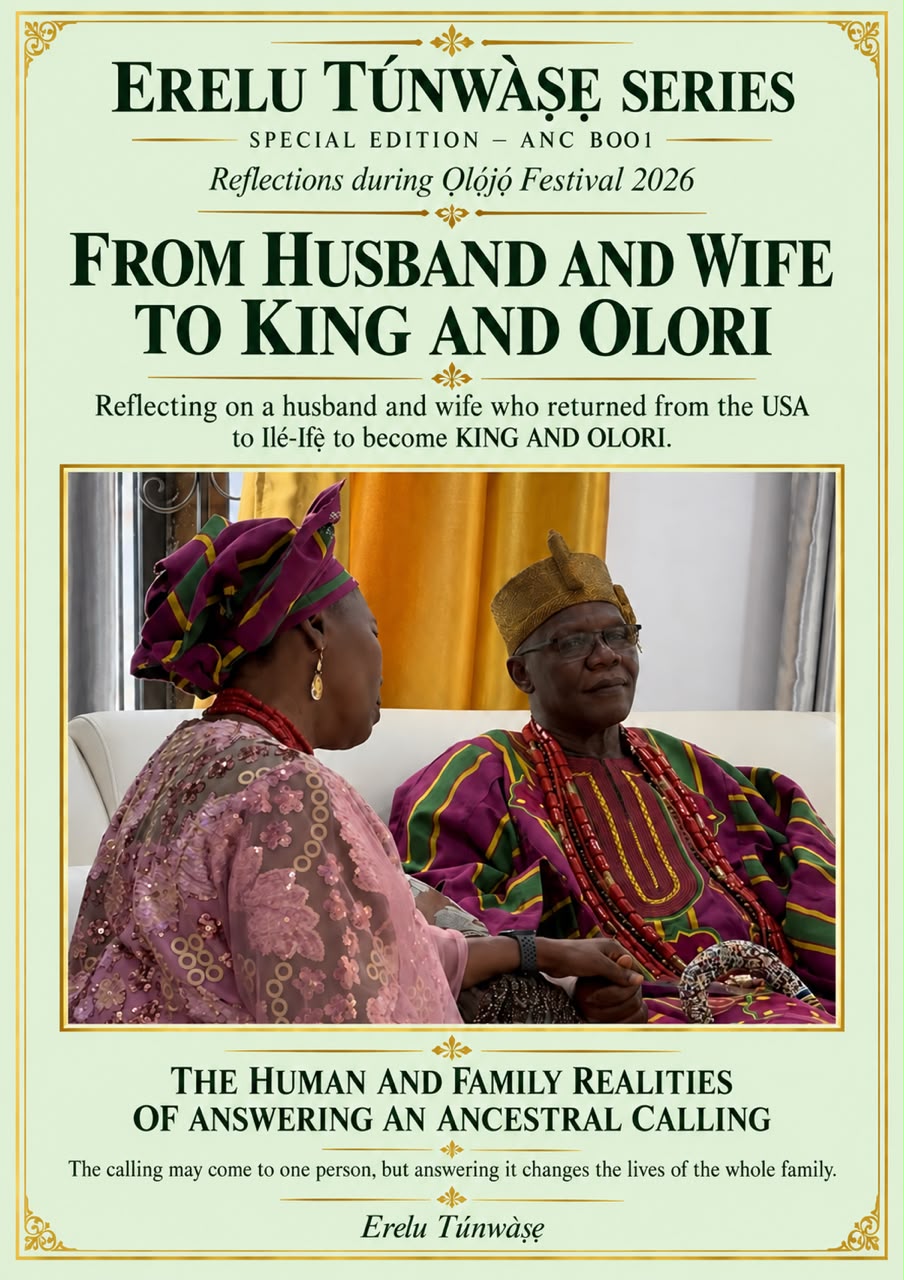
Reflecting on a husband and wife who returned from the USA to Ilé-Ifẹ̀ to become King and Olori.
The calling may come to one person, but answering it changes the lives of the whole family.
WHY HAVE OUR ANCESTORS CALLED US HOME?
WHAT DO THEY EXPECT OF US?
Many of us left our ancestral homes to study or work abroad. Some would say they went in search of a better life. In my case, I had no option: my parents were already in England, and I had to join them. I was only 17 years old.
Over the decades, we built lives abroad—marriages, families, careers, homes and responsibilities.
Then comes an ancestral calling.
For those of us who experience this calling, returning is more than a personal decision to relocate. There is a purpose we understand we have been called to fulfil.
WITH THE CALLING COMES A PLACEMENT
Our ancestors post us to different locations, much like ambassadors sent on foreign assignments. Some are called home; others serve from the diaspora. Each placement carries responsibilities.
My current placement is Ilé-Ifẹ̀. A significant part of it is Ilé Ọ̀rànmíyàn—the family of Ọ̀rànmíyàn, father of Alaafin Ṣàngó, from whom I descend by blood.
It has been an amazing experience, deepening my understanding of my ancestral household and the responsibilities of my calling.
Yet accepting a calling and reporting for duty can be a struggle. The willingness to respond and the financial means to do so do not always arrive together.
Travel, accommodation and existing family commitments must be paid for. Work or business may be interrupted, affecting the income on which a family depends.
THE FAMILY ALSO LIVES WITH THE CALLING
Often, a husband returns home while his wife remains abroad. The couple may now have to maintain two homes, fund journeys between countries and manage responsibilities previously shared under one roof.
There is also the emotional cost: missing everyday companionship and facing important moments without one another’s physical presence.
One spouse may feel the calling deeply while the other needs time, explanation and practical reassurance. The wife who remains abroad also makes sacrifices. Her contribution deserves recognition, consideration and support.
Accepting an ancestral calling does not remove our responsibilities to our family.
A KING AND HIS OLORI: MY FIRST-HAND EXPERIENCE
It has been a privilege to be personally involved with a husband and wife who returned from the USA to Ilé-Ifẹ̀ to become King and Olori.
I write with inside knowledge of monarchy in England. My experience here has brought into clearer focus the adjustments required when a couple’s established married life meets the expectations of an ancient royal institution.
For this discussion, I refer specifically to an Ọba whose appointment has received state-government approval and who has been presented with a Staff of Office.
He must understand the expectations of the ancestral institution, the royal household, the community and the state. His wife must also understand what her position as Olori requires.
THE OLORI AND ÀWỌN ÌYÀWÓ ILÉ
The Olori must find her place within the established traditions of the royal household.
In the experience I am describing, she was first welcomed into the ancient institution of ÀWỌN ÌYÀWÓ ILÉ—the wives of the household.
I witnessed what I regard as an extraordinary, historic first.
Her position as Olori sits within this wider ancestral family. Her welcome among Àwọn Ìyàwó Ilé introduced her to relationships, customs and responsibilities shared by the wives of the household.
I wholeheartedly congratulate her and salute her courage.
Accompanying her made me realise how demanding this journey was. She entered the experience with absolutely no preparation for what she would encounter or what would be expected of her. She had to learn as events unfolded.
Through her participation, she demonstrated her willingness to support her husband—A KING—and embrace her responsibilities as OLORI.
Experience can be the best or the worst teacher. How a person is received, prepared and supported makes a difference.
PUBLIC RESPONSIBILITIES AND PRIVATE LIFE
My own life has taught me the importance of understanding the capacity in which we are acting.
In public, I carry responsibilities as a medium and frontline traditionalist. As a politician and stateswoman (UK), bearing a lifetime English title, I have also carried responsibilities towards the people I serve.
In private, I am a wife, a mother and a confidant. The surname I bear belongs to the family into which I married.
These roles belong to the same person, but each carries its own expectations.
Likewise, a royal couple’s marriage belongs to their private life. In public, they stand as ỌBA AND OLORI.
In our Yorùbá tradition, the Ọba is honoured as ÌGBÁKEJÌ ÒRÌṢÀ—the deputy of the Òrìṣà. He represents an ancestral institution rooted in generations of ancient practices. Both partners must understand the dignity, responsibilities and protocols of their public positions.
THE ROYAL HOUSEHOLD MUST ENABLE UNDERSTANDING
Married life in the diaspora can differ considerably from married life in Nigeria. A couple may have spent decades with different expectations about privacy, shared decisions, family involvement and public behaviour.
The receiving household and community must recognise this background. Unfamiliarity with a custom should not immediately be mistaken for deliberate disrespect.
Knowledge should be shared. Expectations should be explained beforehand, together with the reasons behind them. There must be patience and opportunities to ask questions.
Those returning must equally be willing to listen, learn and fulfil the responsibilities they have accepted.
We must understand the ancestral assignment while recognising the human and family realities of fulfilling it.
Erelu Túnwàṣẹ. 27th September 2026 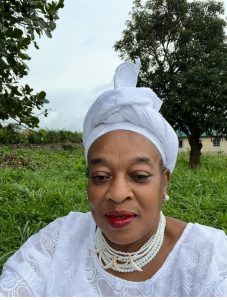
About the Author