
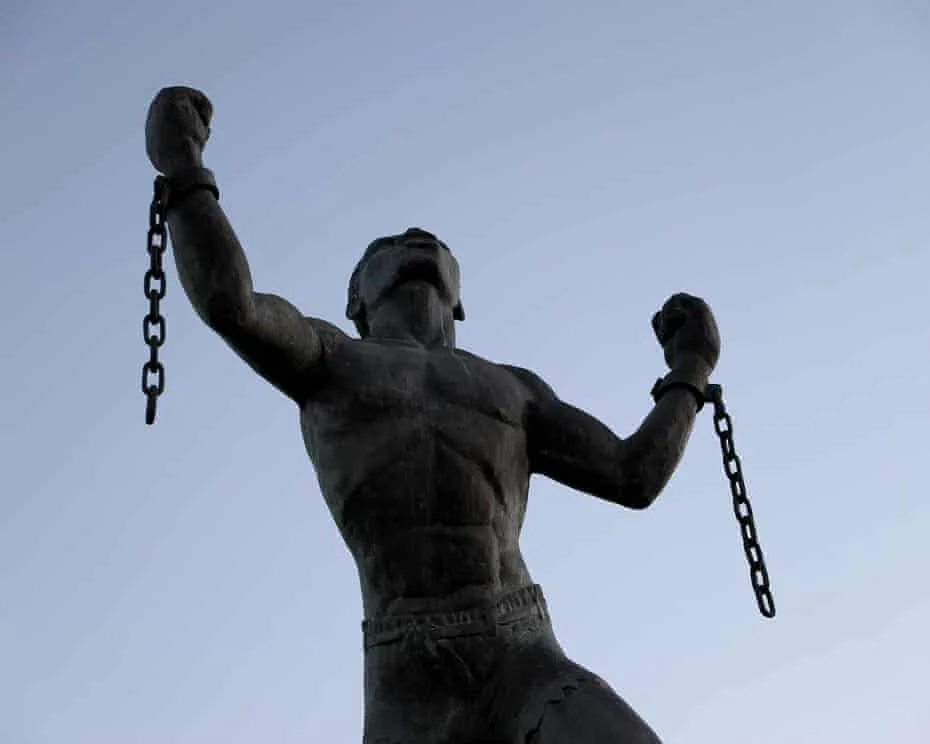
Caribbean countries are working on a unified approach to force Britain to start talking about reparations for the transatlantic slave trade, and are looking at legal routes if diplomacy doesn’t work.
The move followed the Third CARICOM Regional Conference on Reparations, held in Barbados from September 17 to 19, where governments, academics, activists and representatives of the African diaspora reviewed measures to advance the region’s reparations campaign.
The meeting also considered preparations for a Bridgetown Action Plan on Reparations and the execution of a revamped CARICOM Ten-Point Plan for Reparatory Justice. The conference organisers claimed the action plan was meant as a practical blueprint for furthering the reparations agenda.
The Caribbean leaders want the matter tackled at forthcoming international forums such as the Commonwealth Heads of Government Meeting set for Antigua and Barbuda in November. Dr Carla Barnett, the Secretary-General of CARICOM, said the region was preparing to push the issue of reparations higher up the agenda of the summit.
It is not simply about financial reward. CARICOM’s new Ten-Point Plan covers issues such as public health, education, cultural development, support for Indigenous communities, debt forgiveness, psychological rehabilitation and monetary compensation.
Regional officials have also said they are looking at legal options. Among the options being explored are procedures before the Privy Council in Britain and a request for an advisory opinion from the International Court of Justice.
“There are several legal strategies being looked at,” said David Comissiong, deputy chair of Barbados’ National Task Force on Reparations. One suggested path was the recent effort by Jamaica to refer questions regarding slavery to the Judicial Committee of the Privy Council.
Earlier this month, the Jamaican government petitioned King Charles III asking that legal questions over Britain’s role in slavery in Jamaica be brought to the Privy Council. The petition also poses the question of whether the UK has a legal obligation to give reparatory remedies to Jamaica.
The renewed Caribbean push follows the UN Committee on the Elimination of Racial Discrimination’s adoption in August of guidance that states have obligations under the International Convention on the Elimination of All Forms of Racial Discrimination to consider reparatory measures for the transatlantic slave trade and its continuing consequences. The group stated reparations may involve more than monetary recompense, including truth-telling, education, preservation of historical memory and tackling structural imbalances.
In March the UN General Assembly adopted a resolution that described the trafficking and racialised chattel enslavement of Africans as the “gravest crime against humanity”. Britain was among the countries to abstain from the vote.
But the British government has insisted it will not pay reparations. This month, reports said the UK position was restated as Caribbean states prepare to ramp up discussions on the subject.
The Caribbean was not out to bankrupt Britain but to achieve what Barbados Prime Minister Mia Mottley, chair of CARICOM’s Prime Ministerial Sub-Committee on Reparations, termed justice for the historical and ongoing impacts of slavery.
Mottley also said at the Barbados conference that she planned to set up a technical committee of historians and economists to put numbers on Barbados’ claim relating to more than two centuries of slavery, adding that the government required facts to back up its argument.
The Caribbean campaign is thus moving into a new phase, with a mix of diplomatic engagement, historical research and perhaps legal action as regional governments seek talks with Britain over reparatory justice.
About the Author