
By Okojie Annabelle Ofure
September 10 2026
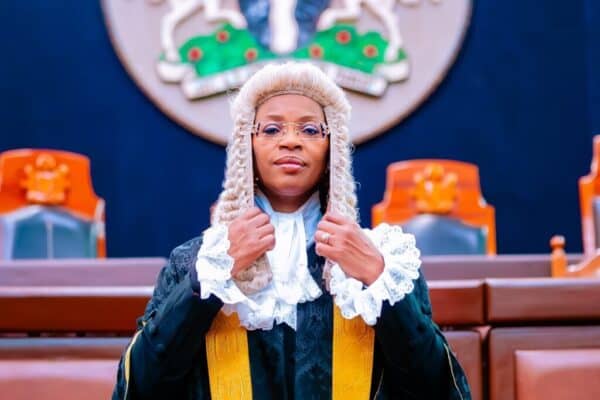
The President of the Nigerian Bar Association (NBA), Oyinkansola Badejo-Okusanya, SAN, has called for a clearer legal framework governing the recording of police officers, arguing that public accountability must not be sacrificed in the name of protecting official privacy.
Badejo-Okusanya spoke during an engagement with the Inspector-General of Police, Tunji Disu, and members of the NBA executive committee in Abuja, where both sides discussed the growing tension surrounding citizens’ recording of police activities.
While acknowledging concerns raised by the police over indiscriminate filming, the NBA president maintained that members of the public should not be prevented from documenting officers who are carrying out their lawful duties in public.
She, however, drew a distinction between legitimate recording for accountability and intrusive filming of officers in their private moments. According to her, the privacy of police personnel and other individuals must remain protected within the bounds of the law.
Badejo-Okusanya cited the deployment of body-worn cameras by police officers in the United States as an example of how recording can be integrated into law enforcement to strengthen transparency and accountability.
She argued that when officers know their conduct can be reviewed, the system provides an additional layer of institutional oversight and can help establish facts where allegations of misconduct arise.
“We should not be afraid of being transparent in the lawful execution of our duties,” she said, stressing the need for society to approach the issue through clearly defined legal boundaries rather than outright restrictions.
The NBA president also advocated stronger dialogue between the legal profession and the police, describing both institutions as partners in the pursuit of public safety, justice and respect for the rule of law.
On his part, Disu said a recent court judgment affirming citizens’ right to record police officers had generated concern within the Force, particularly as some Nigerians began filming officers in circumstances beyond their official duties.
The IGP acknowledged that citizens could record officers performing their duties in public but urged restraint, warning against turning police personnel into material for social media skits or entertainment. He described the trend as “very, very demoralising” to officers.
The exchange underscored the need for a carefully defined balance between citizens’ right to document public officials and the dignity and privacy of police personnel, particularly as mobile-phone recordings increasingly shape public scrutiny of law enforcement.
About the Author