
The blazing debate over the invitation of social media activist, Martins Vincent Otse, widely known as VeryDarkMan, to the 2026 Nigerian Bar Association Annual General Conference in Port Harcourt has opened up a far deeper wound than the topic of who should be speaking at a lawyers’ convention.
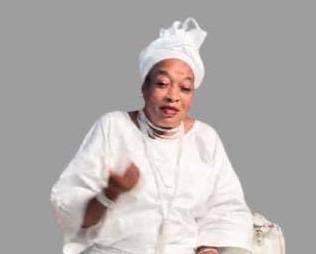
Erelu Tunwase Lola Ayonrinde, a former Mayor of the London Borough of Wandsworth, has made a powerful intervention on the matter to effectively divert the emphasis away from VDM and back on the Nigerian legal profession.
The Cultural Icon addressed an unpleasant question: “why is the voice of the social-media activist more compelling to increasing numbers of ordinary Nigerians than that of lawyers, the courts and established institutions of justice?”
Her judgement is especially harsh. Ayonrinde posits that the brouhaha surrounding VDM’s appearance may have inadvertently exposed the crisis that the Nigerian Bar should be grappling with, namely, the erosion of public confidence in the institutions of justice and the growing perception that the legal system has become increasingly remote from the people it exists to serve.
The 66th NBA Conference with the subject, “Beyond Limits” attracted over 24,000 registered participants, according to the organisers.
Instead of the conference theme dominating public attention, VDM’s attendance on a panel examining insecurity became one of its main talking points.
Ayonrinde has recently queried if attorneys should be looking at the messenger – or staring at the mirror.
VDM was invited to take part in a session on insecurity and the perspectives of communities affected by violence.
His appearance drew some criticism from the legal community, questioning why a social-media figure without any legal credentials should be granted a platform at the NBA’s biggest professional event.
Chief Femi Falana is a Senior Advocate of Nigeria, among many who had queried the selection. Others criticised VDM as an improper option for a legal conference.
But VDM himself clarified his viewpoint. He stated he was not at the conference to teach lawyers about the law but to share his experiences of insecurity and his meetings with people afflicted by violence.
And that is the difference on which the argument of Erelu Ayonrinde is based.
She argues that professional qualification and lived experience are not mutually exclusive sources of knowledge.
If the argument is about the reality of insecurity as experienced by ordinary Nigerians, she argues, “must the microphone be necessarily reserved for lawyers, academics, judges and security experts? Can the victims, witnesses, activists and community people who experience insecurity firsthand not contribute constructively to the conversation?
For Ayonrinde the answer is a resounding yes.
She said that the legal profession is ultimately for the public, not just attorneys and judges, and the experiences of individuals who use legal services should be part of the profession’s debates.
She sees VDM not as an intruder into the legal profession, but as a representative of a constituency lawyers rarely hear directly enough: the ordinary Nigerian who needs to traverse the Police, courts, lawyers and the wider justice system.
The intervention is made much more offensive when it resorts to the “mirror” argument which has been attributed to lawyer and activist, Dele Farotimi.
The parallel is simple and striking. If a mirror reflects an unpleasant image, breaking the mirror does not make the face lovely.
When applied to VDM the thesis is that the huge popularity of VDM and his ability to mobilise public outrage may be signs of a deeper institutional breakdown.
“If more and more citizens are turning to social-media activists to expose injustice, seek redress, confront public institutions or demand accountability, perhaps the question should not be simply, ‘Why is this man so loud’?
“The more fundamental question is: Why are people listening to him in the first place?
That is the challenge issued by Ayonrinde to the Bar.
She warns that the outcry over VDM’s presence might become a classic instance of shooting the messenger and disregarding the message.
And the message, like it or not by attorneys, is that a good chunk of the Nigerian people is unhappy with the established justice architecture.
Ayonrinde’s contribution is thus a direct challenge to the moral standings of the Nigerian legal profession.
Hear her: ‘If attorneys are the traditional champions of justice, why has the Nigerian public been more and more attracted to unconventional voices outside the court room?
Why should a social media star be the one to command the attention of millions of Nigerians when attorneys have occupied the area of formal advocacy for decades?
“Why, sometimes, do citizens seem to have more faith in activists, citizen journalists and online campaigners than in the very institutions created to protect their rights?
“And perhaps most painful is the question: Has the Nigerian Bar done enough to be the moral voice of the ordinary Nigerian?”
These are not questions Erelu Ayonrinde is comfortable with. But these are precisely the problems she believes the VDM affair has put directly before the legal profession.
She added: “One of the strongest arguments in favour of the invitation is that VDM was not invited as a constitutional scholar, Senior Advocate or authority on Nigerian jurisprudence.
He was invited to speak about insecurity from the point of view of his experiences. That counts.
His attendance was acknowledged by the NBA organization later on and he was given an award after the session for participating and sharing his insights with conference participants.
— \”That makes the controversy more fun. “And if the NBA thought his presence was valuable enough to be honoured, then the concept that his mere presence diminished the stature of the conference becomes difficult to hold without looking at the purpose of the particular session.”
Ayonrinde’s position then is not that VDM’s popularity should shield him from examination. “Not at all,” she replied.
She argues that his lack of a legal qualification should not automatically disqualify him from participating in a discussion on a subject he has experienced firsthand.
But she stressed that If VDM makes serious claims, those allegations must be tested and If he accuses institutions or individuals of wrongdoing, evidence counts.
But those norms, Ayonrinde believes, should apply equally to everyone- lawyer, judge, politician, academic, activist or regular person.
Ayonrinde says this underscores a bigger idea: Institutions that are responsible to government and society have to be ready to be held responsible themselves.
“The Bar cannot ask for transparency from public institutions while closing itself off from uncomfortable questions. It cannot be allergic to criticism and advocate justice at the same time. And it cannot demand that the public listen to attorneys, while refusing to listen to the public itself,” she stressed.
In the end, Ayonrinde’s participation implies that VeryDarkMan may be the least interesting player in the controversy. The trust crisis is the true story.
She said: “The VDM phenomenon did not just happen overnight. It has thrived in a milieu where many Nigerians are angry with bureaucratic institutions, wary of public authorities and more impatient with formal avenues that seem slow, expensive or inaccessible. Another question is whether VDM’s procedures are always correct.”
And Ayonrinde wants the Nigerian Bar to pay the piper.
“The legal profession is not there for lawyers,” she said. It’s for the society.” Lawyers may practise law but they don’t own justice. Judges read the law, civilians get justice.
“Judgments can be made by the courts but it is ordinary people who have to live with the consequences. The Police may uphold the law but it is the public that feel the system out on street. And so those who are affected by the judicial system need to be part of the discourse about how the system operates.
Why does VeryDarkMan have such a strong constituency among Nigerians in the first place? Until the legal profession is willing to address that issue honestly, attacking the messenger may not achieve much. Because the mirror will stay. And the reflection will remain.”
About the Author