
Italy has taken similar steps in reaction to a major influx of migrants into Ceuta and Spain has announced that it will conduct temporary border checks on visitors from Italy.
“The checks will start at midnight today and last until September 7, amid the persistent irregular migration pressure” facing Italy, Spain’s interior ministry said in a statement.
Spain had threatened Italy with retaliation if it did not quickly remove its own border inspections, but got a pushback from Rome, says AFP.
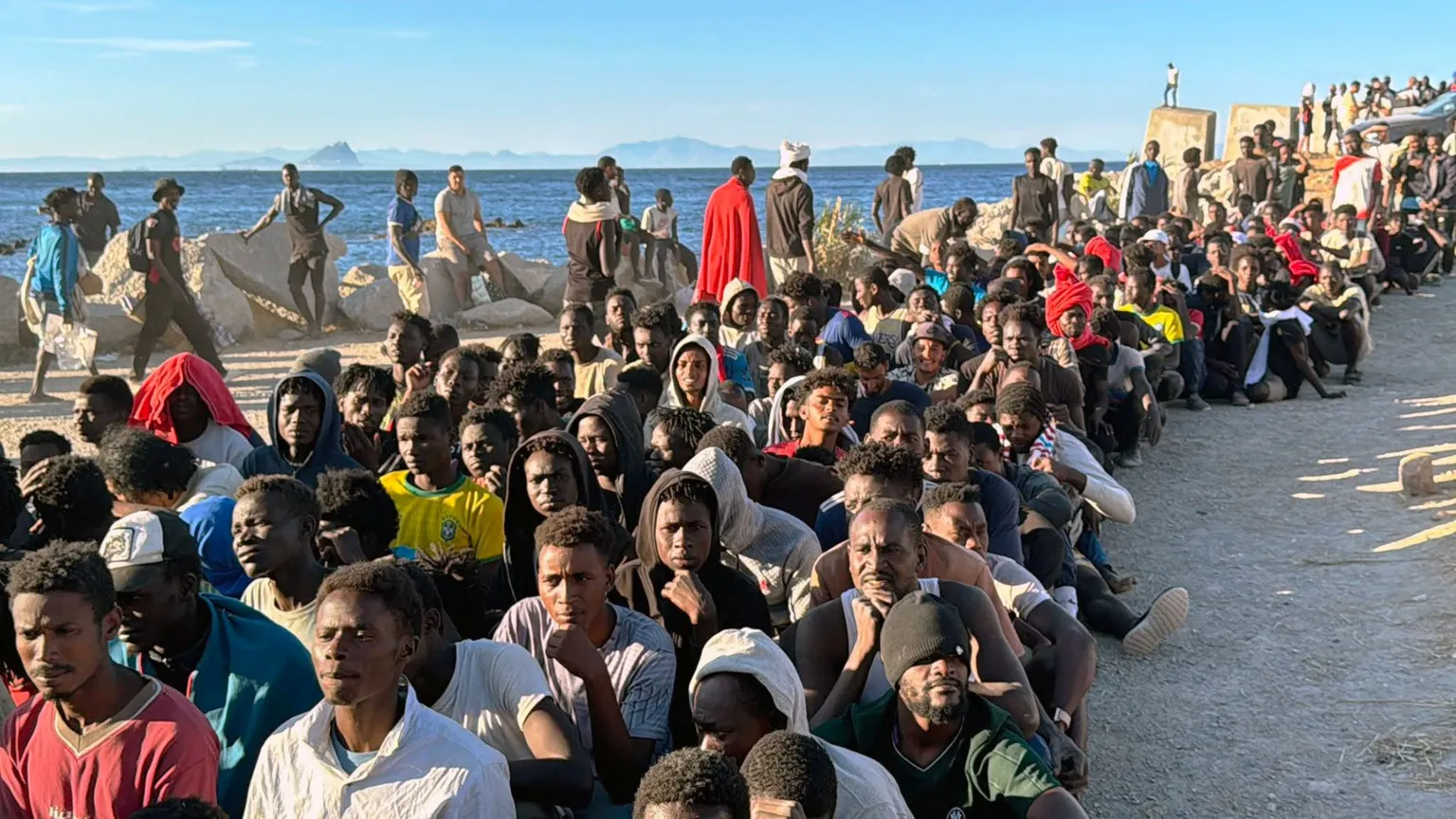
The uncommon disagreement between the European Union and NATO partners began after tens of thousands of refugees crossed on July 30-31 from Morocco to Spain’s North African region in an unprecedented, deadly stampede.
The scenes angered the EU member states backing a hardline approach to irregular immigration including Italy which enforced a month-long suspension of its visa-free travel Schengen agreement with Spain.
The Spanish government denounced the legislation Friday as “unfair, against the interests of the EU and discriminatory for the Spanish population.
Foreign Minister Jose Manuel Albares called it as “a torpedo aimed at the hull of European unity.”
“We call on the government of Italy to fix, end the checks and treat Spaniards like other European citizens,” the ministry declared.
He promised “proportional measures” if Italy failed to comply by Sunday (tomorrow).
Within hours, Italy’s far-right Prime Minister Giorgia Meloni declared her government “had no intention of revising the decision” before August 15, when it stated Spanish police “expected a new wave of migration” to hit Ceuta.
“Italy does not accept ultimatums or impositions from abroad on issues of national security and border control,” Meloni’s office said in a statement.
The decision would only be revisited when it was convinced there were no security or terrorism dangers to Italy, no new wave was underway and no irregular migrants were going toward European territory, it said.
Within hours, Spain’s interior ministry announced comparable actions.
Local media reports say Spanish authorities have been investigating online speculation and social media regarding anticipated new arrivals in mid-August in Ceuta.
But officials have not declared explicitly that they anticipate a repetition of last week’s surge.
Meanwhile, border authorities will ‘do their utmost to ensure maximum ease of travel for Spanish and European individuals’, who are not affected by border checks, the Italian statement stated.
Italy, which does not share a physical border with Spain, has put in place border checks at sea and air ports of entry for nationals from a third country coming from the Iberian country.
The announcement on July 31 was a “extraordinary measure” to “safeguard national security and prevent possible repercussions for our nation” . At the time Meloni said.
Among the EU leaders who urged for Spain to be suspended from the visa-free Schengen travel zone after the Ceuta event was she, although such a measure would have been legally impossible.
Italy’s coalition government has moved to stem the flow of tens of thousands of refugees arriving each year in small boats on the country’s shores.
The Spanish government advised against “creating divisions and sterile conflicts motivated by internal electoral reasons” and stated: “we trust that the pro-European sentiment, common sense and good faith will prevail”.
Official Spanish data say 70,000 of the 72,000 who entered Ceuta have gone back to Morocco.
Spanish authorities say 80 killed in the crossings.
But Moroccan rights groups claim the figure is greater.
At least 141 people were killed and the toll was certain to grow, the Moroccan Association for Human Rights (AMDH) and the European Coordination for Human Rights in Morocco announced on Friday.
Eleven people died on the Moroccan side of the border, the interior minister claimed, all but one of them in drowning.
Those who remain in Ceuta – including hundreds of unaccompanied children – are living in horrific conditions with minimal access to food, water and shelter.
About the Author