

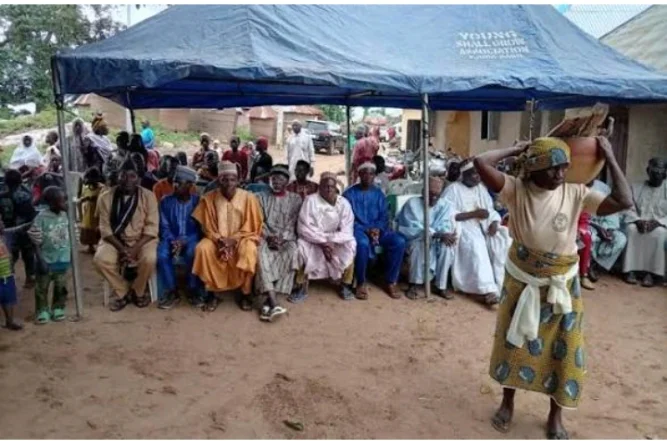
ActionAid is stepping up its demand to world and national leaders to substantially expand investment in grassroots development as the most effective method to tackle systemic poverty and inequality.
The group maintains that sustainable change can only be achieved when communities are allowed to lead their own development.
During a recent strategic engagement, the Country Director of ActionAid Nigeria presented a forceful directive to all participants to develop durable structures and to continue to push change via collective action and responsibility.
This rallying cry reflects the organization’s conviction that meaningful change starts with empowering people not only with handouts, but with the resources and platforms to create their own destinies.
“This is beginning to pay dividends. The Scaling Up of Public Investment in Agriculture initiative in Nigeria was able to enable more than 2,913 smallholder women farmers to move from being mere spectators to active participants in budget processes and policy formation.
The project has successfully campaigned for more and gender-responsive public investment in agriculture, resulting in new budget lines to improve food and nutrition security.
Additionally ActionAid’s agroecology initiatives are showing what is possible through community-led solutions.
Khadijat Taiwo, a smallholder farmer, participated in a training program, returned to her village and trained over 100 others, creating a model farm that provides fresh veggies every week. “It has been very rewarding to see people embrace agroecology and begin to produce their own food,” Taiwo said. “What I have learned through this journey is that when you educate one person, you are creating a ripple effect that can affect an entire community.
The model has reached over 135 000 farmers and youth resulting in increased yields and revenue.
ActionAid says sponsoring such localised, gender-sensitive programs is crucial for developing long-term resilience and delivering enduring justice for poor communities.
About the Author