
Iran vowed to retaliate against the United States and Israel for further strikes in Beirut yesterday, significantly dimming hopes for a sustainable settlement as the Middle East war entered its 100th day.
The war has shaken global markets and has put domestic pressure on US President Donald Trump ahead of midterm elections. Efforts to turn a ceasefire into a settlement have repeatedly faltered, AFP said.
Tehran has consistently said any solution to end the war permanently must also stop the parallel battle in Lebanon, where Israel is waging a campaign against the Iran-backed movement Hezbollah.
Iran has warned in recent days that any additional assaults on Beirut would precipitate a “full-scale resumption” of hostilities.
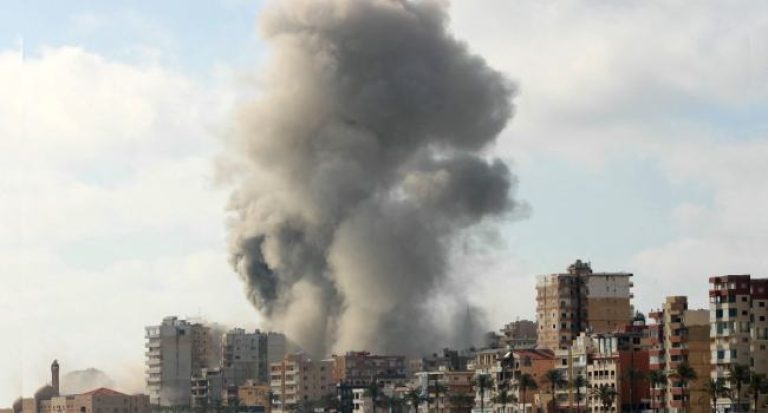
Yesterday, the office of Israeli Prime Minister Benjamin Netanyahu claimed that the army had “just struck a militant command centre in the Dahiyeh district of Beirut, in retaliation for Hezbollah’s firing towards Israeli territory”.
Israel and Hezbollah regularly exchange fire along the border, but Beirut’s southern neighbourhoods, viewed as strongholds of the militant group, have been attacked only twice since mid-April.
Israel has warned of strikes on the area if Hezbollah attacked northern Israel.
Iran’s parliament speaker and country’s top negotiator in negotiations with Washington Mohammad Bagher Ghalibaf said the United States had given a “green light” for the Beirut attack.
“This and the ongoing US blockade of Iranian ports turn the bases and assets of America and the (Israeli) regime in the region into legitimate targets,” he said. “Our armed forces are as always free to take action.”
Ebrahim Rezaei, spokesman for the Iranian parliament’s national security commission, also warned “a decisive and painful response”.
“These mad dogs have to be taught a lesson… “Look at the sky over the occupied lands tonight,” he continued, alluding to Israeli territory.
Iran’s assertion that the crises are connected has hampered negotiations for Washington. Trump had advocated for Israel to take a “more surgical” approach in Lebanon in a previously taped interview aired Sunday.
‘Gone Numb’
The predictions of an escalation on the 100th day of the war came as Iranians had already been feeling the strain of weeks of uncertainty.
Ahvaz fitness trainer Elaheh said: “I’ve really gone numb.
“Everyday life? It’s a joke. The whole thing sucks. ‘We just try to survive,’ said 32-year-old.
“Life is becoming more and more difficult,” Farhad, a 35-year-old cook, also observed, adding that economic difficulties had hit even before the war.
“Things that you might have thought of buying a few months ago are now dreams and fairy tales,” he informed our correspondent.
Signs of ongoing diplomatic attempts over the weekend included a visit to Tehran by Pakistan’s interior minister Mohsin Naqvi.
Iranian state media said Naqvi was carrying a “special letter” from Pakistan’s army chief to Iran’s supreme leader and a message from the prime minister when he arrived Saturday.
Meanwhile, Pakistan Army chief Syed Asim Munir has been instrumental in facilitating dialogue between Iran and the United States after a first round of bilateral talks in Islamabad.
Also on Saturday, Lebanese army leader Rodolphe Haykal flew to Pakistan for his own discussions with Munir and a source close to his visit said it was “linked to the Pakistani mediation” between Tehran and Washington.
Deadlock
Iran’s military adviser to supreme leader Ayatollah Mojtaba Khamenei, Mohsen Rezaei, said CNN negotiations with the US “are at a deadlock, and Trump must break this deadlock”, pushing for the release of around $24 billion in frozen Iranian assets.
But in the same interview Trump stated he would not unfreeze Iranian assets until striking a deal with Tehran.
“That comes after. “If they behave, if they do a good job, we start talking,” he remarked.
In fact, a source familiar with Treasury Secretary Scott Bessent’s thinking said Washington may want to tap those funds to pay for damage inflicted by Iranian strikes on Gulf allies.
Meanwhile US Central Command (CENTCOM) stated overnight it had destroyed two Iranian drones “that threatened international maritime traffic in the Strait of Hormuz”.
Earlier, Tehran had fired a salvo of missiles at US allies Bahrain and Kuwait on Saturday, after a prior drone interception and strikes on Iranian radar stations.
About the Author