
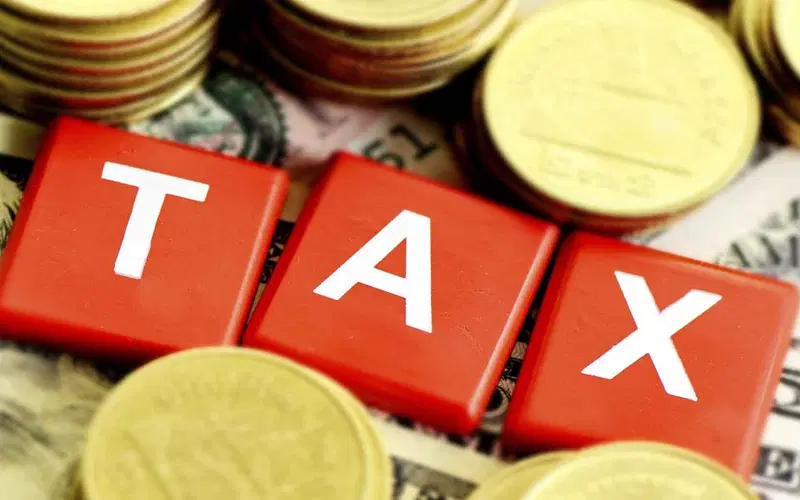
Some businesses and dealers may be using the new tax regulations to raise prices of goods and services in different parts of the country without any reason, according to research.
The federal government has said since the new tax rules went into effect in January that they would lower some taxes and boost growth without raising revenue in the short term, according to Saturday PUNCH.
But new information shows that some business owners are already boosting the pricing of their goods and services, saying that the tax regulations are to blame.
It was learned that the price hikes have arrived in the shape of Value Added Tax levies and other general pricing changes.
On June 26, President Bola Tinubu signed four key tax reform measures into law. This was the most important change to the tax system in decades, according to the administration.
The Nigeria Revenue Service (Establishment) Act, the Nigeria Tax Administration Act, the Nigeria Tax Act, and the Joint Revenue Board (Establishment) Act are the laws that govern the Nigeria Revenue Service.
Last December, the NRS declared that the new tax laws were meant to make the economy more competitive, bring in more investments, and make the economy more stable in the long run.
The agency also emphasized that the four percent development tax on imported items that has been spoken about a lot is not a new or extra tax, but a simpler way to combine many existing taxes.
The things that are not subject to tax
A list of things that Nigerians use a lot are now free from VAT payments because of the new tax legislation. These are things like rice, beans, veggies, and other fundamental foods that haven’t been processed yet.
Medical and pharmaceutical products, educational publications (materials and services), electricity production and transmission services, non-oil exports, agricultural inputs, diesel, petrol, and solar power equipment are also excluded.
The new rule also says that rents and items meant for humanitarian projects don’t have to pay VAT.
Also, businesses that make less than N100 million a year don’t have to charge VAT at all.
But even with these exceptions, research shows that business owners, traders, and small and medium-sized businesses in different parts of the country are using the new tax regulations to charge more for goods and services.
Some business owners, shopkeepers, and traders told our reporters in separate interviews that prices of goods and services have gone up sharply because they need to make room for new tax payments.
Yemisi, a company owner, stated that the new tax rules had made her raise prices so that she could pay her taxes.
She said that not doing so could hurt her business at the end of the year.
Yemisi said that the tax and VAT system was hard for small registered enterprises, and that both have hurt their income and earnings.
“We’ve begun raising prices to cover the tax changes,” she stated. If we don’t do that, business owners might not make any money.
“Things we used to buy for N8,000 now cost N10,000, and things that used to cost N15,000 now cost between N17,000 and N20,000.”
A vendor named Ramat Owolabi also reported that commodities sold by wholesalers had gotten more expensive in the market.
She said that prices had gone up and that the new tax system was to blame for the rise.
“We don’t even know what’s going on in the market this year,” Owolabi remarked. The things we got for less money last December have gone up by 10 to 20 percent this year.
“Has the tax had an effect on the prices of goods? This doesn’t make sense. “We hope this clears things up for us.”
It was also learned that certain car dealers were raising the prices of cars by adding extra fees.
A leading vehicle dealer in Lagos, who didn’t want to be named, told our reporter that they did so out of extreme caution regarding the new tax rules.
“Everyone is being careful with this new tax rule so that you don’t have to pay for what you didn’t eat at the end of the year,” he said.
“Most of the time, people give us cars to sell.” We get our commission after the sale.
“Think about it: after I make N2,000 from selling a car, they want me to pay N20,000 in taxes at the end of the year for just that one car.” “Where do you think I should get the money to pay the taxes?” he asked.
He remarked, “Before, we didn’t do this, but now it’s a must” to explain how the new tax legislation has changed how businesses work. We will first figure out the VAT on the price of the car and add it to the amount the buyer will pay if they want to buy a car now. Now that’s the rule. “We just want to be very careful with the new law.”
More outrage about X
Since the start of the year, Nigerians have also been complaining on X about small businesses and street vendors who they think are trying to extort money from them because of the new tax laws.
On Tuesday, Ohikizi, who goes by the name @Kings75431077, stated, “Literally, everything in Nigeria has gotten more expensive because of the new tax reform.” A kilo of chicken costs between 6,000 and 6,600. A POS fee of N100 for N5,000 is now N150. “Buy N10,000 worth of gas, and they charge you N500.”
On the same day, a blog on X called Gist with Denok shared a video in which a woman talked about how a well-known restaurant called Ileyan, which has locations in Lagos, Abuja, and Ibadan, charged her an extra N23,000 as 7.5% VAT and 5% consumption tax on a meal she and her friends ate there that cost N181,000.
The lady in the video showed the receipt for the lunch, which showed that roughly N9,000 was collected as consumption tax and the rest, N13,000, was taken as VAT.
“I don’t get Tinubu’s policies at all.” We went to Ileyan to eat, and our bill was N181,000. To our astonishment, they requested us to pay an extra N23,000. That is a 5% consumption tax plus a 7.5% VAT. We ended up paying N203,625. The woman said, “Is this how we will pay when we buy and sell?”
Last Friday, a post on X went viral. It was from a Nigerian social media influencer named Rita Ushie, who is better known as Raye. She shared a payment receipt that said N487,500 was added to her N6.5m partial payment for a tech startup project as a 7.5% VAT charge. This caused a lot of discussion on the platform.
On the same day, a user named Stringer, who goes by the name @dcryptosailor, posted on X, “I saw a woman on my street today who said she was charged an extra N500 at the market where she went to buy products worth about N10,000 because of the new tax law. She was advising other shop owners to start adding money. I shook my head and then told them what was going on.
A dealer who didn’t want his name in the news told our correspondent that the new tax legislation had made it easier to deduct money from everyday transactions.
He added that even though the new tax laws don’t say that savings interest should be taxed with Value Added Tax, he still had to pay almost N4,000 in VAT on his PiggyVest funds.
He remarked, “I put N250,000 into PiggyVest for a year, and when I took my money out, I had to pay N4,125.14 in Value Added Tax.”
“This is money I already had a hard time saving, and the deduction was just because of the new tax law.”
Attempts to talk to the Manufacturers Association of Nigeria and the Nigerian Labour Congress were unsuccessful since their representatives did not answer their calls or respond to text messages and WhatsApp messages sent to their phone lines as of press time.
Small and medium-sized businesses (SMEs) are against extorting customers.
Femi Egbesola, the President of the Association of Small Business Owners of Nigeria, argued that raising prices in the name of tax compliance was immoral and unfair.
Egbesola stated, “I don’t know if that’s happening, but if it is, it’s very wrong because they should be paying taxes on their profits and not stealing from the people.” That is pretty much extortion, and it also demonstrates that they don’t truly understand what the government wants or what the tax rules say.
“If they know, they will know that the more money they make, the more taxes they will have to pay.” They will have to pay higher taxes because they are raising the prices of their goods.
He did say, though, that small enterprises should not have to follow the rules so that everyone can fully comprehend the new tax law.
Dr. Aliyu Ilias, an economist, also noted that the government needs to do more than just make changes; it needs to make sure they are carried out and watched.
He told the NRS to look into the incident and make sure that the people implicated are punished.
He says that if the reforms aren’t enforced, they will hurt most Nigerians.
Ilias said, “The government should do more than only bring about a change. They should also make sure that the changes they are making are checked. The NRS should investigate into this and punish the business owners. If they don’t do this, it will hurt most Nigerians.
NRS says there is no reason for the price jump.
Mr. Dare Adekanmbi, the Special Adviser on Media to the Executive Chairman of the Nigeria Revenue Service, Zacch Adedeji, told our reporter that there were no additional taxes or higher tax rates under the tax laws.
Adekanmbi added, “It goes without saying that the new tax laws can’t justify any rise in the prices of taxable goods and services.”
He called the business owners who were raising prices unpatriotic.
“The tax reform helps Nigerians in important areas where they spend a lot of their money.”
He went on to say, “It also helps a lot of low-income people and small businesses.”
About the Author