
Nigeria is facing an existential threat rather than a traditional socio-economic crisis, according to former military leader Major General Rogers Nicholas (retd.), who stated that the country cannot overcome its increasing insecurity without immediately securing its borders.
During his appearance on Channels Television last night, he said these things.
Nicholas, a former Chief of Civil-Military Affairs at Army Headquarters and Commander of Operation Lafiya Dole (North-West), contended that although President Bola Tinubu has access to workable solutions to the security situation, he has not yet fully implemented them.
“There are a few fundamental tasks to do. I would like to inform the President that his office holds the key to solving this insecurity issue.
“A thorough national security retreat was carried out when his Chief of Staff was Speaker of the House of Representatives, and the subsequent communiqué was extremely detailed.”
That document contains all of the necessary steps to address insecurity. Nicholas stated, “It is regrettable that those concepts have remained mostly unexecuted.
Despite years of warnings from top security officials, the retired general also criticized the lack of a border security focus in current defense strategy and financing.
“Christopher Musa, the current minister of defense, made unambiguous remarks regarding border security when serving as chief of defense staff. He said that without secure borders, Nigeria cannot be considered secure.
“We continue to run budgets that do not sufficiently account for border security, notwithstanding his criticism at the time. “There can be no security if we do not secure our borders,” he stated.
The former commander dismissed claims that economic interventions are the primary means of resolving Nigeria’s security crisis.
“The liberal security theory, which solely discusses basic security, is not one that I follow. We are currently confronted with an existential peril. “Bread and butter solutions don’t work on it,” he continued.
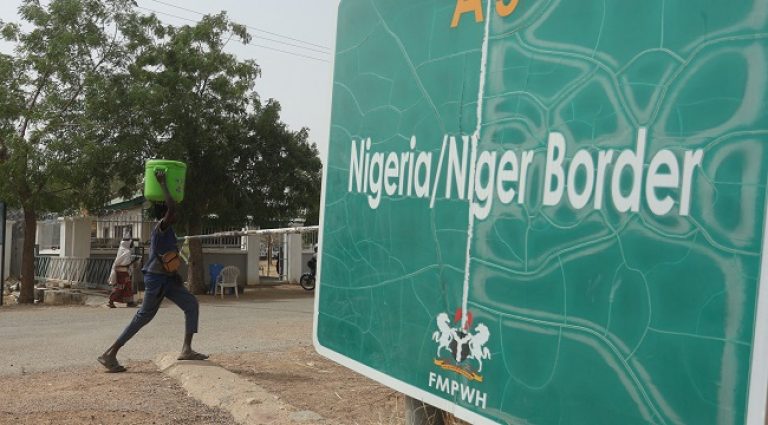
Due in large part to their porous nature and ungoverned areas, Nigeria’s vast land and sea borders have been recognized as contributing to the nation’s security issues.
In the midst of the nation’s ongoing banditry, abduction, and intercommunal violence, security officials claim that extremist organizations like Boko Haram and ISWAP use the northern border routes connecting Nigeria with Niger, Chad, and Cameroon to transport fighters and weapons.
About the Author