
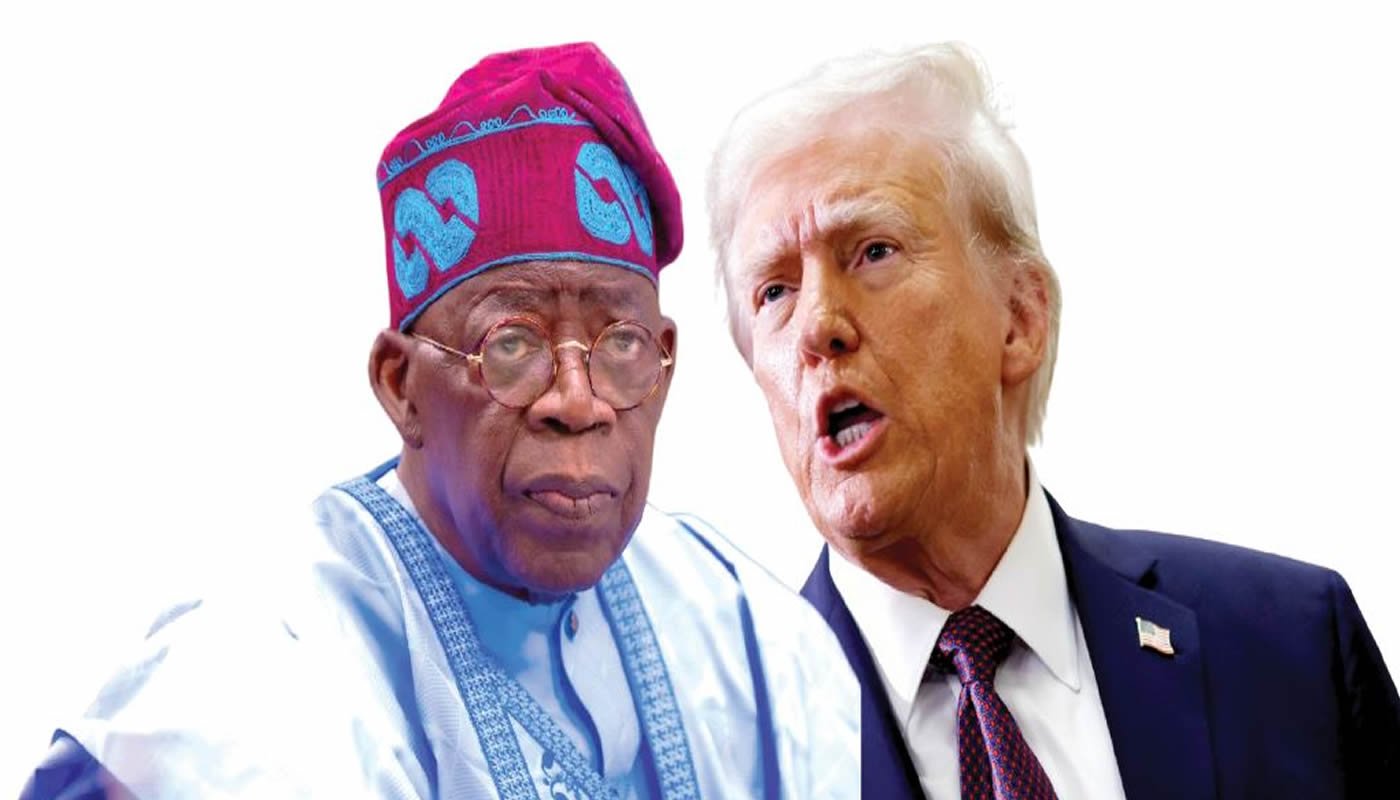
A diplomatic storm is brewing around twelve northern governors, well-known traditional leaders, and senior judges. The US Congress is considering a bill that could impose harsh penalties on them for allegedly being involved in what American lawmakers call a “Christian genocide” and systemic persecution under Nigeria’s sharia and blasphemy laws.
President Donald Trump named Nigeria a Country of Particular Concern and told Secretary of State Marco Rubio to act right away, according to The PUNCH.
On Friday, Trump posted on Truth that hundreds of Christians were being killed in Nigeria. He urged Congressman Riley Moore, Chairman Tom Cole, and the House Appropriations Committee to look into the situation right now and let him know what they found.
Republican Senator Ted Cruz’s Nigeria Religious Freedom Accountability Act of 2025 calls Nigeria a “Country of Particular Concern” for religious persecution.
The measure suggests that public officials and religious leaders who are accused of encouraging or allowing violence against Christians and other religious minorities should face immediate punishment.
The US Department of State named Nigeria a “Country of Particular Concern” for the first time in December 2020 because of what it called “systematic, ongoing, and egregious violations of religious freedom,” violent Boko Haram attacks, and frequent ethno-religious conflicts that were made worse by the court system.
The bill, which was introduced on September 9, 2025, says that the US Secretary of State must send Congress a list of Nigerian officials, such as governors, judges, and monarchs, who have “promoted, enacted, or maintained blasphemy laws” or “tolerated violence by non-state actors invoking religious justification” within 90 days of the bill’s passage.
Under Executive Order 13818, the US government’s Global Magnitsky Human Rights Accountability framework, the sanctions could lead to travel bans, asset freezes, and financial limitations for individuals found guilty.
The bill’s most important part was the introduction of Sharia law in northern Nigeria, which it called the blasphemy legislation and said was against Christians.
Sharia, which comes from Islamic law, has been a way for Muslim communities in northern Nigeria to regulate their own behavior, morals, and the behavior of others for a long time.
The biggest change happened between 1999 and 2000, right after Nigeria returned to civilian control. Several northern states, starting with Zamfara under Governor Ahmad Sani Yerima, broadened Sharia’s reach to cover criminal law and public morality.
In just two years, roughly 12 northern states had passed identical Sharia-based criminal laws and set up Sharia courts next to regular courts.
Zamfara, Kano, Sokoto, Katsina, Bauchi, Borno, Jigawa, Kebbi, Yobe, Kaduna, Niger, and Gombe are the states that are affected.
Kwara, Kogi, Plateau, Benue, Nasarawa, Taraba, and Adamawa, on the other hand, still use the regular secular legal system. Sharia only applies to personal status matters like marriage, inheritance, and family issues for Muslims, not criminal or public law.
The Sharia Council recently said it would set up shop in some parts of the South, starting with the states of Oyo and Ogun.
The development caused problems since Christian and Muslim factions fought over what they thought was the installation of Sharia in the two states.
But the tension went down when the council made it clear that it wasn’t establishing up a court of law but rather arbitration panels to help settle Muslim-related conflicts and give advice that wasn’t binding.
Cruz argued that Nigeria’s officials had “institutionalized sharia law and allowed jihadist violence” when defending the bill.
“Religious persecution and violence against Christians and other religious minorities in Nigeria happens all the time.
“Since 2009, more than 52,000 Christians have been killed, 20,000 churches and other places of worship have been destroyed, and dozens of villages have been wiped out.” The federal and state governments have not done anything, and in many cases, they are part of the problem.
The bill makes it clear that since Zamfara State accepted sharia law in 2000, when former President Olusegun Obasanjo was in office, almost all of the 19 northern states have added blasphemy laws to their legal codes.
Death sentences for alleged blasphemy in states like Kano, Bauchi, Sokoto, and Katsina have caused outcry around the world. Now, even southern states like Oyo and Ogun, which have Sharia committees, may be investigated.
FG stands up for Sharia
The federal government, on the other hand, has defended Nigeria’s constitutional and legal framework for religious freedom, saying that the country does not have statewide blasphemy laws or persecute Christians, as the US draft legislation says it does.
The Ministry of Foreign Affairs published an official policy note called “Nigeria’s Constitutional Commitment to Religious Freedom and Rule of Law.” In it, the government said that the country’s constitutional and judicial systems fully protected freedom of religion and conscience. It also said that all state and local laws, including Sharia laws, were subject to constitutional protections and secular appellate review.
The statement says that Nigeria is still a “constitutional, multi-religious democracy.” Its Constitution, as amended, says that there can’t be a state religion (Section 10), that people have the right to think, believe, and practice their religion freely (Section 38), and that people can’t be discriminated against because of their religion (Section 42).
The document made it clear that “Sharia in Nigeria is not a nationwide, compulsory system.”
“Some northern states have made Sharia-based criminal laws that only apply to Muslims; non-Muslims are not affected by these laws.”
“In civil or personal matters, like marriage or inheritance, using Sharia is optional, just like parties can choose between customary or statutory regimes,” it said.
The federal government also made it clear that there was no federal crime of blasphemy in Nigerian law.
It further said that national criminal laws only cover activities that break public order or are likely to lead to violence, which are “religion-neutral” and apply to all religions.
“The Nigerian government does not persecute Christians in law or policy.
The statement said, “Nigeria’s legal system treats all religions the same; Christians can freely build and register churches, run schools and charities, and hold public office all over the country.”
It said again that Sharia’s reach was limited by the Constitution and not required.
“Sharia Courts of Appeal at the state and federal levels only have power over Islamic personal law in civil cases, and people choose this system by getting married or signing a contract.
Only a few northern states have accepted Sharia-based regulations for criminal cases, and Muslims are the only ones who can use them. Those laws don’t apply to non-Muslims.
Even if a first-instance Sharia court finds someone guilty, constitutional due-process rules still apply, like a fair hearing, legal representation, and proof criteria.
“Secular appellate courts have thrown out or sent back convictions many times because the procedures or rights weren’t good enough. “The constitution sets limits on Sharia law, not above it,” the government said.
The statement said that any notion that Nigeria’s laws or policies allowed religious discrimination was false.
It declared, “Nothing in Nigeria’s Constitution, Criminal Code, or Penal Code allows the persecution of Christians or people of any other religion.”
The statement went on to say that “blasphemy laws” are sometimes used in other countries to refer to public-order offenses that are actually content-neutral rules meant to stop violence amongst communities.
The note also said that Christian groups and non-governmental organizations were free to work in all parts of the country and that Christians worked in all levels of government and the courts, showing that everyone was equally involved in civic life.
In response to claims that Nigeria “tolerates” violence against religious groups by non-state actors, the government stressed its strong stance against terrorism.
It went on to say, “Boko Haram and ISWAP are still banned under the Terrorism (Prevention) Act, and there are thousands of arrests, prosecutions, and deradicalization programs going on.”
The government noted that many attacks that are typically called “religious” around the world were actually caused by terrorism, organized crime, resource conflict, and climate hardship. It also said that federal and state police worked together on operations without regard to faith identification.
The paper underlined that “Nigerian authorities consistently condemn sectarian violence, open investigations, and prosecute offenders where evidence meets the legal threshold.”
Nigeria reaffirmed its commitment to international human rights responsibilities, such as the International Covenant on Civil and Political Rights and the African Charter on Human and Peoples’ Rights, which are now part of Nigerian law and can be enforced in Nigerian courts.
The government made it clear that all federal and state laws must follow these higher guarantees, and Nigerian courts have always maintained that premise in their decisions.
The government said the US draft law that would make Nigeria a CPC was “legally and factually flawed.”
It said that the plan “mixes up different legal systems—federal, state statutory, and Sharia—into one wrong frame” and wrongly compared neutral public-order rules to religious blasphemy.
Concerns brought up
People are worried about human rights and religious freedom because Shari’a legislation has been put into place. Reports say that non-Muslims have been suppressed by limiting their ability to worship in public, build churches, and celebrate religious holidays for traditional religionists.
Also, people who have converted from Islam to Christianity or other religions have said they have been persecuted, harassed, and even attacked. This is because blasphemy laws are sometimes not clear, which makes it easy for others to interpret and implement them. This has let mobs take the law into their own hands, which has led to violent and terrible results.
In May 2022, there was nationwide uproar when Deborah Samuel, a second-year student of Home Economics at the Shehu Shagari College of Education in Sokoto, was slain after being accused of blasphemy against Islam. A group of her classmates threw rocks at her and set her on fire. The people who did it were not punished.
A crowd killed Usman Buda, a butcher in Sokoto, after he was accused of blasphemy. This caused a lot of anger.
A water seller in Bauchi State was tortured and burned to death in 2021 for allegedly blaspheming.
Bridget Agbahime, 74, also died in a same way in Kano in 2016 after being accused of blasphemy against Prophet Muhammad.
Trump called Nigeria a “Country of Particular Concern” because of what he said were serious abuses of religious freedom, especially the persecution of Christians. He said that extreme Islamists are killing thousands of Christians in Nigeria, which he said is an existential threat to Christianity.
Trump said that the US would do something, possibly even send troops, if Nigeria didn’t do something about the problem.
The US President also said that if the Tinubu government didn’t stop the supposed persecution and slaughter of Christians, the US will stop all aid and support to Nigeria.
“If the Nigerian government keeps letting Christians be killed, the U.S. will stop all aid and support to Nigeria right away. The U.S. may even go into that now-disgraced country with guns blazing to wipe out the Islamic terrorists who are committing these horrible crimes.
“I am now telling our Department of War to get ready for probable action. He stated, “If we attack, it will be quick, brutal, and sweet, just like the terrorist thugs attack our CHERISHED Christians.”
If the Act passes, the US would have to put targeted sanctions on officials who enforce Sharia or blasphemy laws, put Nigerian actors who are involved in religiously motivated violence on a blacklist, and keep Boko Haram and ISIS-West Africa on the list of Entities of Particular Concern as terrorist groups.
The US Secretary of War, Pete Hegseth, said that the US was ready to take military action over reports of Christians being killed in Nigeria. This is similar to Trump’s threat to attack Nigeria.
The top official claimed in an X post yesterday that the US Department of War is getting ready to act if Nigeria doesn’t safeguard Christians.
“The murdering of innocent Christians in Nigeria and wherever else must stop right away. The War Department is getting ready to go to war. Hegseth added, “Either the Nigerian government protects Christians or we will kill the Islamic terrorists who are doing these terrible things.”
The draft bill says that the US Secretary of State should “Designate, for engaging in or tolerating systematic, ongoing, and egregious violations of religious freedom— (1) the Federal Republic of Nigeria as a Country of Particular Concern; and (2) Boko Haram and ISIS-West Africa as Entities of Particular Concern.” This is under section 3, which is called “Designations and amendments related to the International Religious Freedom Act.”
The designation was based on a report that used section 402(b)(1)(A) of the International Religious Freedom Act of 1998 and section 301(a) of the Frank R. Wolf International Religious Freedom Act of 2016.
Tinubu’s trip to the US
The presidency said that Tinubu would meet with his American counterpart in the next few days to talk about claims of Christian genocide in Nigeria in response to the news. Daniel Bwala, Special Adviser to the President on Policy Communication, confirmed this in a post on X on Saturday.
Bwala added that the meeting would be about working together to fight terrorism and clearing up any misunderstandings about what terrorist attacks are like in Nigeria.
Bwala added, “Both President @officialABAT and President @realDonaldTrump are interested in fighting insurgency and all forms of terrorism against humanity.”
“President Trump has helped Nigeria a lot by letting them sell weapons, and President Tinubu has made good use of that chance in the battle against terrorism, with huge results to show for it.
The two leaders will talk about and settle the disputes about whether terrorists in Nigeria only go after Christians or people of all faiths when they meet in the next few days, either in the State House or the White House.
Bayo Onanuga, the President’s Special Adviser on Information and Strategy, said that the Nigerian leader had expected and responded to what he called “orchestrated moves” against Nigeria’s image abroad, especially in the United States, by firmly reaffirming his government’s commitment to national security. But in a post on his official X account, he didn’t mention any individual people who were involved in the problem.
“President Bola Tinubu was well ahead of the planned game going on in America when he told the new military chiefs on Thursday what Nigerians expect from them. He said, “No more excuses.” “Nigerians want results.”
The aide quoted Tinubu’s speech to the new service chiefs at the State House in Abuja. In it, he talked about how insecurity is changing across Nigeria and how he was worried about “the recent emergence of new armed groups” in the North-Central, North-West, and some parts of the South.
“We can’t let these new risks grow. We need to be quick and take action. “Let’s smash the new snakes right in the head,” Tinubu told the military leaders.
He said that people were no longer interested in excuses or shifting blame; they wanted real results.
He remarked, “Nigerians want results, not excuses,” and he called for a new culture of innovation, patriotism, and preemptive planning in the military.
“Threats to security are always changing and growing. The President added, “We can’t let the crisis that started in 2009 go on any longer.” He was talking about the Boko Haram insurgency and other types of violent extremism.
He affirmed Nigeria’s constitutional commitment to freedom of belief, stressing that he is still working with Christian and Muslim leaders.
The president also promised that Nigeria would cooperate with Washington and other countries to better understand and safeguard all faith groups.
Meanwhile, SaharaReporters said yesterday that Trump had “delegated his Vice, James David Vance, to meet with Tinubu during the visit,” unless something changed at the last minute.
The report says that Tinubu will visit the US tomorrow for high-level diplomatic meetings with the US government.
What diplomats do
Retired diplomats and foreign policy experts who were worried about the Country of Particular Concern (CPC) designation said that it might have big effects on diplomatic relations, security cooperation, and economic growth.
Mohammed Mabdul, a former Nigerian ambassador to Algeria and Portugal, said that the designation would have “broader implications,” such as less US help for socio-economic development.
“It will definitely reduce US aid to deal with social and economic problems affecting Nigeria’s most vulnerable people, especially in health care, education, microfinance programs, and gender advocacy,” he said.
He also said that visa restrictions were already in place. He said that the choice will also have an effect on cooperation on security.
Nigeria gets most of its advanced weapons, drones, and other military gear from the US to help it battle terrorism. He said that the CPC’s stance will greatly decrease the cooperation, collaboration, and exchanging of information between the two countries.
Mabdul also said that US-Nigeria relations have gotten worse since Tinubu became office.
He said, “In addition to the usual UN work in the US, President Tinubu’s foreign trips were mostly to European countries like the UK, France, and Italy, as well as Middle Eastern countries like Saudi Arabia, Qatar, and the UAE.”
He went on to say, “The implication is clear: there aren’t enough regular meetings between Nigeria and the US at the highest levels of leadership, which is why Washington doesn’t trust Nigeria and misrepresents events.” He also urged the government to quickly send ambassadors and consuls to important missions abroad.
Ogbole Amedu-Ode, a former spokesman for the Ministry of Foreign Affairs, said that no matter the reason, the event should serve as a wake-up call for the government to make protecting lives and property its top priority.
The former ambassador to Mexico said, “We have had a lot of empty words for far too long.”
Amedu-Ode also said that there could be economic and political effects, such as a drop in foreign investment from Western countries and a possible lack of support in international organizations.
He also said that developing economies may step in to cover any economic gaps left by less Western involvement.
“The economic effects on us are that investment from the West may slow down!” In the case of the “Neo-scramble,” nevertheless, other developing economies will definitely fill the gap. We should expect some kind of isolation, especially in international organizations and on the political front. He warned, “We may see some more political tensions inside the country and in the national space.”
He also said, “Nigerians should be extra careful, and those in political office need to start taking their constitutional duties seriously.”
Former Ambassador Godknows Igali stressed how important it is to use diplomacy to deal with problems like this. He said that big countries often put their own interests first in international affairs.
“They tend to look down on you because of your size, economic, political, and military weight.” So, in a circumstance like this, they usually go after their own goals, he said.
Igali said that Nigeria might ask friendly third countries to help settle the disagreement.
“There must be some third countries that are close to both sides. Some countries are nice to them and nice to us, you know. And we can ask them to assist us talk to the other side, he said.
He also told people to be careful while interacting with the US government, stating, “Trump is someone who has his own views, very strong views on issues.”
Charles Onunaiju, an expert on foreign affairs, said the decision was “not new” and showed how antagonistic the Trump administration has been for a long time.
“Well, the US has always been Nigeria’s ally. But what we’re seeing now isn’t just new. He remarked, “The Trump administration has had a lot of hostile attitudes over time.”
The analyst said that the US’s approach on Nigeria was similar to its critiques of China over human rights. Onunaiju said that the designation might have a big effect on the economy.
“The meaning is quite apparent. It makes our official interactions with the United States less frequent. It has an effect on investments. He said, “If you name a country of special concern because of genocide against a religious group, you send the wrong message to investors.”
He told FG not to react with anger but to work on making changes within the organization.
“The best thing to do is not to respond to bombast with bombast. We should also make the facts very apparent. “And, of course, do things that make us look like a very serious country,” the Director of the Centre for China Studies said.
Onunaiju said that the problem was a “wake-up call.” He went on to say, “It has very wide-ranging effects.” So, for me, it shouldn’t be taken lightly. We need to do more to fight back against some of these stories.”
Kwankwaso asks for help
Senator Rabi’u Kwankwaso, who used to be the governor of Kano and is running for president of the New Nigeria Peoples Party in 2023, asked for American help in fighting threats across the country using advanced technology instead of divisive labels that might make the country even more divided.
The former presidential contender made the request in a message he posted on X and Facebook on Sunday, when there were a lot of heated online discussions about the issue.
Kwankwaso underlined Nigeria’s independence in dealing with these problems, saying that insecurity affects everyone equally, regardless of religion, tribe, or politics.
He told the United States to stop threatening Nigeria and start working with it, offering cutting-edge technology to help Nigerian authorities destroy criminal networks that are hurting communities all over the country.
Kwankwaso said, “Instead of making threats that could divide our country, the US should help with better technology to solve these problems.” He stressed working together to find answers instead of fighting.
The former senator ordered the federal government to send top diplomats to Abuja as special envoys to engage directly with Washington on security and relations between the two countries. He said that these actions will make Nigeria’s position clearer and help create bridges in the face of global scrutiny.
Kwankwaso also called for quick selections of permanent ambassadors to protect Nigeria’s interests overseas and keep the country’s diplomatic presence consistent.
He said in the post, “We need to appoint distinguished diplomats and permanent ambassadors to represent our interests on the world stage.”
Kwankwaso told Nigerians at home that this was a crucial time for unity, placing national unity above any lines of separation.
The 2023 NNPP flagbearer told his people, “This is an important time to stress unity of belonging over division.”
He ended with a patriotic plea, asking for blessings on the country as the arguments continue.
A number of young people from the National Youth Council of Nigeria spoke out against the US President’s threat of war. The Vice President of the NYCN, Ojo Eniafe, said in a statement Wednesday that the threat was an atrocity.
CAN says leaders are to fault
The Christian Association of Nigeria said that President Donald Trump’s threats of intervention over alleged genocide against Christians in the country are because the country’s officials are too scared to deal with deaths and human rights violations.
Rev. John Hayab, the chairman of Northern CAN, told our reporter yesterday that Trump’s warning was another chance for the federal government to fix the problems with how it runs things and deal with all the people who are committing violence in the name of religion across the country.
Hayab, who stated that Christians in the North were victims of the killings, said that Trump’s demand was for President Bola Tinubu’s government to be brave and do the right thing to stop the killings in the country.
Hayab remarked, “The reason we are where we are today is that leaders don’t have the guts to take strong action and stop people from hiding behind religion or any other identity to violate the rights of others.”
“The Nigerian government should just take advantage of this chance and stamp its foot to fix what’s wrong. Stamp its foot to say that those who have been hiding behind religion to hurt other people no longer have a place in Nigeria.”
“Trump is just claiming that people are being killed in Nigeria, which is true. That’s it. Stop it. Do something, and that’s the end of it. It is something that needs to be looked into. And I think someone should take responsibility, fix it, and you’ll see that the rhetoric will change.”
He said he didn’t think Trump would suddenly send US forces to attack Nigeria. He also said, “It’s a call for correction.” It is a summons to act in a way that is right. Trump won’t just tell the army to go to Nigeria and start fighting. We are dying. We are not getting some of our rights and benefits. As citizens, we are not treated well. As citizens of our country, we don’t get the respect we deserve. And we need to say something. We were telling our government what we thought.
“When this issue came up, we, as a Christian community, spoke our minds.” We just wanted the world to know that we are really in pain.
And it is in newspapers that people all around the world may read. Thank God that groups who work to protect human rights and religious freedom around the world received our complaints and did something about it. This may have gotten the attention of some people in America, and what is occurring is happening.
Sultan in trouble
At the same time, Mike Arnold, a former mayor of the US, openly challenged the Sultan of Sokoto, Alhaji Sa’ad Abubakar, saying he hadn’t used his power to stop Islamist carnage in northern Nigeria.
Arnold sent an open letter on X in which he questioned the Sultan’s prior position as Nigeria’s Defense Attaché in Pakistan. He linked the Sultan’s years of service to the growth of Islamist techniques in northern Nigeria later on.
The Sultan was Nigeria’s Defense Attaché to Pakistan from 2003 until he became king in 2006. He was also given permission to work in Iraq, Saudi Arabia, and Afghanistan during this time.
Arnold said in his post, “How can you explain that the methods of global jihadist groups, which had never been seen in Nigeria before, started in your caliphate after you got back from Pakistan? Where are the fatwas that say these killings are wrong? What have you done to keep your people safe? ”
He also said that minerals worth more than $9 billion were stolen every year from areas under the Sokoto Caliphate’s control. He warned that the Sultan may be investigated by international criminals if he didn’t respond to the claims.
When we called, the Sultanate Council of Sokoto’s secretary, Alhaji Saidu Maccido, replied, “The Sultan will not respond to such accusations again.” The Federal Government has answered the accusations, and I even remember that the Nigerian Senate approved a resolution on the matter. If you respond again, they’ll just feel important.
The Sultanate Council is still dedicated on encouraging truth, peaceful cooperation, and respect for others. We won’t let false charges get in the way.
Maccido said again that the Sultanate Council is committed to peace, unity, and national stability. He advised Nigerians to avoid stories that divide and inflame.
PDP leader threatens
Segun Showunmi, a leader of the Peoples Democratic Party, told the Nigerian government to take quick diplomatic and policy steps to stop the US from using both the Country of Particular Concern designation and the Global Magnitsky Act. He warned that their combined effect could damage Nigeria’s reputation and elite influence around the world.
Showunmi stated in a statement on X called “The Alternative,” “The @NigeriaGov must do everything humanly possible to avoid the invocation of a Global Magnitsky Act.”
“The combined effects of a CPC designation under the International Religious Freedom Act and the Global Magnitsky Act would have big effects on both the Nigerian state and the people who are responsible for the violations.”
The CPC goes after the whole government, whereas the Magnitsky Act goes after people. One one claims, “Your state is guilty,” whereas the other adds, “You personally will pay.”
Showunmi said that a lot of people who say they know a lot about international sanctions are “uninformed pretenders.” He also said that France and the UK were not likely to protect Nigeria if the US went forward with punitive measures.
“When these two tools work together, the pressure is both strong and widespread.” “The CPC designation says that your government is violating religious freedom,” he added. “The Magnitsky Act says that we know exactly who is responsible, and they will pay personally.”
He also remembered that the late US Senators John McCain and Ben Cardin pushed for the worldwide Magnitsky Act, which was meant to make sure that “human rights abusers and corrupt officials, no matter where they are from, are held personally accountable through coordinated global action.”
About the Author