

Nigerians seem uncertain about the 2026/27 political season, unsure whether there have been improvements or developments which were not there in previous political seasons, especially in 2022/23.
Lagos-based human rights lawyer and advocate of social justice, Barrister Olalekan Festus Ojo, has termed the contemporary political campaigns as more litigious, more stressful and more compacted than the one of 2022/2023, Daily Independent reported.
Barrister Ojo, the Managing Partner, Platinum & Taylor Hill LP, told our correspondent weekend that courts are key in the current elections, but parties battled mainly on the trail in 2022/23.
“The leadership of the ADC, Atiku’s nomination and the status of other parties have been in court for months now,” he said. Candidates campaign not knowing if their tickets will stay together.”
Violence in the present campaigns has moved closer to power, Ojo said, noting that in 2023 Peter Obi’s supporters were attacked in Lagos, but officials themselves have now been quoted threatening critics.
“There was a fatal incident in Asaba, a clash in Bichi, Kano and stones thrown at the presidential convoy in Abuja,” he observed.
Ojo said that the election comes earlier in the present regime, stating, “With polls scheduled for January 2027, the campaign period is shorter and palliative measures like fuel discounts and the transport allowance are evidently timed.”
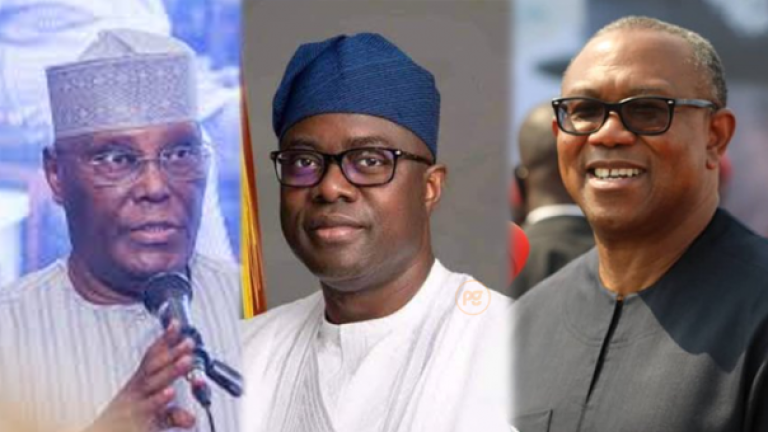
The lawyer further argued that the field has changed, saying Obi is now the leader of the NDC, while Atiku is the leader of the ADC and the PDP is split.
“On the positive side, we have town halls, the Peace Accord, INEC’s mock voting and the growing issue-based debate,” he said. My advice: settle issues early, treat violence the same, let voters decide.”
POLICIES UNDER THE LENS
Hon. Nwazue Arungwa, a retired Assistant Inspector General of Police (AIG), said the changes in the Nigeria political conversation between the 2022/23 election cycle and the 2026 pre-election and off cycle environment reflect a transition from identity and personality driven mobilisation to survival and policy driven realities.
AIG Arungwa, a grassroots politician and Director of Security, Abia Labour Party Governorship Campaign Council said: “The most profound difference is in the politics of removal of fuel subsidies. PoliticsFollow
All the major candidates in 2023 ran on the platform of removing the gasoline subsidy and harmonising the currency rates as abstract necessary measures for saving the economy. The dispute was on who had the political will to accomplish them.
“Whereas in 2026, those reforms are now lived realities after the removal of fuel subsidy, currency floating and consequent inflation shocks.
“From my view, the worldwide electioneering we are witnessing is much different from that of 2022/23,” said Apostle Bolaji O. Akinyemi, convener, Apostle Round Table (ART).
“While the previous electoral cycle was largely dominated by the APC-PDP rivalry, the Peter Obi phenomenon introduced in 2023 has evolved into a formidable youth-driven movement cutting across religious and ethnic divides.
FLUID PARTY SYSTEMS
“The Obi-Kwankwaso alignment on the NDC platform brings another major dimension to the emerging political landscape of realignments, coalition building and an increasingly fluid party structure.
“Obi’s move from the Labour Party to the NDC and the political excitement it has generated, further demonstrates Nigeria’s growing readiness for independent-minded political movements outside the traditional party establishment.
“There is also an increasing effort to shift the conversation from personalities to governance, economic recovery, security and institutional performance.
“But the danger is that political manoeuvring will again trump ideological clarity and concrete policy commitments. The electorate must want value, not just promises.”
Bishop Herbert Ekechukwu, a church leader and economist, said: “Considering the ongoing nationwide electioneering, the 2023 and 2027 campaigns are not similar. They are not alike at all.
“For example, a new Electoral Act was passed on February 18, 2026, repealing the Electoral Act 2022. BVAS and IRev have been backed by legislation. Now BVAS and IRev are recognised by law.
“The 2023 campaigns were defined by religion, Muslim/Muslim ticket, very high social media mobilisation, Naira redesign and fuel subsidy removal.
We have same faces of participants in 2023 and 20, 27 but different platforms and different regulations and also distinct atmosphere. Even the time table is earlier and shorter.
INEC changed the election to January, and the campaign period to around four months for the next election, while elections were held in February and March in 2023, with campaigns lasting nine months.
In 2023, the opposition was PDP but in the approaching elections, the opposition has been divided into NDC, ADC, APM, SDP and PDP.
Obi and Kwankwanso were presidential aspirants on different political parties in 2023 but now they are on a combined ticket as president and vice respectively under NDC party. That affects the maths entirely.
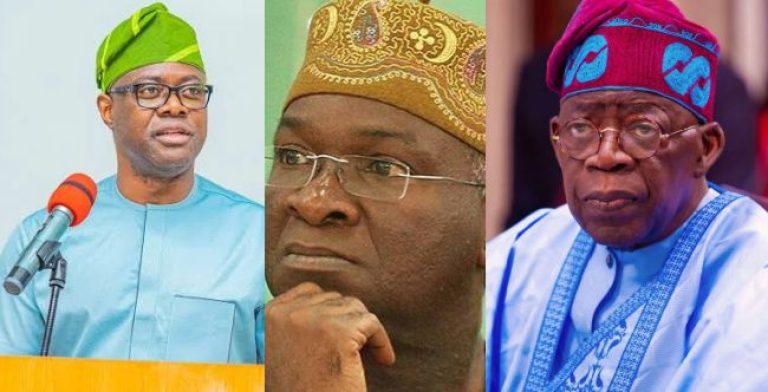
In 2027, Tinubu himself campaigns less personally. He intended to visit just 12 states, leaving the others to Shettima, his running mate and the governors. Politics Follow
“The issues of the campaigns have changed too. 2023, the year of Emi lo kan, the Obidient Movement and the rage of the youths. 2027 campaign is about just surviving.
Atiku promises to restore gasoline subsidies, re-open borders, confront insecurity.
“Makinde launched the ‘Reset Nigeria’ promising to ease the economic burdens of Nigerians. “Obi is promising unity, anti-corruption and insecurity.
MORE TRANSACTIONAL CAMPAIGNING
An economist and All Progressives Congress (APC) chieftain, Professor John Ebhomien, said: “My observation is that the 2026/27 electioneering started much earlier and feels more transactional than 2022/23.
“The 2022/23 contest was mostly about three powerful narratives – Emi lo kan, Obidient Movement and Atiku’s experience – with genuine ideological energy, particularly among youths and first-time voters. Debates were about ideas even if they were acrimonious.
The excitement is different this time for the following reasons: Defections over ideology Massive cross-carpeting to the ruling party and early endorsements.
“Politics feels less like manifestos and more like survival and alignment.
Economy rules: Insecurity and naira scarcity key in 2023. Hunger, inflation, gasoline price and expense of living is all the talk now. They’re more cynical, less easily enthused.
“Social media is more fragmented. “In 2023, Twitter/X drove one national conversation. Now TikTok, WhatsApp and regional influencers promote different conversations that are often ethnic and religious.
“Trust in INEC is lower: After the glitches in result transmission in 2023, many Nigerians already doubt the process before it started. Buy Maps
“Overall, 2023 was a year of hope and emotion. 2027, so far, is calculating, weary, elite-driven – unless a new movement alters the attitude again.
“Lastly, I want to frankly counsel the presidential candidates and their supporters not to make inflammatory statements and always remember that Nigeria is our country and we have no other country to call our own.
Media executive Julius Adegunna said: “The current electioneering activities with political party campaigns are going on as expected but to me it is not a balanced activity.
“It is as if only one party, the APC, is in the field, while others are engaged in calumny campaigns of criticisms, hatred, confusion and apparent self-defeat and intimidation.
“I think for democracy to thrive in Nigeria, all political stakeholders should play the game according to the rules.
“As the majority has its way, the minority should be allowed to have their say and that both parties in government and the opposition should also have confidence in the electoral process rather than threaten fire and brimstone here and there.
“Maximum security must be provided for persons in government parties and the opposition and free access to all available facilities by the parties on campaign should be allowed. This will give more faith in the system. May this happen again to Nigeria.”
THE APPEAL OF DIGITAL PLATFORMS
Tola Oresanwo is an activist and the Director, Administration and Programs, Center for Anti-Corruption and Open Leadership (CACOL).
“The current process seems to value political alliances, party structures, strategic positioning and the exploitation of digital platforms and social media to mould public narratives more than the 2022/2023 election cycle,” he said. Voter Information
“Increased public scrutiny of governance performance, economic hardship, insecurity and accountability also.
However, the current electioneering, unlike that in 2022/2023, is less driven by the traditional enthusiasm of mass demonstrations and more by deliberate political manoeuvring, although the level of mobilisation varies among parties. There are also plenty of signs of disagreements inside parties, court fights, desertions and fears of election violence.
“My biggest concern is that political players should take away attention from personality orientated campaigns, intimidation and harsh speech and focus on issue focused interactions that talk to the concerns of the population.
Political parties should come with genuine manifestoes, respect democratic ideals and commit to peaceful elections rather than heating up the discourse. Voting Information Check
BAD MOMENTUM
Dr Mathew, Executive Director of Kingdom Advocacy Network (KAN) and CEO of Nextstep Security Organization said, “To me the campaigns of both the incumbent and the opposition has not gained traction and momentum considering the fact that we are less than two months to the general elections.
“There is yet to be a feeling of election fever and presence among the voting populace.
“The APC campaigns are ongoing with the crowd whether organic or rented, but characterised mostly by rejection, especially in the north who voted massively and was instrumental to the enthronement of the Tinubu government.
“The Obidient Movement, their activities nationwide are not as intense as it was in 2023. I can’t explain why it is that way.
The Kwankwansiya Movement is not as loud as it was in 2023. I expected that the merger of Obidients and Kwankwansiya Movement will generate so much momentum. Maybe it still adds up.
“The ADC is embroiled in controversy and hasn’t yet vigorously campaigned effectively.
“Another visible difference is the way the opposition has been targeted especially the NDC party. Nigeria’s elections have always been marked by violence, but now the NDC is being targeted as a threat to the government, with the purpose of frightening the party and its candidates out of the contest, if possible.
“To sum it up, campaign activities are not as loud and keenly contested like that of the 2023 elections.
About the Author