
Nigeria has suggested the setting up of a $10 billion African Union (AU) Peace Fund to be realised in the next decade to enhance the continent’s capacity to finance peace and security activities without overdependence on external help.
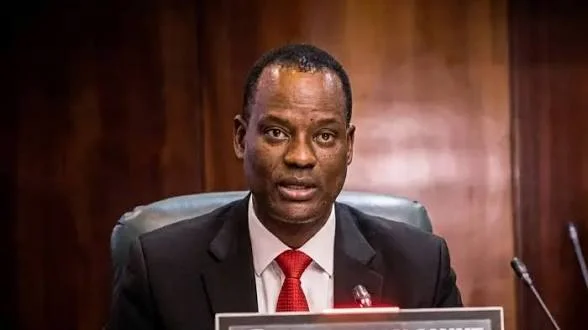
The proposal was submitted by the Minister of Finance and Coordinating Minister of the Economy, Taiwo Oyedele, at the 27th Extraordinary Session of the AU Executive Council on Financing the Union in Accra, Ghana.
The fund would be supported through donations from member states, philanthropy organisations and African capital, with the investments managed under sovereign wealth fund principles to provide sustainable returns, the Ministry of Finance statement said, citing Oyedele.
The suggested $10 billion aim is more than the present $1 billion financing target being considered for the AU Peace Fund, yet Nigeria has signalled its willingness to back the first target.
The suggestion was part of attempts to boost Africa’s financial independence as development funding from outside partners continues to diminish, Oyedele added.
He said African member states presently contribute only 25 per cent of the AU’s budget and four per cent of its program spending, instead of the targeted 75 per cent.
He said the budget shortage made it imperative for African countries to increase domestic resource mobilisation and create sustainable finance arrangements for the continental organization.
The minister said Nigeria’s position on the AU financing reforms was governed by three principles, which include fiscal discipline, institutional efficiency and financial leverage.
On fiscal discipline, he urged to “concentrate resources on a few, high-impact priorities, supported by a credible medium term fiscal framework and performance-linked expenditure ceilings”.
He also appealed to technical specialists of the Forum of Finance Ministers F15 to evaluate forecasts that could see member states’ contributions rise to $779 million by 2031, almost four times the current level.
But he warned that the anticipated increase must be balanced against the fiscal constraints of African countries.
On institutional efficiency, Oyedele found 29 areas of duplication inside the AU system, which he estimated could cost the organization up to $36 million.
He encouraged the AU Commission to do away with overlapping functions, adopt pending audit findings and look for other sources of funding including income from AU-owned properties.
The minister also urged not to touch the principal amount of the planned Peace Fund and to continue the interest-only regime until a sustainable replenishment mechanism is put in place.
Under the scheme, profits on investments would provide a steady stream of funds for peace efforts, while member governments and others would contribute to the fund’s expansion.
Oyedele also urged African countries with pending financial responsibilities to meet their payments within the stipulated period.
He urged the participants at the summit in Accra to develop a real strategy to achieve the pledges on financial reforms, instead of just making vague promises.
The minister encouraged the AU Commission to resolve the observed institutional inefficiencies and report progress at the organization’s mid-year session in 2027.
“I have asked the F15 technical experts to fully cost the proposed financing options and to explore alternative funding arrangements, while the commission develops sustainable mechanisms for replenishing the Peace Fund,” he said.
The suggestion comes amid wider attempts by the African Union to improve the continent’s financial infrastructure.
The AU has just established the African Credit Rating Agency (AfCRA) to offer impartial assessments of the African economy and tackle concerns about high borrowing rates.
Ugandan President Yoweri Museveni, who chairs the African Peer Review Mechanism (APRM), launched the APRM, saying Africa needs appropriate and inexpensive finance, adding that the continent’s economic realities must be accurately reflected in assessments by global financial institutions.
AU Commission Chairperson Mahmoud Ali Youssouf said the body would independently examine dangers affecting African economies to be credible. “We are going to assess objectively the risks facing African economies.
He reiterated Nigeria’s commitment to measures that will ensure equal financial contributions, careful management of resources and a financially sustainable African Union.
About the Author