
Ahead of the 2027 general elections, the Independent National Electoral Commission (INEC) has put in place new technological protections to prevent the upload of wrong election results on its Result Viewing Portal (IReV) in a move to restore public faith.
The INEC Chairman, Prof. Joash Amupitan, SAN, said this on Thursday in London as he announced that the Commission would conduct a statewide mock accreditation and voting exercise on November 28 to test its updated electoral systems.
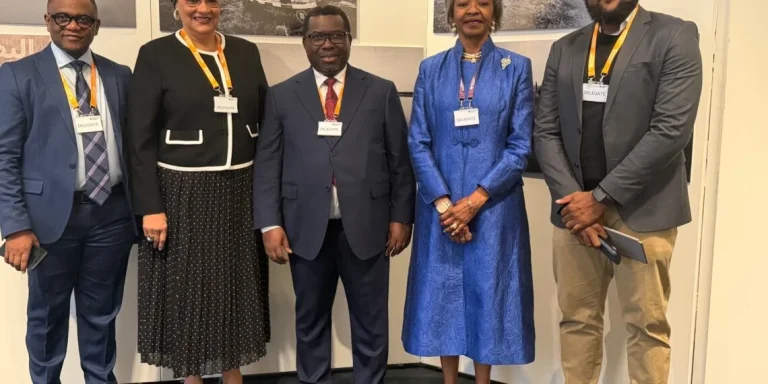
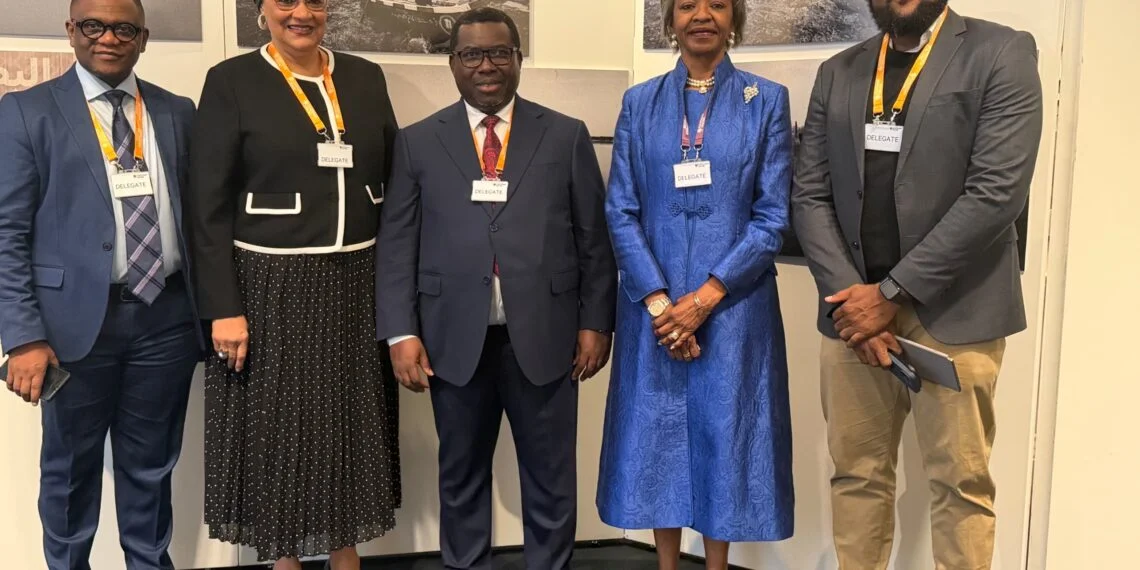
Amupitan spoke at Chatham House, during a high level dialogue hosted in partnership with Kimpact Development Initiative (KDI), themed, “Nigeria’s 2027 Elections: Democratic Trajectory and Regional Stability Beyond the Ballot.”
The electoral boss admitted that the scandals trailing the 2023 general elections had created a huge confidence deficit for INEC but maintained that the Commission was putting measures in place to prevent a re-occurrence.
He cited the governorship elections in Anambra, Osun and Ekiti states, the FCT Area Council elections and 16 legislative by-elections as opportunities that INEC had used to test and improve on its operations.
The recent elections in Anambra and Osun witnessed a marked improvement as the results were announced a day after voting unlike the experiences of the past where governorship elections in the states dragged.
Every election is a lesson. “The 2023 general election was a big lesson for Nigeria and the Anambra election was another,” Amupitan remarked.
He said that the post-election review of INEC has highlighted collation centers as major sources of differences in the management and declaration of results in terms of electoral transparency in the 2023 elections.
He said the Commission has thus put in place a technical validation procedure to ensure that results that had mistakes or evidence of over-voting did not show on IReV.
“There were cases in 2023 where incorrect results or results with over-voting were uploaded on IReV. “We have put in place a technical safeguard that if a result is not accurate at the polling unit, it will not go to IReV at all,” he stated.
“I am sure that this new arrangement would enhance the integrity of the electronically viewed results and make the collation process more transparent,” Amupitan said.
He also said that INEC opted to improve on current voting technology instead of introducing a new one after the short time available before the 2027 polls.
He said the Commission was tackling difficulties related to severe temperatures and storage conditions that impacted some devices in the 2023 elections, speaking on the performance of the Bimodal Voter Accreditation System (BVAS).
INEC, he said, was developing climate-controlled storage facilities in the states and had bought extra BVAS devices.
The Commission has also decreased the maximum number of registered voters per BVAS machine from 1,250 to 850, with polling locations with more than that expecting to get extra devices.
Amupitan said the simulated exercise, which will be conducted countrywide on November 28, will imitate the presidential election and test the voter accreditation and electronic result transmission to determine the success of these interventions.
On election financing, he said that a large portion of the 2027 election budget had been received by INEC, but that the released amounts were still to be received.
The Commission has been guaranteed that the balance of the allocation, part of which would go toward recruiting and welfare of ad hoc election personnel, would be released before the end of November, he said.
The INEC chairman also addressed suspicions of political bias, following assertions on social media that his phone number was associated with a controversial X account.
He said that an independent forensic examination had been conducted and the situation reported to the Department of State Services (DSS) and the Inspector-General of Police for investigation, while denying running any account on the site.
Amupitan downplayed worries that his past engagement in political issues as a legal practitioner could affect his impartiality. “I was acting strictly as a legal practitioner before my appointment and this should not affect my impartiality,” he said.
He said, “I am loyal to the Constitution of the Federal Republic of Nigeria and the Electoral Act alone.
He said the Commission had investigated and addressed the complaint in compliance with the law on allegations of irregularities in the voters’ register including claims of an 85 per cent increase in registered voters in a ward in Ebonyi State.
He advised Nigerians, particularly the youth, to be involved in the political process and to desist from disseminating false information.
Amupitan said disinformation was a big threat to democracy and urged citizens to check facts before sharing and allow the country’s democratic institutions a chance to flourish.
The 2027 presidential and National Assembly elections are scheduled for January 16, 2027 while gubernatorial and State Houses of Assembly elections will happen on February 6, 2027.
About the Author