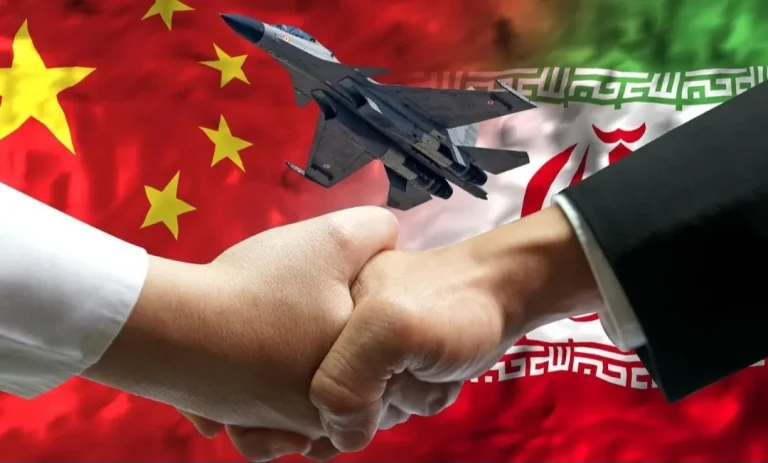

According to many people acquainted with the agreement, Iran is anticipated to receive its first shipment of shoulder-launched air defence missile systems manufactured in China in the upcoming weeks. After months of fighting with the US and Israel, the scheduled delivery is regarded as one of Tehran’s most important attempts to strengthen its short-range air defence capabilities.
Up to 400 man-portable air-defense systems (MANPADS) worth an estimated US$60–70 million could be part of the deal, according to sources who spoke with Reuters. The QW-12 and FN-16, Chinese-designed missiles that can target drones, helicopters, and low-flying aircraft, are apparently part of the systems. More sophisticated versions, such as the QW-18 and QW-19, are reportedly of interest to Iran.
The sources claim that Zhongqing Baoshang International Investment, located in Hong Kong, will supply the missile launchers, which will then be shipped overland from Urumqi in western China through Pakistan to Iran. Compared to maritime deliveries, which have grown more vulnerable due to increased tensions in the Gulf region, the reported route is meant to lower the danger of disruption.
The claimed accord has not been formally confirmed by Beijing or Tehran. China’s Foreign Ministry stated that it was not aware of the purported shipment and reaffirmed that it maintains stringent controls over military exports. Additionally, Pakistani officials have denied any role in enabling the transit of weaponry to Iran.
According to military analysts, Iran’s protection against low-altitude threats, especially drones and attack helicopters, would be greatly strengthened by portable air defence systems. MANPADS are a crucial layer in contemporary integrated air-defense networks because, in contrast to larger permanent air-defense batteries, they are highly mobile, can be quickly deployed, and are hard to detect.
See also US Energy Secretary: Resolving the Iran Crisis Is Necessary for Petrol Prices to Drop
The reported transfer coincides with Iran’s ongoing efforts to rebuild its military capabilities following damage to some of its air defence assets from previous interactions with the US and Israel. Despite long-standing international sanctions, Tehran has progressively attempted to upgrade its military through a combination of domestic manufacturing and selective foreign procurement.
The purported missile shipment, according to security analysts, may strengthen China-Iran military collaboration, which has drawn increasing attention from Western countries. Analysts point out that defence and strategic collaboration between the two nations has grown in recent years, despite China’s repeated denials of offering direct military support in relation to recent regional crises.
The United States and its allies, who have worked to restrict the flow of cutting-edge military equipment to Iran, are expected to closely monitor the cargo if it is verified. Strengthening Iran’s short-range air defence capabilities, according to some, may make future military actions in the area more difficult and exacerbate the already precarious Middle East security situation.
About the Author