
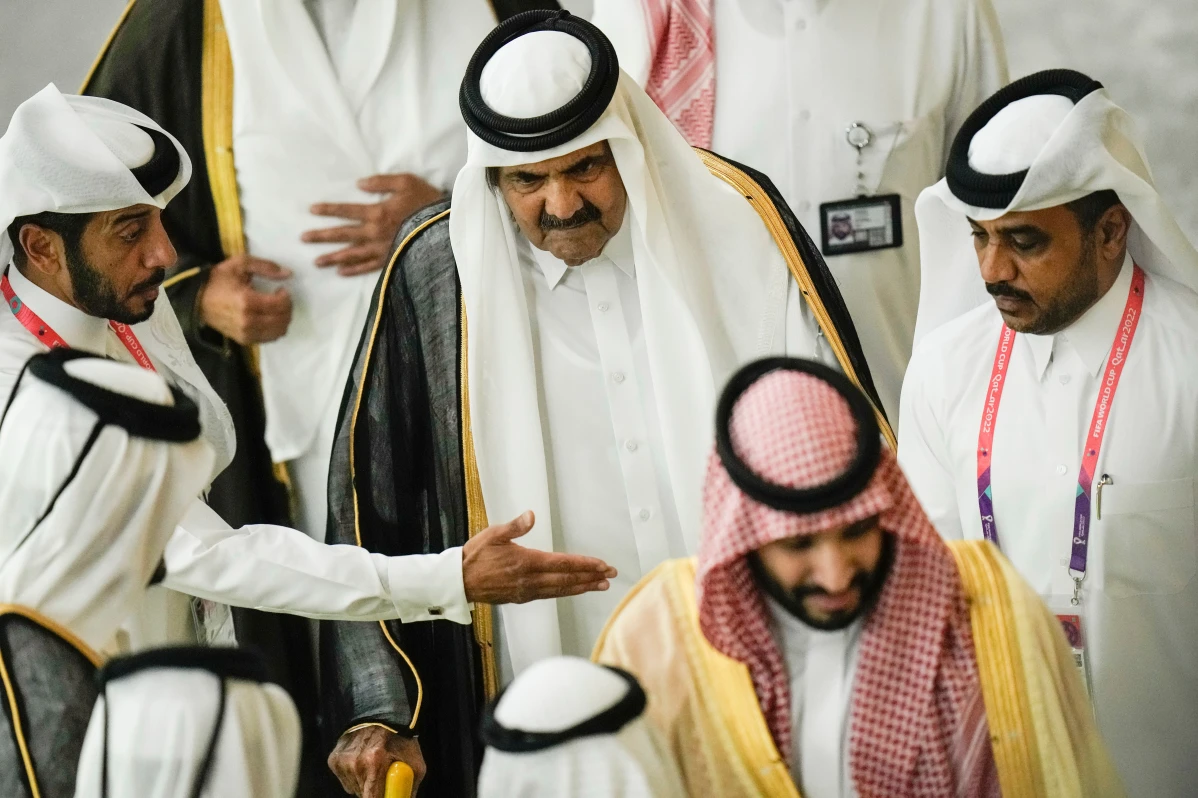
Sheikh Hamad bin Khalifa al-Thani, the former emir of Qatar who is largely recognised for transforming the small Gulf nation into a global economic, diplomatic and media powerhouse, has died at the age of 74. The statement was made on Sunday by the state-run Qatar News Agency (QNA) and the country’s Amiri Diwan, but no exact cause of death was given.
Following the announcement, Qatar declared four days of national mourning, flags to be flown at half-mast and halted work across government ministries and public institutions for the mourning period. The country’s leadership called Sheikh Hamad, known as the “Father Emir,” a statesman with a vision that transformed Qatar’s destiny and raised its profile on the world stage.
Sheikh Hamad rose to power in 1995 in a bloodless palace revolution that overthrew his father Sheikh Khalifa bin Hamad Al Thani. In his 18 years in power, Qatar’s massive natural gas reserves fuelled a remarkable development. Under him, the country poured money into infrastructure, education, banking and international diplomacy, developing Doha into a major regional and global hub.
One of his most lasting accomplishments was the founding in 1996 of the Al Jazeera satellite television network, which transformed Arabic-language broadcasting and provided Qatar with a powerful global media platform. His government also expanded Qatar Airways, and boosted the country’s sovereign wealth investments around the world; including high-profile assets such as London’s Harrods department store. It also successfully won Qatar’s bid to host the 2022 FIFA World Cup, the first tournament to be held in the Middle East.
Sheikh Hamad also advanced an ambitious foreign policy that sought to turn Qatar into a mediator in regional conflicts, while nurturing ties with a wide array of international entities, beyond economic development. But his independent style has created friction with some Gulf neighbours and Western allies over Qatar’s ties to groups like Hamas and the Muslim Brotherhood and its outreach to Iran. Years after he left office, these measures helped fuel the diplomatic rift that led many Arab states to impose a blockade on Qatar in 2017.
Sheikh Hamad made the unprecedented move among Gulf monarchs to willingly step down for his son, Emir Sheikh Tamim bin Hamad Al Thani, in 2013, saying it was time for a younger generation to rule the country. The peaceful transfer of power was generally hailed as an unusual step in the region and helped preserve political continuity as Qatar proceeded to grow its international clout.
News of his passing provoked a flood of tributes around the world. Leaders commended Sheikh Hamad as a visionary who brought Qatar to be one of the world’s richest and most powerful countries. Condolences poured in from nations around the Middle East and beyond. Indian Prime Minister Narendra Modi called him “a visionary leader” and “a valued friend of India.”
Sheikh Hamad leaves behind a legacy as a man who transformed Qatar’s position in the world. Under his leadership, the UAE transformed from a relatively quiet Gulf state to a prominent actor in diplomacy, global investment, aviation, sports and media. His foreign policy was contentious in some ways, but almost everyone agrees that his vision established the basis for modern Qatar and its expanding importance in the globe.
About the Author