
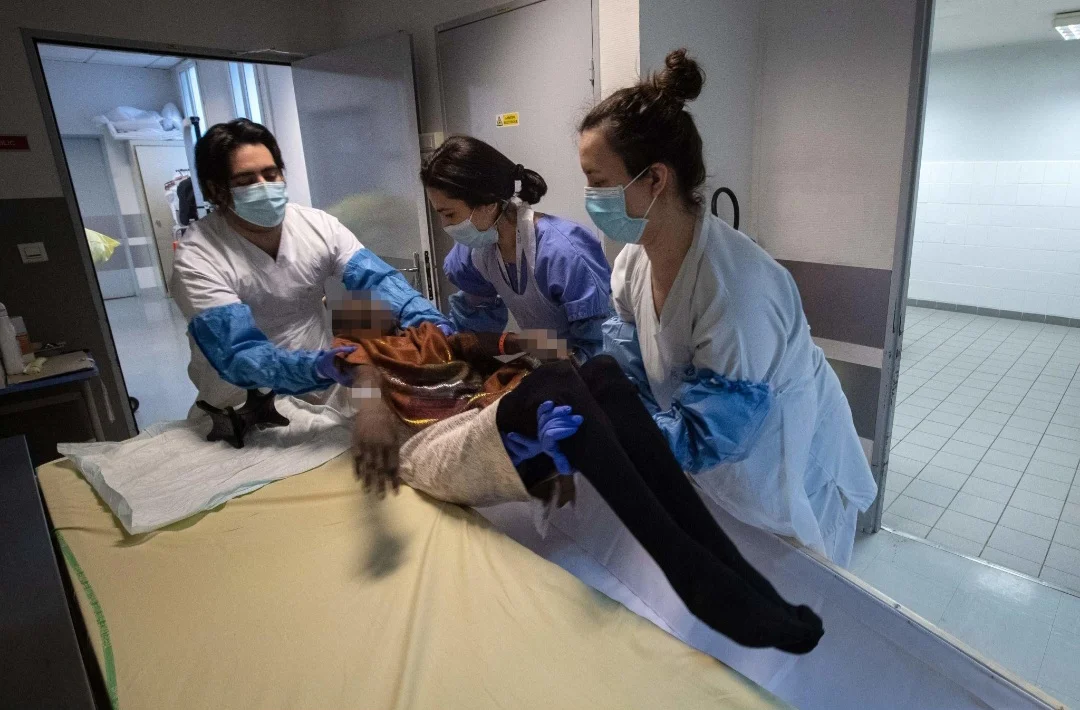
The human cost of Europe’s unprecedented heatwave is still rising, with Parisian mortuaries overburdened by a spike in fatalities that has left bereaved families waiting days to retrieve their loved ones’ bodies.
According to French health authorities, hospitals, funeral homes, and mortuary services are under tremendous strain due to the exceptional heat, with temperatures rising beyond 40°C (104°F) in many areas of the nation. According to numerous funeral directors, authorities are forced to deploy temporary refrigerated units while families suffer excruciating delays in making funeral arrangements since storage facilities have reached capacity.
The demand for mortuary services has increased significantly in the last week, according to funeral home operators.
Reporters were informed by a Paris mortuary owner that his business has been getting hundreds of calls every day from families and hospitals looking for space for the deceased, but the available space has already been used up. Because of this, some bodies have been moved to facilities outside of the capital, lengthening the wait times for family members who are already grieving.
Despite France’s emergency heat-response measures, the rapid increase in deaths has overloaded portions of the funeral industry, highlighting the difficulties in handling a public health emergency brought on by extremely high temperatures.
According to French public health officials, the current heatwave has caused almost 1,000 unnecessary deaths, with most of the fatalities being 65 years of age or older.
More than 1,200 people died on Wednesday, the warmest day of the heatwave, according to authorities, and over 1,400 people died on Thursday and Friday, both of which were much higher than seasonal averages. Additionally, officials saw a significant rise in at-home deaths, especially among senior citizens living alone.
See also NIMET’S 2026 SCP, which cautions farmers against early cultivation and predicts longer-than-normal rainfall.
For older persons and those with underlying medical disorders, prolonged exposure to intense heat can quickly prove fatal, according to health experts, especially when nighttime temperatures stay abnormally high and prevent the body from cooling down.
The most recent crisis has brought back bitter memories of the disastrous heatwave that struck France in 2003, killing around 15,000 people and forcing extensive changes to the nation’s emergency response system.
Authorities implemented heat alerts, cooling facilities, welfare inspections for residents who were at risk, and public awareness campaigns after that catastrophe. But experts now caution that those systems are being tested once more by increasingly severe heatwaves associated with climate change.
Scientists claim that human-caused climate change has greatly increased the likelihood and severity of the excessive temperatures plaguing France and much of Europe.
From France, the heatwave has spread to Germany, Italy, the Balkans, and a number of other European nations, causing wildfires, medical crises, and a record demand for electricity. There are worries that the death toll may keep rising as meteorologists predict another period of abnormally hot weather in early July.
Beyond the numbers, funeral directors claim that families are suffering greatly emotionally as a result of the problem.
Many family have experienced difficulties in gathering bodies and planning funeral services due to mortuary facilities being at or beyond capacity. Some have been forced to accept relocation to far-off facilities, which has made it more challenging to finalise funeral plans and say farewell.
Public health officials continue to advise locals to stay hydrated, avoid outdoor activities during high temperatures, check on elderly neighbours and relatives on a regular basis, and seek medical assistance right away if symptoms of heat exhaustion or heatstroke appear.
The scenes taking place in Paris mortuaries as Europe deals with one of the deadliest heatwaves in recent memory serve as a sobering reminder that the effects of extreme weather go far beyond temperature records, putting a tremendous burden on funeral services, healthcare systems, and families already dealing with severe loss.
About the Author